Flies Guide
Green Bottle Fly Facts & Information
Appearance Size: Green bottle flies are similar in size to house flies Color: They appear metallic green with portions of copper-green. Wings: They have clear wings with brownish-colored wing veins Eyes: large, …
At a glance
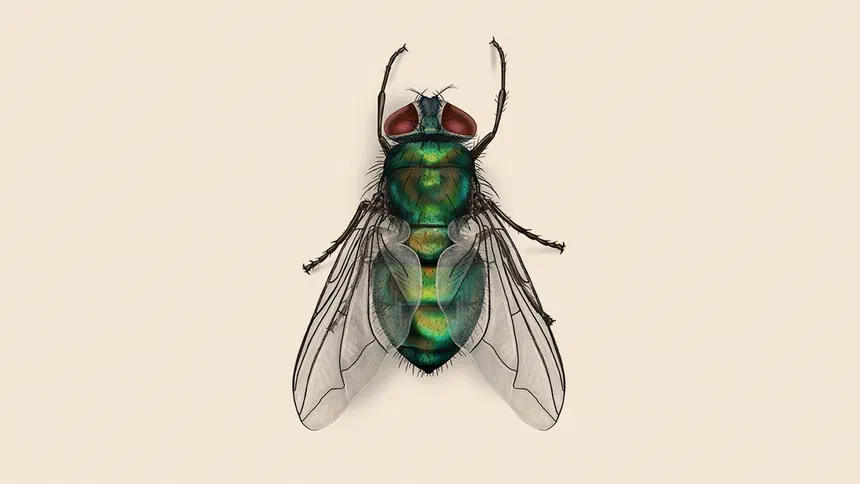
Appearance
- Size: Green bottle flies are similar in size to house flies
- Color: They appear metallic green with portions of copper-green.
- Wings: They have clear wings with brownish-colored wing veins
- Eyes: large, reddish-colored compound eyes
- Body: black legs and antennae
Reproduction & Life Cycle
Green bottle flies complete their life cycle in a short time, but the period of time is affected by factors such as the quality of their food source, seasonality, temperature and humidity. The adult female fly deposits up to about 200 eggs that hatch and become larvae in 1-3 days. Within about 3-10 days, fully developed larvae leave their development site and burrow into the soil. Pupal development takes approximately 6-14 days after which time the adults will emerge and begin to feed on plant nectar, a carcass or garbage. The female fly lays eggs about 2 weeks after they leave the pupal stage. Green bottle flies usually complete 3 or 4 generations per year, more in the warmer regions of their distribution areas. One female green bottle fly will lay about 2,000-3,000 eggs in her lifetime
Distribution
The green bottle fly is found throughout the world, but is more likely to be found in the Northern Hemisphere. This species is widely distributed throughout the United States and southern Canada.