Face Fly Facts & Information
Identification
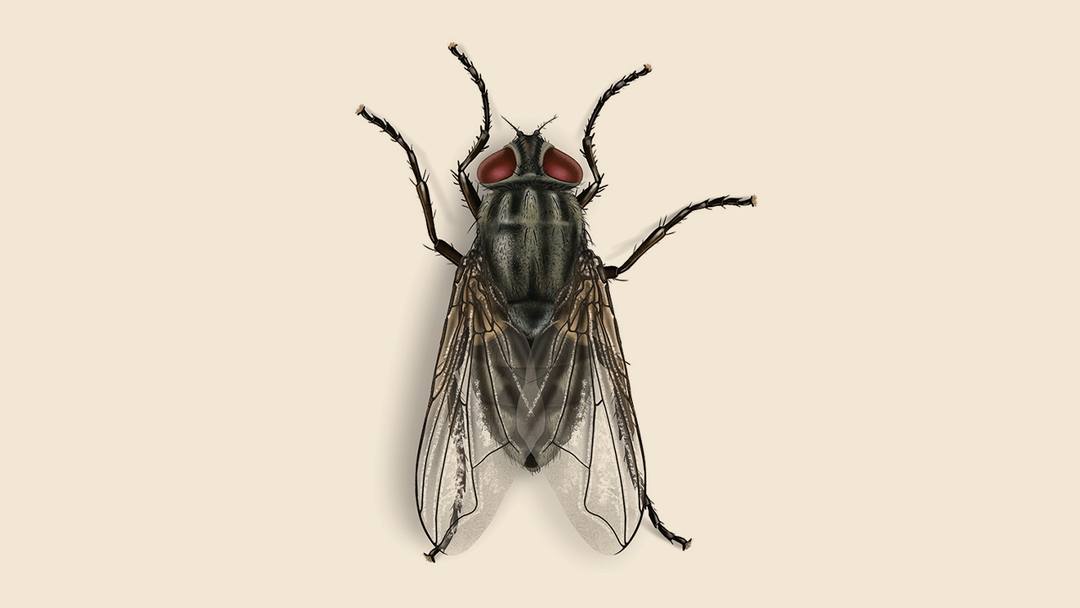
Appearance
- Size: Face flies are about 6-8 mm in length.
- Color: These flies have four dark stripes on top of their gray-colored thorax. Females look almost identical to males except they have yellow coloration on the front portion of their abdomen. They look very similar to house flies .
Habitat
Face flies spend most of their time away from their host animals, resting on plants and fence posts. As the weather warms in late winter and early spring, adults move outdoors. These flies are present in fields throughout the summer with populations usually peaking in late July and August.
These insects migrate into buildings that provide a protected place to overwinter in places such as:
- Attics
- Barns
- Ceilings
- Walls
Diet
Male face flies spend most of their time feeding on plant nectar near the cattle or horse pasture. If their preferred meals are not available, these flies also eat sweets and food waste in kitchens.
The females use their rasping, sponging mouthparts to stimulate tear flow from the animal’s eyes and noses so they can lap up secretions, including:
- Blood
- Nasal discharge
- Saliva
Geographical Range
Face flies are found over southern Canada and most of the more temperate portions of the United States.
Life Cycle
Face flies go through four life stages : egg, larvae (grub), pupae (cocoon), and adult. They will complete one entire life cycle in as little as 15-25 days. The reproductive potential of these flies is very high since they can complete one generation in such a short time.
- Eggs: Females lay their eggs only in the manure of grass-fed cattle that is less than one hour old.
- Larvae: Eggs hatch within the manure pile and larvae develop under the drier manure crust.
- Pupae: When larvae mature, they crawl into the soil close to the manure piles and develop into pupae.
- Adults: After about one week, adults emerge from the soil.