Library Section
Flies
How to identify Flies A typical adult fly has three body parts: head, thorax and abdomen. The colour and body size varies depending on species; most are small in size, typically measuring no more than 10 millimetres …
At a glance
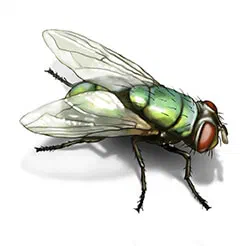
How to identify Flies
A typical adult fly has three body parts: head, thorax and abdomen. The colour and body size varies depending on species; most are small in size, typically measuring no more than 10 millimetres long. The head has a pair of compound eyes, a pair of antennae, and variously modified mouthparts. The thorax is the locomotor center; it bears a pair of functional membranous wings used in flight and three pairs of functional legs. The immature forms, called larvae, are tiny, cream-whitish, legless, and often worm-like.
Signs of an infestation
Flies start life as eggs, which hatch into tiny, whitish, legless larvae, also known as maggots. These larvae then become pupae, enclosed in hard shells (puparium) from which they eventually emerge as adult flies. The length of time it takes for a fly egg to develop into an adult fly depends on the temperature of the surrounding environment – the colder it is, the longer the life cycle will take. Once fully grown, the life expectancy of a fly can be from eight days to two months, or in some cases, up to a year. One pair of mating flies can produce more than 1 million offspring in as little as six to eight weeks.
How to prevent Flies from invading
Clean all drains and sink areas, Replace broken windows and screens, Reduce the presence of ripe fruits and vegetables, Place fruits and vegetables in the refrigerator, Create an air current to prevent flies from landing, Close the lids on all garbage and waste containers
Habitat, Diet, and Life Cycle
Habitat
Flies generally live within close proximity to suitable food sources and breeding grounds. They feed on various food substances; however, most of the flies found in and around buildings feed and breed in warm, moist decaying organic matter. Small flies such as drain flies, fungus gnats, and phorid flies are commonly found in and around drains, leakages in slab floors, shower pans, sinks, and overwatered potted plant soils. Fruit flies tend to breed in decaying fruits and vegetables. Meanwhile, filthy flies such as house flies, dung flies, blow flies, bottle flies, and flesh flies visit and breed in garbage, trash bins, piles of compost or manure, and the carcasses of animals. Flies are attracted to light, so they often gather around windows when inhabiting indoor areas. Some fly species such as blow and bottle flies are known to fly long distances of up 20 miles in search of food and breeding sites.
Life Cycle
Flies undergo complete metamorphosis consisting of egg, larva, pupa and adult stages. Sexual mature female flies lay eggs on suitable material; the number of eggs laid depends on the fly species. The eggs hatch into tiny, whitish, legless larvae also known as maggots that resemble tiny worms. After completing the larval stage of development, the larvae become pupae from which the adults develop. The development time from egg to adulthood depends on the temperature of the surrounding environment. Colder temperatures prolong the life cycle, while warmer temperatures shorten it. In general, flies complete the life cycle within a few weeks and live an additional few weeks or months as adults.
Commonly Asked Questions
Where do they live?
There are over 15,000 species of flies in North America. Some of the most common domestic fly species in Canada include blow/bottle flies, cluster flies, drain flies, fruit flies, flesh flies, phorid flies and house flies. Flies always live close to suitable food sources and breeding grounds. In homes, they look for warm, moist decaying organic matter.
How worried should I be about flies?
As many as 33 million microorganisms may flourish in a single fly’s gut, while a half billion more swarm over its body and legs. Flies can easily spread disease, because they move quickly from rotting, disease-laden garbage to exposed foods, food prep surfaces and utensils. More than 100 pathogens are associated with the house fly including salmonella, staphylococcus, E. coli and shigella. These can cause typhoid fever, cholera, bacillary dysentery, hepatitis, ophthalmia, polio, tuberculosis and infantile diarrhea. However, for every fly you see, there are an estimated 19 more flies hidden from view. If you are concerned you have a fly infestation, the best way to deal with it is to get the help of a professional pest control service who can accurately identify the species.
Browse This Section
Every guide in Flies
Use these links to move quickly between closely related pages in the same section.
Biting Fly Facts & Information
What Types of Flies Bite? Biting flies feed on blood, attacking humans and other animals as food sources. Some are …
Black flies
How to identify Black flies With more than 160 species present in Canada, black flies are especially annoying pests. To …
Blow flies
Why do I have blow flies Blow flies, also known as bottle flies, like to live close to animal carcasses, which they use …
Bottle Flies
Identify What do bottle flies look like? Bottle flies, also called blow flies, are common, large flies known for their …
Cluster flies
What Do Cluster Flies Look Like? Cluster flies appear similar to the common house fly and blow/bottle flies. Adult …
Crane Flies
What Do Crane Flies Look Like? Crane flies have very slender bodies, long legs, and one pair of large wings. They have …
Deer Flies
Appearance Size: Deer fly adults range in size from about ¼ to 1/3 inches long. Wings: Their wings are clear, but with …
Drain flies
Habitat, Behaviour, Lifecycle Habitat and Behaviour These flies are not particularly adept at flying long distances, …
Dung flies
How to prevent Dung flies from invading Remove wet organic matter. Remove outdoor standing water. Clean interior drains …
Face Fly Facts & Information
Appearance Size: Face flies are about 6-8 mm in length. Color: These flies have four dark stripes on top of their …
Flesh flies
How to prevent Flesh flies from invading Keep your property and clean sanitary. Remove all potential food and breeding …
Flies All Stages of Life
A common fly The development of flies involves a four-phase life cycle. Beginning as eggs, flies undergo larval and …
Fly Anatomy
A common fly The head of the fly contains the eyes, antennae and mouthparts. The common housefly liquefies food with its …
Fruit Flies
What is a Fruit Fly? Fruit flies are a type of fly found throughout the United States that often infest homes containing …
Fungus Gnats
How to identify Fungus Gnats Often mistaken for mosquitoes, fungus gnats are very small and range from 3 to 4 mm in …
Garbage Fly Facts & Information
How to Keep Flies out of the Garbage Can Flies are attracted to garbage cans as a source of food, shelter, and a place …
Glassy-Winged Sharpshooter Facts & Information
Appearance Glassy-winged sharpshooters are larger than other leafhoppers. Adults average 12 millimeters in length and …
Gnats
What Do Gnats Look Like? These flies are very small, typically measuring 1/16 to 1/8 of an inch long. Gnats have slender …
Green Bottle Fly Facts & Information
Appearance Size: Green bottle flies are similar in size to house flies Color: They appear metallic green with portions …
Horn Fly Facts & Information
What You Can Do One technique to control horn flies are walk-through traps. These traps prey on horn flies hesitancy to …
Horse Flies
What is a Horse Fly? The horse fly is a type of fly that likely received its common name because it is a notorious pest …
House Flies
What is a House Fly? The house fly is the most common fly found in and around homes. It has a worldwide distribution and …
Houseflies
How to prevent Houseflies from invading Clean all drains and sink areas, Replace broken windows and screens, Create an …
How to Get Rid of Flies in Restaurant
A fly infestation poses a serious hygiene risk. Unfortunately, flies are attracted to conditions found in restaurants, …
How to Identify Crane Fly Larvae
Crane Fly Larvae Facts & Information Female crane flies carry eggs within their abdomens and place them in moist soil or …
Identify Flies
Common Fly Identification Flies vary greatly in size, shape, and color. Because they are easy to confuse with other …
Life Cycle of Flesh Flies
Life Cycle Stages Like their name implies, these flies depend on live or dead tissue to complete the entire flesh fly …
Love Bug Facts & Information
What do love bugs look like? Love bugs are small black flies with a dull, somewhat velvety appearance. The top of the …
No-see-ums Facts & Information
What do no-see-ums look like? Adult no-see-ums are gray, small, barely visible, and less than 1/16 inch long. Their two …
Phorid Humpbacked flies
How to identify Phorid Humpbacked flies Phoridae is a family of small flies with a pronounced hump to the thorax. They …
Russian Wheat Aphid Facts & Information
What You Can Do Russian wheat aphids are considered one of the most invasive pests of small grains in the world and many …
Sand Fly Facts & Information
What You Can Do to Get Rid of Sand Flies Large-scale control of sand flies can be challenging due to their hidden …
Sewer Fly Facts & Information
What You Can Do If you’re combating a sewer fly infestation, begin by eliminating their breeding sites. Clean suspected …
Silverleaf Whitefly Facts & Information
What You Can Do Whitefly infestations often are kept in check by beneficial insects. If populations reach high numbers, …
Soybean Cyst Nematode Facts & Information
What You Can Do No known method exists to completely eradicate nematode infestations from the soil. However, a number of …
Sphaerocerid Fly Facts & Information
What You Can Do Some prevention procedures that a homeowner may use include the following: Removing accumulations of wet …
What are Flies Attracted to Inside Your Home?
Flies in Homes Many homeowners notice flies in their homes during late spring, summer, and fall months. The pests get …
What's the Life Cycle of a Fly?
A common fly Homeowners across the United States are familiar with pest flies. Two species seem to spend the most time …
Where Do Flies Lay Eggs Inside Houses?
Most insects begin their life cycle by laying eggs in various locations. Where flies lay their eggs depends on the …
Yellow Fly Facts & Information
What You Can Do Things you can do to prevent or control yellow flies include: Wear clothing that covers skin Repellents …