Fish Guide
Jackfish
What Is a Jackfish? Jackfish is a common name applied to several fast-swimming marine fishes in the family Carangidae, most often the crevalle jack, Caranx hippos. It is a powerful, deep-bodied predator prized by anglers …
At a glance
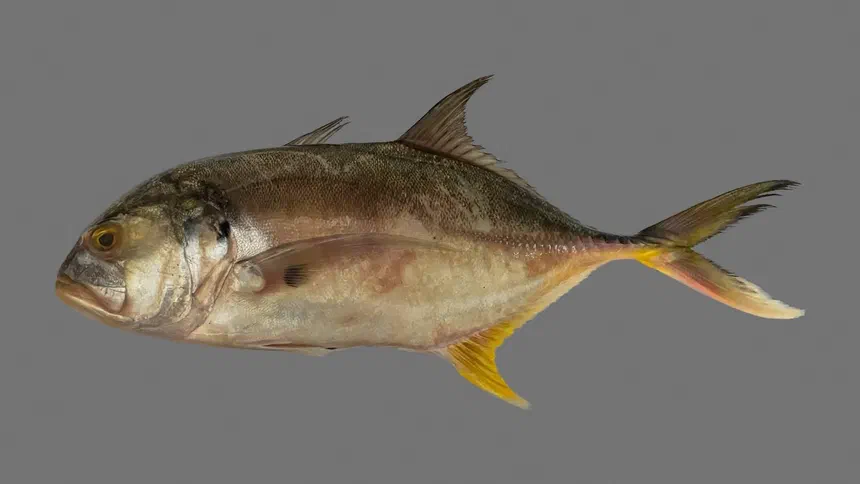
What Is a Jackfish?
Jackfish is a common name applied to several fast-swimming marine fishes in the family Carangidae, most often the crevalle jack, Caranx hippos. It is a powerful, deep-bodied predator prized by anglers for its speed and stamina. The name “jack” is used loosely across the world, but Caranx hippos is among the best known and most widespread species that carries it.
Appearance and Identification
The jackfish has a robust, laterally compressed body built for bursts of speed. Its back is greenish to bluish, fading to silvery sides and a paler, often yellowish belly. A distinctive dark spot marks the rear edge of the gill cover, and a second dark blotch usually appears on the lower pectoral fin. Like other carangids, it has a series of hardened, keel-like scales called scutes along the rear portion of the lateral line, which give the tail base a ridged, armored feel. The deeply forked tail powers rapid swimming. Most fish encountered are 12 to 30 inches (30 to 75 cm) long, though the species can reach roughly 4 feet (1.2 m) and weights above 50 pounds (22 kg) in exceptional cases.
Habitat and Range
Caranx hippos occupies warm coastal waters on both sides of the Atlantic Ocean. In the western Atlantic it ranges from the northeastern United States south through the Gulf of Mexico, the Caribbean, and along the coast of South America. In the eastern Atlantic it occurs from Portugal and the Mediterranean fringe down the west coast of Africa. Adults favor open coastal waters, sandy shorelines, and rocky areas, while juveniles are frequently found in estuaries, lagoons, and even low-salinity river mouths. The species tolerates a wide range of salinities, which helps young fish exploit sheltered nursery habitats.
Diet
The jackfish is an active carnivore that hunts largely by sight during the day. Its diet is dominated by smaller schooling fishes such as sardines, anchovies, and mullet, supplemented by shrimp, crabs, and other invertebrates. Jackfish often hunt cooperatively, herding baitfish toward the surface or against shorelines in fast, coordinated rushes. These feeding frenzies can churn the water and attract diving seabirds, a scene familiar to coastal anglers.
Behavior
Jackfish are strong, restless swimmers that spend much of their lives on the move. Juveniles and smaller adults tend to travel in schools, while the largest individuals often become more solitary. The species is known for stamina and speed, using its forked tail and streamlined body to run down prey and to resist capture when hooked. Groups may push into shallow bays and surf zones as they chase bait, then retreat to deeper water. Their willingness to enter brackish estuaries also makes them a common sight near harbors and river mouths.
Life Cycle and Reproduction
Jackfish are broadcast spawners that release eggs and sperm into open water, typically during warmer months when conditions favor larval survival. Spawning often occurs offshore, and the fertilized eggs and resulting larvae drift with currents. Young fish settle into sheltered estuaries and coastal nurseries, where abundant small prey and reduced predation support rapid growth. As they mature, individuals move into more open coastal habitats. The species is relatively long-lived for a coastal predator, with individuals reaching roughly 15 to 17 years of age.
Conservation Status
The crevalle jack is widespread and abundant across its range and is currently assessed as Least Concern by the IUCN. It supports both commercial and recreational fisheries, though its flesh is often considered less desirable than that of many other food fishes, which limits heavy targeted harvest in some areas. No major range-wide threats are recognized, but like all coastal species it can be affected by habitat degradation and localized overfishing.
Frequently Asked Questions
Is a jackfish good to eat? It is edible and taken by anglers, but the dark, strongly flavored flesh is generally considered less prized than that of many other coastal fish. It is often used fresh, smoked, or as bait.
How big do jackfish get? Most are between 12 and 30 inches (30 to 75 cm), but large crevalle jack can approach 4 feet (1.2 m) and exceed 50 pounds (22 kg).
Where are jackfish found? They live in warm coastal waters on both sides of the Atlantic, including the Gulf of Mexico, Caribbean, and eastern Atlantic from the Mediterranean south along West Africa.