Fish Guide
Indian Glassy Fish
What Is a Indian Glassy Fish? The Indian glassy fish (Parambassis ranga) is a small freshwater and brackish-water species native to South and Southeast Asia. It belongs to the Asiatic glassfish family (Ambassidae) and is …
At a glance
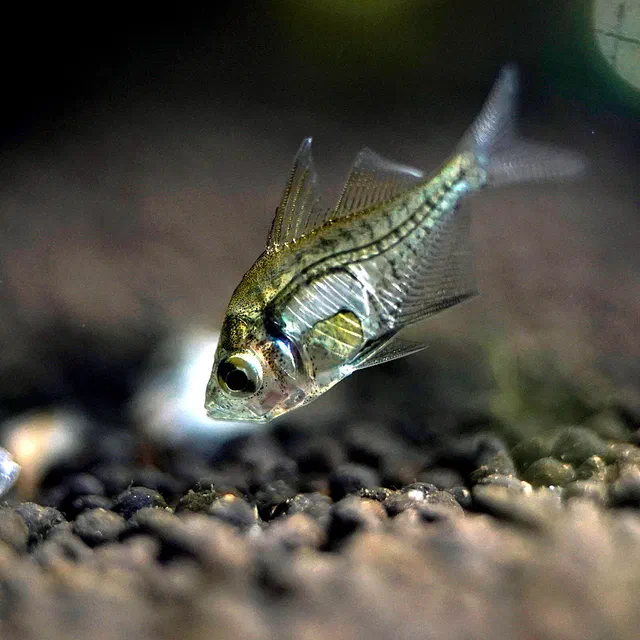
Image: opencage — CC BY-SA 2.5 · source
What Is a Indian Glassy Fish?
The Indian glassy fish (Parambassis ranga) is a small freshwater and brackish-water species native to South and Southeast Asia. It belongs to the Asiatic glassfish family (Ambassidae) and is best known for its remarkably transparent body, through which the spine and internal organs are plainly visible. Peaceful and modest in size, it is a familiar sight in slow-moving waters across its range and a popular subject in the ornamental fish trade.
Appearance and Identification
This species is instantly recognizable for its see-through appearance. The body is laterally compressed, roughly oval in outline, and so translucent that the backbone, swim bladder, and other organs can be seen from the outside. Living fish often show a faint golden or greenish sheen, and the fins may carry a subtle bluish edge, especially in mature males during courtship. Adults typically reach around 6 to 8 centimeters (about 2.5 to 3 inches) in length, with females tending to be slightly rounder-bodied than males. The dorsal fin is divided into a spiny front section and a soft rear section, a feature shared with many perch-like fishes. Buyers should note that dyed “disco” or “painted” glassfish, injected with fluorescent color, are the same species subjected to an artificial and harmful process; natural fish are never brightly colored.
Habitat and Range
The Indian glassy fish occurs widely across the Indian subcontinent and into parts of Southeast Asia, including India, Bangladesh, Nepal, Pakistan, Myanmar, and Thailand. It favors standing or slow-flowing fresh water such as ponds, ditches, floodplain pools, lakes, and the quieter margins of rivers and streams. The species tolerates a range of conditions and is often found in slightly brackish estuarine waters as well as pure fresh water, which helps explain its broad distribution. Dense aquatic vegetation is usually part of its preferred surroundings, offering both cover and hunting grounds.
Diet
The Indian glassy fish is a carnivore that feeds on small live prey. Its natural diet consists largely of zooplankton, tiny crustaceans, insect larvae, worms, and other small aquatic invertebrates. It is a micropredator, picking prey from the water column and among plants rather than pursuing large food items. In aquariums it readily accepts small live and frozen foods such as brine shrimp, daphnia, and bloodworms, though some individuals are slow to take dried flake foods.
Behavior
This is a peaceful, somewhat shy schooling fish that feels most secure in the company of its own kind. Groups tend to stay in the mid to lower levels of the water, often near vegetation where the transparent body helps them avoid the notice of predators. Males can become mildly territorial and display to one another during breeding, spreading their fins, but serious aggression is rare. In good conditions the fish are active, curious, and constantly on the lookout for drifting food.
Life Cycle and Reproduction
Breeding is commonly triggered by seasonal changes, particularly the warmer, softer water associated with the onset of the rainy season. Males court females with fin displays and heightened color at the fin edges. Females scatter numerous small, adhesive eggs among fine-leaved plants, where they stick until hatching. The eggs typically hatch within a day or two, and the tiny larvae become free-swimming shortly afterward, feeding at first on infusoria and other minute organisms before graduating to larger prey. The parents provide no care and may eat the eggs or fry if given the chance. Individuals generally live around three to four years.
Conservation Status
The Indian glassy fish is listed as Least Concern by the IUCN, reflecting its wide distribution, adaptability, and large overall population. It is not considered threatened, though local populations can be affected by habitat degradation, pollution, and collection for the aquarium trade. The practice of artificially dyeing these fish for sale remains an animal-welfare concern that reputable hobbyists and retailers discourage.
Frequently Asked Questions
Why is the Indian glassy fish transparent? Its body lacks heavy pigmentation and its muscle and connective tissues are unusually clear, so light passes through and reveals the skeleton and organs. This transparency likely helps the fish avoid predators in open water.
Are dyed “painted” glassfish natural? No. Brightly colored glassfish have been injected with dye, a stressful process that can shorten their lives and increase disease. Naturally, the species is transparent with only a faint golden tint.
Is it a good aquarium fish? Yes, for prepared keepers. It is peaceful and hardy but does best in a small group, with gentle tankmates, plenty of plants, and a diet that includes small live or frozen foods.