Fish Guide
Ide
What Is a Ide? The ide (Leuciscus idus), also known as the orfe, is a freshwater fish in the carp family, Cyprinidae. Native across much of Europe and northern Asia, it is a hardy, adaptable species valued by anglers …
At a glance
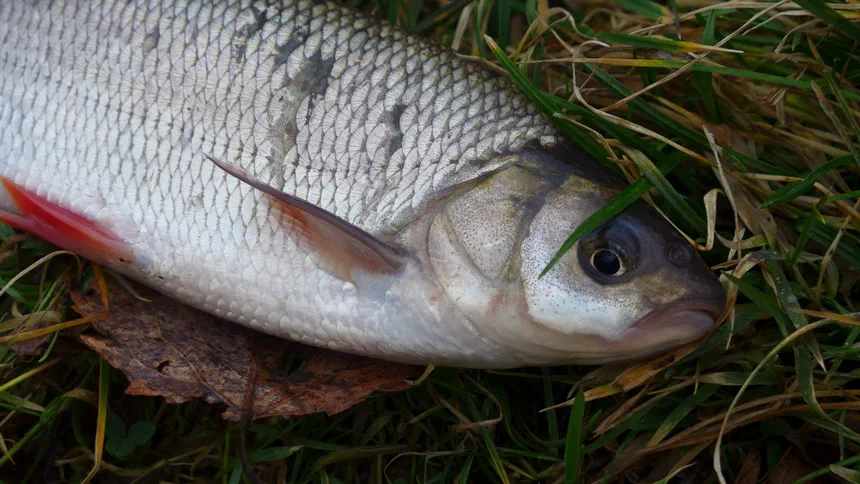
Image: Wiktor Kuśmider (Poland) — CC BY-SA 4.0 · source
What Is a Ide?
The ide (Leuciscus idus), also known as the orfe, is a freshwater fish in the carp family, Cyprinidae. Native across much of Europe and northern Asia, it is a hardy, adaptable species valued by anglers and, in its golden ornamental form, popular in ponds and water gardens.
Appearance and Identification
The ide has a fairly deep, laterally compressed body that is more robust than that of its close relatives, the dace and chub. Adults typically show silvery flanks, an olive to blue-gray back, and a paler, sometimes yellowish belly. The lower fins (pelvic and anal) and often the caudal fin carry a reddish or orange tint, which becomes more pronounced in older or breeding fish. The mouth is small and terminal, and the scales are moderately sized. Most wild ide measure roughly 30 to 50 centimeters, though exceptional individuals approach 90 centimeters and weigh up to about 4 kilograms. A widely kept ornamental variety, the golden orfe, displays a bright orange to gold coloration rather than the natural silver.
Habitat and Range
Ide favor larger lowland rivers with slow to moderate current, as well as lakes, reservoirs, and backwaters. Unusually for a cyprinid, the species tolerates brackish conditions and is regularly found in the coastal lagoons and estuaries of the Baltic Sea. Its natural distribution stretches from western and central Europe eastward across Russia into Siberia. The fish has also been introduced beyond its native range, including parts of North America, largely through the ornamental pond trade. Ide generally prefer clean, well-oxygenated water but cope with a range of temperatures and moderate turbidity.
Diet
The ide is an opportunistic omnivore whose diet shifts with age and season. Younger fish feed heavily on zooplankton, aquatic insect larvae, and other small invertebrates. As they grow, adults take a broader menu that includes crustaceans, mollusks, worms, insects taken from the surface, plant material, and occasionally small fish. This flexible feeding strategy helps the species thrive in varied and sometimes changeable habitats.
Behavior
Ide are social fish that commonly gather in loose shoals, particularly when young. They are active swimmers and often feed near the surface, where they can be seen rising to take drifting insects. Larger, older individuals tend to become more solitary and move into deeper water. The species is relatively wary and fast-moving, traits that make it a challenging quarry for anglers. In colder months ide reduce their activity and congregate in deeper, sheltered stretches of water.
Life Cycle and Reproduction
Spawning takes place in spring, generally from March to May when water temperatures rise. Mature ide undertake short upstream migrations to reach shallow, weedy margins, flooded meadows, or gravelly riffles. Females release large numbers of sticky eggs that adhere to submerged vegetation and stones; a single large female may produce tens of thousands of eggs. The adults provide no parental care. Eggs hatch within one to two weeks depending on temperature, and the larvae initially feed on small planktonic organisms. Ide grow relatively slowly, typically reaching sexual maturity at around three to five years of age, and can live roughly 15 to 18 years in the wild.
Conservation Status
The ide is listed as Least Concern by the IUCN. It remains widespread and locally common across its extensive range, and no major threats currently endanger the species as a whole. Localized pressures can include river regulation, habitat degradation, water pollution, and barriers such as dams that interrupt spawning migrations. Because it is farmed and traded as an ornamental fish, introduced populations exist outside its native range, where escapees can occasionally establish in the wild.
Frequently Asked Questions
Is the ide the same fish as the golden orfe? Yes. The golden orfe is simply a selectively bred, orange-gold color variety of the ide, commonly kept in garden ponds. Both belong to the same species, Leuciscus idus.
Can ide live in brackish water? Unusually for a member of the carp family, ide tolerate low-salinity brackish water and are regularly found in the coastal lagoons and estuaries of the Baltic Sea.
How large can an ide grow? Most ide reach about 30 to 50 centimeters, but large specimens can approach 90 centimeters in length and weigh close to 4 kilograms.