Fish Guide
Blackfin Icefish
What Is a Blackfin Icefish? The blackfin icefish (Chaenocephalus aceratus) is a bottom-dwelling fish of the frigid Southern Ocean and one of the most remarkable vertebrates known to science. It belongs to the crocodile …
At a glance
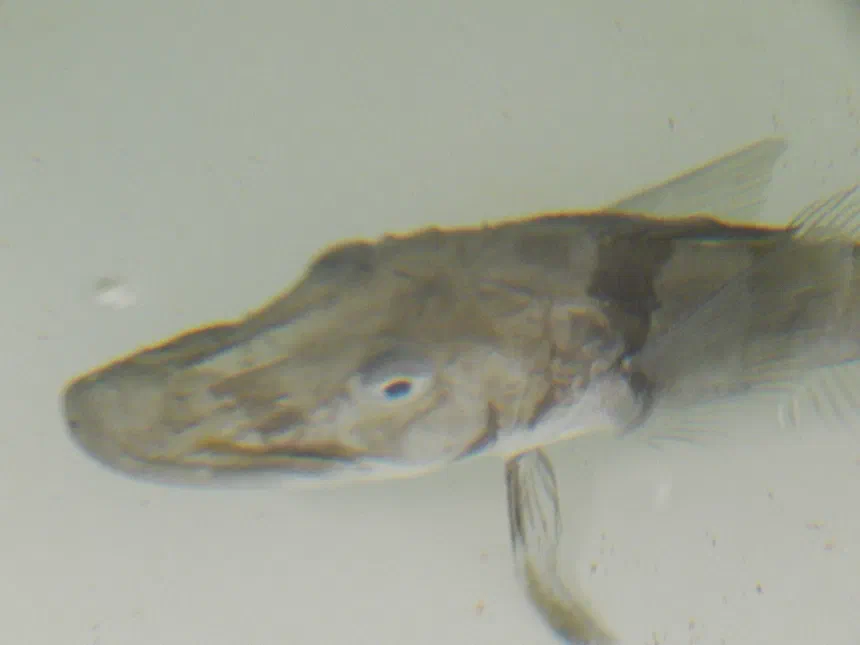
Image: Ambiederman — CC BY-SA 4.0 · source
What Is a Blackfin Icefish?
The blackfin icefish (Chaenocephalus aceratus) is a bottom-dwelling fish of the frigid Southern Ocean and one of the most remarkable vertebrates known to science. It belongs to the crocodile icefish family (Channichthyidae), a group famous for a bizarre trait: their blood contains no hemoglobin, giving them nearly colorless, “white” blood. The blackfin icefish is among the largest and best-studied members of this family.
Appearance and Identification
Blackfin icefish have an elongated, tapering body with a broad, flattened head and a wide, toothed mouth reminiscent of a small crocodile or pike. The skin is thin and largely scaleless, and because the fish lacks red blood pigment, the body appears pale, grayish, and slightly translucent, with the gills looking whitish rather than the bright red seen in most fish. Adults commonly reach around 45 to 75 centimeters (18 to 30 inches) in length. The pectoral and dorsal fins are large and fan-like, and the darker fins help distinguish this species and give it its common name.
Habitat and Range
This species lives in the cold waters surrounding Antarctica and nearby sub-Antarctic islands, including the region around the Antarctic Peninsula, South Georgia, and the South Shetland and South Orkney Islands. It is a demersal fish, meaning it spends most of its life on or near the seabed, typically at depths ranging from the shallows down to several hundred meters. Water temperatures in this environment hover near or below freezing year-round, and the fish’s body chemistry is finely tuned to these extreme cold conditions.
Diet
The blackfin icefish is a carnivore and an ambush-style predator. It feeds primarily on Antarctic krill and other small crustaceans, along with small fish. Younger individuals tend to rely more heavily on krill, while larger adults take a greater proportion of fish. Lying still on the bottom, the icefish waits for prey to pass before lunging forward with a quick strike of its wide, tooth-lined jaws.
Behavior
Icefish are generally sluggish, energy-conserving animals suited to a cold, oxygen-rich but food-limited world. Because their blood carries oxygen far less efficiently than hemoglobin-rich blood, they compensate with several adaptations: a large heart, wide blood vessels, a greater blood volume, and the ability to absorb oxygen directly from the surrounding water through their thin, scaleless skin. Cold seawater holds abundant dissolved oxygen, which makes this unusual, hemoglobin-free lifestyle possible. Antifreeze glycoproteins in their body fluids prevent ice crystals from forming in their tissues.
Life Cycle and Reproduction
Blackfin icefish are slow-growing and reproduce relatively late in life. Females produce comparatively large, yolk-rich eggs in modest numbers, an investment strategy suited to cold, stable environments. Spawning typically occurs in autumn, and the parents guard nests of eggs deposited on the seabed. Development is slow in the near-freezing water, and larvae hatch already fairly well developed before growing gradually over a lifespan estimated at roughly 10 to 15 years.
Conservation Status
The blackfin icefish has not been formally assessed on the IUCN Red List. It is not a major commercial target today, though related icefish have been fished in the Southern Ocean in the past, and populations in some areas were reduced by historical fishing. As a cold-adapted species with a narrow temperature tolerance, it is considered potentially vulnerable to warming ocean conditions and to broader ecological changes affecting krill, its key food source.
Frequently Asked Questions
Why is the blackfin icefish’s blood white? It lacks hemoglobin, the red, iron-based protein that carries oxygen in most vertebrates. Living in extremely cold, oxygen-rich water lets the fish survive by dissolving oxygen directly in its blood plasma instead.
Is the blackfin icefish dangerous to people? No. It is a modest-sized, slow-moving deep-water fish that poses no threat to humans and lives in remote, frigid Antarctic waters far from most human activity.
How does it survive freezing water? Its body produces antifreeze glycoproteins that bind to tiny ice crystals and stop them from growing, keeping its tissues and blood from freezing solid.