Fish Guide
Goldfish
What Is a Goldfish? The goldfish (Carassius auratus) is a small freshwater fish in the carp family, Cyprinidae, and one of the most widely kept ornamental fish in the world. Domesticated in China more than a thousand …
At a glance
What Is a Goldfish?
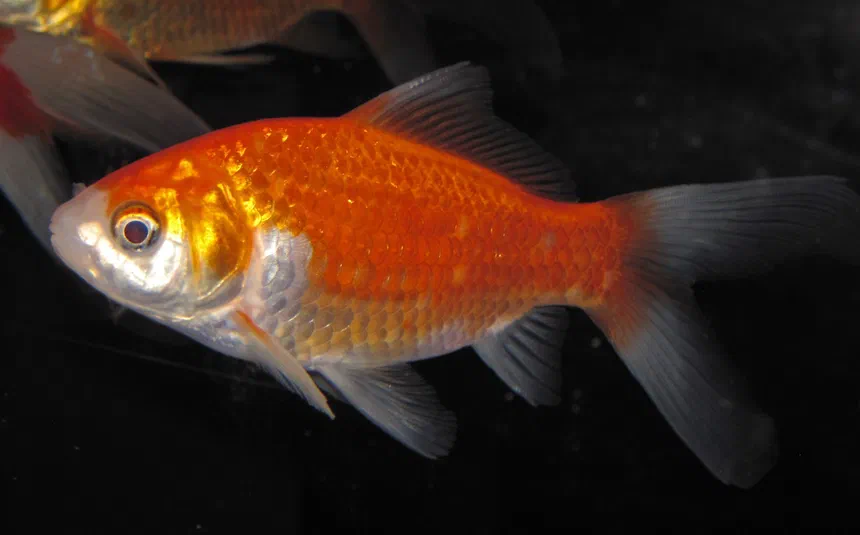
The goldfish (Carassius auratus) is a small freshwater fish in the carp family, Cyprinidae, and one of the most widely kept ornamental fish in the world. Domesticated in China more than a thousand years ago from a drab, wild-colored ancestor, it has since been bred into hundreds of shapes and colors. Despite its familiar presence in bowls and garden ponds, the goldfish is a hardy, adaptable animal with a rich biology.
Appearance and Identification
Wild-type goldfish have a streamlined, slightly compressed body with a single dorsal fin, forked tail, and small mouth lacking barbels, which helps distinguish them from true carp. Domestic goldfish come in a wide palette: bright orange is most familiar, but individuals may be gold, red, yellow, white, black, or calico. Selective breeding has produced dramatic fancy varieties such as the fantail, oranda, ryukin, black moor, and bubble eye, with features like doubled tails, egg-shaped bodies, hooded head growths, and protruding eyes. Common pet goldfish usually reach 4 to 8 inches (10 to 20 cm), but fish in ponds or the wild can grow considerably larger, occasionally exceeding a foot. Coloration often changes with age; many goldfish begin life dark and brighten as they mature.
Habitat and Range
The goldfish descends from wild carp native to slow-moving fresh waters of East Asia, including China and neighboring regions. In captivity they thrive in ponds, tanks, and aquaria. Through centuries of trade and release, feral and introduced populations now occur on every continent except Antarctica. They tolerate a broad range of temperatures and water conditions, surviving in cool ponds that nearly freeze and in warmer, low-oxygen waters where many fish cannot. This resilience makes released pet goldfish an invasive concern in many regions, where they can disturb sediments, cloud the water, and outcompete native species.
Diet
Goldfish are opportunistic omnivores. In natural or pond settings they feed on aquatic plants, algae, insect larvae, small crustaceans, worms, and organic detritus stirred from the bottom. They lack a true stomach, instead processing food along a long intestine, so they tend to graze more or less continuously when food is available. In captivity they accept commercial flakes and pellets along with vegetables, and readily learn to associate people with feeding.
Behavior
Goldfish are social and generally peaceful, often congregating and foraging together. They are surprisingly perceptive: studies show they can distinguish colors, recognize shapes, and learn simple tasks, and they retain memories for weeks or months rather than the few seconds of popular myth. Much of their day is spent rooting through substrate for food, which naturally clouds their water. They have no eyelids and do not sleep in the way mammals do, but they become inactive and rest quietly, often near the bottom, during dark hours.
Life Cycle and Reproduction
Goldfish are egg-layers that typically spawn in spring as water warms and daylight lengthens. Males pursue females and nudge them to release eggs, which are fertilized externally and scattered over aquatic plants or other surfaces, where their sticky coating anchors them. A single female may release hundreds to thousands of eggs. The parents provide no care and may even eat the eggs. Hatching occurs within a few days to about a week, depending on temperature, and the tiny fry are dark for camouflage, developing adult coloration over subsequent weeks and months. With good care, goldfish commonly live 10 to 15 years, and well-kept individuals have reached far greater ages.
Conservation Status
As a domesticated animal derived from wild carp, the goldfish itself is not assessed by the IUCN and is in no danger of extinction; it is abundant worldwide. Conservation concern instead runs the other way: released goldfish are a recognized invasive species in many countries, where feral populations can grow large and harm native aquatic ecosystems. Responsible owners are urged never to release unwanted fish into natural waters.
Frequently Asked Questions
Do goldfish really have a three-second memory? No. This is a myth. Goldfish can learn and remember tasks, colors, and feeding routines for weeks or months.
How big can a goldfish get? Pet goldfish are often 4 to 8 inches, but in ponds or the wild they can exceed a foot, especially fast-growing feral fish.
How long do goldfish live? With proper care they commonly live 10 to 15 years, and some well-kept individuals have lived much longer.