Fish Guide
Dorado
What Is a Dorado? The dorado (Coryphaena hippurus) is a fast-swimming, surface-dwelling ocean fish famous for its brilliant colors and acrobatic leaps. It is widely known by several names, including mahi-mahi and …
At a glance
What Is a Dorado?
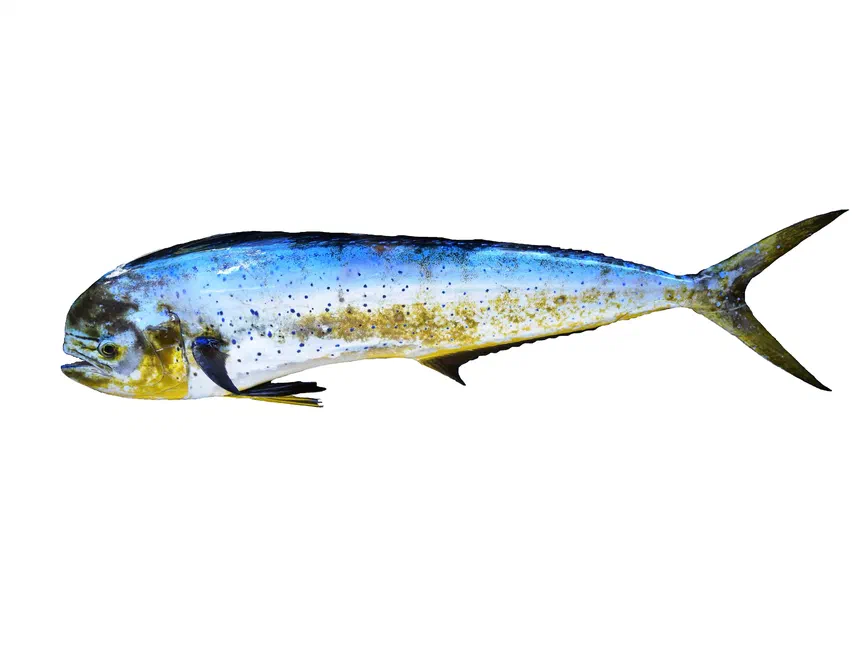
The dorado (Coryphaena hippurus) is a fast-swimming, surface-dwelling ocean fish famous for its brilliant colors and acrobatic leaps. It is widely known by several names, including mahi-mahi and dolphinfish, though it is a true bony fish and not related to marine mammals. Prized by anglers and diners alike, the dorado is one of the most striking predators of the open sea.
Appearance and Identification
The dorado has a long, laterally compressed body with a single dorsal fin that runs almost the full length of its back. Its living colors are dazzling: shimmering blue and green along the back, golden-yellow on the flanks, and scattered dark speckles, though these hues fade quickly to muted gray after the fish is removed from the water. Mature males, called bulls, develop a distinctive tall, blunt, almost vertical forehead, while females retain a more rounded, sloping head. Adults commonly reach 3 to 4.5 feet (1 to 1.4 meters) and weigh 15 to 30 pounds (7 to 14 kilograms), though exceptional individuals can top 60 pounds.
Habitat and Range
Dorados inhabit warm tropical and subtropical waters throughout the world’s oceans, including the Atlantic, Pacific, and Indian Oceans, as well as the Caribbean and Mediterranean Seas. They are pelagic fish that favor the upper layers of open water, usually within the top few dozen feet of the surface. Dorados are strongly attracted to floating objects such as drifting weed lines, logs, and buoys, which offer shade and concentrate the smaller prey species they hunt. They generally avoid colder, deeper waters and follow warm currents.
Diet
As active carnivores, dorados feed heavily during daylight hours near the surface. Flying fish are a favorite target, and the dorado’s speed allows it to pursue these prey as they glide above the waves. The diet also includes squid, mackerel, small crustaceans, and a wide variety of juvenile fish that gather around floating debris. Dorados are opportunistic and voracious, and their rapid growth reflects their high food intake.
Behavior
Dorados are among the fastest fish in the open ocean, capable of short bursts that let them run down prey and evade larger predators such as marlin, tuna, and sharks. They often travel in small schools when young, becoming more loosely associated as adults. When hooked, they are renowned for spectacular jumps and hard runs, which makes them a highly sought-after sport fish. Their strong attraction to surface structure means they are frequently found clustered beneath any floating cover.
Life Cycle and Reproduction
The dorado is defined by extremely fast growth and a short life. Individuals mature within their first few months and can spawn several times a year in warm waters, releasing large numbers of eggs that drift and hatch near the surface. This high reproductive output supports rapid population turnover. Most dorados live only about four to five years, with many reaching harvestable size in well under a year, an unusually quick life cycle among ocean predators.
Conservation Status
The dorado is listed as Least Concern by the IUCN. Its enormous reproductive capacity and swift growth make the species resilient to fishing pressure, and populations remain widespread and abundant. It supports important commercial and recreational fisheries around the world, and many of these fisheries are considered relatively sustainable when well managed. Nonetheless, monitoring continues because the species is heavily targeted and can be caught incidentally in other fisheries.
Frequently Asked Questions
Is a dorado the same as mahi-mahi? Yes. Dorado, mahi-mahi, and dolphinfish are all common names for the same species, Coryphaena hippurus. The names vary by region and market.
Is the dorado related to dolphins? No. Despite the nickname “dolphinfish,” the dorado is a true ray-finned fish with gills, not a marine mammal. The shared name likely reflects its habit of riding near the surface.
How fast do dorados grow? Very fast. They can reach several pounds within their first few months and often mature before their first birthday, one of the quickest growth rates among large ocean fish.