Fish Guide
Bull Shark
What Is a Bull Shark? The bull shark (Carcharhinus leucas) is a stout, powerfully built member of the requiem shark family, Carcharhinidae. It is best known for its unusual tolerance of fresh water, which allows it to …
At a glance
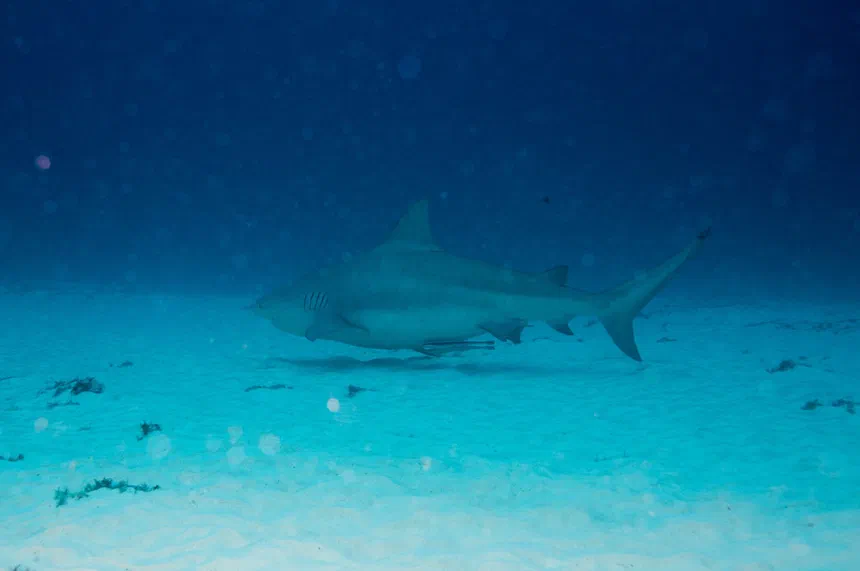
What Is a Bull Shark?
The bull shark (Carcharhinus leucas) is a stout, powerfully built member of the requiem shark family, Carcharhinidae. It is best known for its unusual tolerance of fresh water, which allows it to swim far up rivers and into lakes well beyond the reach of most other sharks.
Appearance and Identification
Bull sharks are named for their thickset, muscular build, short blunt snout, and generally aggressive-looking profile. The body is gray to gray-brown on top and pale white underneath, a countershading pattern that helps conceal the animal from both above and below. Adults typically measure between 7 and 11.5 feet (2.1 to 3.5 meters), with females noticeably larger than males, and heavy individuals can weigh several hundred pounds. The first dorsal fin is large and triangular, and the small eyes and broad head give the shark a distinctive stocky appearance compared with sleeker relatives.
Habitat and Range
This species occurs in warm coastal waters throughout the tropics and subtropics, including the western and eastern Atlantic, the Indo-Pacific, and adjacent seas. Bull sharks favor shallow, murky waters near coastlines, in bays, and around river mouths, usually staying at depths of less than about 100 feet (30 meters). Their remarkable ability to regulate the salt balance in their bodies lets them move between salt water and fresh water freely. They have been recorded far up the Amazon, Mississippi, Zambezi, and Ganges rivers, and in freshwater lakes such as Lake Nicaragua, sometimes hundreds of miles inland.
Diet
Bull sharks are opportunistic carnivores with a varied diet. They feed mainly on bony fishes and smaller sharks, but they also take stingrays, crustaceans, sea turtles, seabirds, and marine mammals when the opportunity arises. In turbid coastal and river waters they often hunt using short, powerful bursts, relying on their strong jaws and serrated teeth. Their willingness to eat almost anything of appropriate size contributes to their success across so many different environments.
Behavior
Generally solitary hunters, bull sharks patrol shallow waters where prey is abundant and visibility is low. They can be curious and bold, and because they frequent the same warm, shallow, near-shore areas that people use for swimming and fishing, they are considered one of the shark species most likely to encounter humans. Bites are nonetheless rare and are thought to result from investigative or defensive behavior rather than deliberate predation on people. Bull sharks tolerate a wide range of water temperatures and conditions, which supports their broad wandering movements.
Life Cycle and Reproduction
Bull sharks are viviparous, meaning the young develop inside the mother and are nourished through a placental connection before being born live. After a gestation period of roughly 10 to 11 months, females give birth to litters that commonly range from about 1 to 13 pups. Birth typically takes place in brackish estuaries and low-salinity river mouths, which serve as nursery areas offering shelter and abundant food while reducing the risk of predation by larger sharks. The young grow slowly and take several years to reach maturity, generally around 8 to 10 years of age.
Conservation Status
The IUCN lists the bull shark as Vulnerable. Its populations face pressure from targeted and incidental fishing for meat, fins, hides, and liver oil, and its habit of using shallow coastal and freshwater nurseries makes it especially exposed to habitat loss, pollution, and coastal development. Because these sharks grow slowly and produce relatively few young, populations recover slowly once depleted, making sustainable management important.
Frequently Asked Questions
Can bull sharks really live in fresh water? Yes. They can regulate the salt and water balance in their bodies well enough to survive in fresh water for extended periods, and they routinely travel far up large rivers.
Are bull sharks dangerous to people? They are among the species most often involved in encounters with humans because they share shallow, near-shore waters, but serious incidents remain uncommon and are not typical predatory behavior.
How big do bull sharks get? Most adults are around 7 to 11.5 feet long, with females larger than males, and heavy individuals can weigh several hundred pounds.
References
The conservation status and key facts in this profile are supported by these sources:
- Animal Diversity Web — Carcharhinus leucas (accessed 2026-07-29)
- GBIF — Carcharhinus leucas (accessed 2026-07-29)
Found an error, source problem, or image concern? Report this page.