Fish Guide
Betta
What Is a Betta? The betta, or Siamese fighting fish (Betta splendens), is a small freshwater fish native to Southeast Asia and one of the most popular aquarium species in the world. It is famous for the vivid coloring …
At a glance
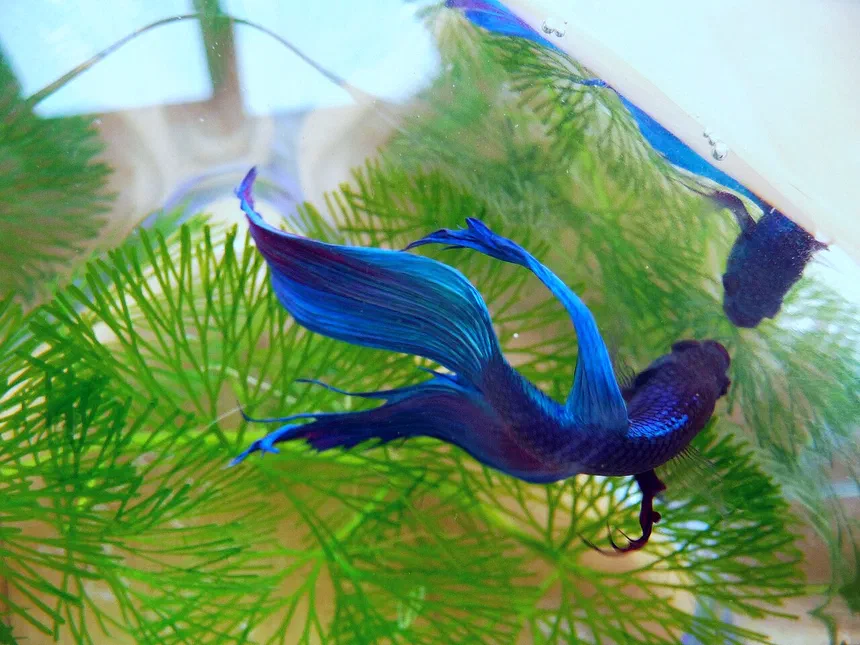
Image: Denise Chan — CC BY-SA 2.0 · source
What Is a Betta?
The betta, or Siamese fighting fish (Betta splendens), is a small freshwater fish native to Southeast Asia and one of the most popular aquarium species in the world. It is famous for the vivid coloring and flowing fins of ornamental males, as well as for the territorial aggression that gave the species its common name.
Appearance and Identification
Wild bettas are relatively modest in appearance, with short fins and a dull greenish-brown body that flushes with color when the fish is excited. Generations of selective breeding have produced the spectacular aquarium forms seen today, displaying nearly every color of the spectrum and a wide range of fin shapes such as veiltail, halfmoon, crowntail, and plakat. Males are typically larger, brighter, and more elaborately finned than females. Adults usually reach about 6 to 7 centimeters (2.5 to 3 inches) in body length, not counting the trailing fins. A distinctive feature is the labyrinth organ, an accessory breathing structure that allows bettas to gulp air directly from the surface.
Habitat and Range
Betta splendens is native to the central plains of Thailand and neighboring parts of the Mekong and Chao Phraya river basins, including areas of Cambodia, Laos, and Vietnam where it has also spread. In the wild it inhabits shallow, slow-moving or standing waters such as rice paddies, drainage ditches, floodplains, and marshes. These warm, oxygen-poor environments are often choked with vegetation, and the betta’s ability to breathe atmospheric air lets it survive where many other fish cannot. Introduced populations now exist in several regions outside the native range as a result of the aquarium trade.
Diet
Bettas are carnivores adapted to feeding near the water surface. In the wild their diet consists largely of insects and insect larvae, including mosquito larvae, along with small crustaceans, worms, and zooplankton. Their upturned mouths are well suited to snatching prey from the surface film. In captivity they readily accept prepared pellets and flakes formulated for carnivorous fish, supplemented with live or frozen foods such as bloodworms and brine shrimp.
Behavior
The species is best known for the intense territorial aggression of males, which flare their gills and fins in threat displays and will fight rival males, sometimes to serious injury. This behavior led to the fish being bred and staged in contests in Thailand for centuries. Because of this aggression, males are usually housed alone in aquariums. Despite their reputation, bettas are curious and can become responsive to their keepers. The labyrinth organ makes them frequent visitors to the surface, where they take gulps of air.
Life Cycle and Reproduction
Bettas are bubble-nest builders. When ready to breed, the male constructs a floating raft of mucus-coated air bubbles at the surface, often anchored among plants. During spawning the male wraps around the female in an embrace that releases and fertilizes the eggs, which he then gathers in his mouth and places into the nest. The male guards the nest aggressively, retrieving any eggs or newly hatched fry that fall and tending them until the young are free-swimming, typically within a few days. Females play no role in parental care after spawning. Bettas commonly live about two to four years, with well-kept aquarium fish sometimes reaching the upper end of that range.
Conservation Status
Although bettas are enormously abundant in captivity, wild populations of Betta splendens face pressures from habitat loss, agricultural development, pollution, and interbreeding with released domestic and hybrid fish. The IUCN has assessed the species as Vulnerable, reflecting the decline and fragmentation of its native wetland habitats. The vast farmed population sold in the pet trade is entirely separate from these threatened wild stocks.
Frequently Asked Questions
Why are they called fighting fish? Males are highly territorial and will attack rival males, a trait that historically made them popular in staged fighting contests in Thailand.
Do bettas really need to breathe air? Yes. Their labyrinth organ lets them take oxygen directly from the air at the surface, which is essential for survival in the warm, low-oxygen waters they inhabit.
Can two bettas live together? Two males should never share a tank because they will fight. Even males and females are usually kept apart except for controlled breeding.
References
The conservation status and key facts in this profile are supported by these sources:
- Animal Diversity Web — Betta splendens (accessed 2026-07-29)
- GBIF — Betta splendens Regan, 1910 (accessed 2026-07-29)
Found an error, source problem, or image concern? Report this page.