Library Section
Earwigs
What do earwigs look like There are several species of earwigs, with the European earwig (Forficula auricularia) being the most common in Canada. As the name suggest, it was first introduced from Europe and is now well …
At a glance
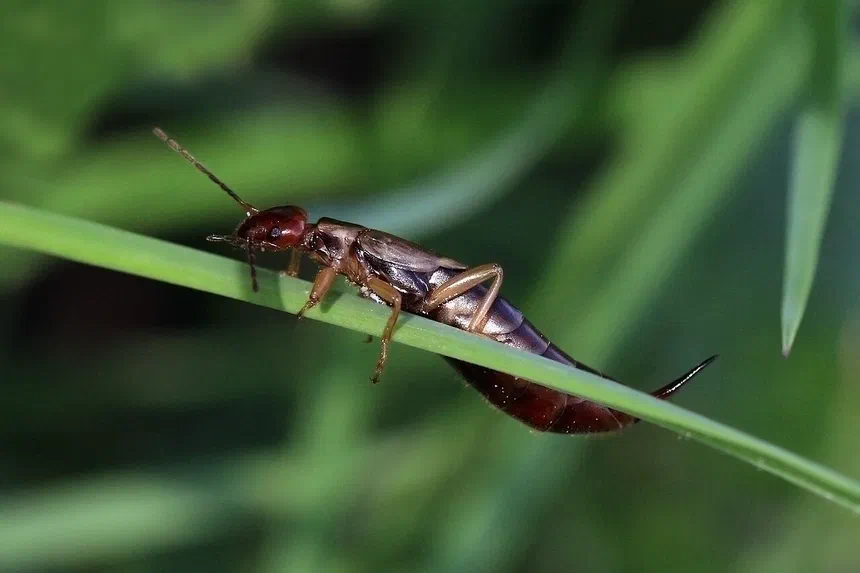
Image: Charles J. Sharp — CC BY-SA 4.0 · source
What do earwigs look like
There are several species of earwigs, with the European earwig (Forficula auricularia) being the most common in Canada. As the name suggest, it was first introduced from Europe and is now well established in North America. It is dark-red in colour with prominent pincer-like appendage (cerci) at the tip of its abdomen. It measures about 16 mm long, with pale yellow wings and legs. The antennae are long with 12 segments. In preparation for flying, earwigs have been observed to climb as high as possible before taking flight. However, they do not typically fly and prefer to run from one place to another.
Why do I have earwigs
The European earwig seeks out dark places rich in moisture, so often rest under tree bark or beneath stones. However they are also attracted to the narrow cracks in foundations, under floorboards, and in other tight spaces around the home. Damp and dark basement areas with multiple cracks in the foundation provide perfect hiding places for earwigs. Garbage and refuse may also attract earwigs, as will piles of leaves, vegetation, and mulched areas. When foraging at night, earwigs like to feed on dead or decaying vegetable matter, dead insects, spiders, aphids, caterpillar pupae, and other small invertebrates. They use their cerci to grab and hold prey, including, before bending back to move the food to their mouthparts.
How worried should I be about earwigs
It’s a common misperception that earwigs crawl into the ear canal of sleeping humans and bore into their brains. In reality, earwigs do not attack, however when defending themselves, they may give a short nip and discharge a foul-smelling yellow brown liquid. The earwig can be beneficial, since it aids the decomposition of detritus and feeds on destructive insects – but it can also feed on flowers, vegetables, ornamental trees, and shrubs. In large enough numbers, earwigs can eventually kill healthy plants. An infestation is not easily tackled, as earwigs release a pheromone in their feces to attract other earwigs to the spot. Even if you kill existing earwigs, more could be on the way. To be truly sure you’ve eradicated your earwig infestation, contact a professional pest control service.
How can I prevent earwigs invading
Remove any decaying vegetation around, Clear leaf piles, grass clippings, and compost, Fix leaky downspouts and reroute drains, Repair broken irrigation systems, Seal cracks and crevices in foundations, walls and around doors and windows. You can find more information on earwigs in our blog post about How to Get Rid of Earwigs.
Browse This Section
Every guide in Earwigs
Use these links to move quickly between closely related pages in the same section.
Are earwigs dangerous or poisonous to humans?
Because of their intimidating pincers, or forceps, protruding from the abdomen, earwigs might appear to be a dangerous …
Earwig Bite
Do earwigs bite people? What do their bites look like? Earwigs are one of the most misunderstood insects. Many fear that …
Earwig Larvae
What Are Earwig Larvae? As insects, earwig larvae hatch from eggs and are the multiple stages between egg and adult. …
Earwig Life Cycle
What Is the Life Cycle of the Earwig? There are over 20 species of earwigs in North America, so there are slight …
Earwig Pincers
What Are Earwig Pincers? Folklore says that the term “earwig” comes from the Anglicization of European terms tracing to …
Earwigs in House Plants
Since some earwigs prefer young plants, besides being a garden pest, the earwigs can become an indoor pest and feed on …
Flying Earwigs: Do Earwigs Fly or Have Wings?
There are over 1,500 species of earwigs documented, and most species of earwigs have wings. The name of the biological …
How Do I Keep Earwigs Out of My House?
Earwigs have a knack for making their way into our homes, but their pincers and preference for damp environments make …
How to Tell Earwigs and Silverfish Apart
Earwigs sometimes are compared to silverfish. They do have some similarities, including the preference for moisture and …
How to Tell Earwigs and Termites Apart
Biologists have created a system of scientific taxonomy to classify all living beings. This is explained in detail under …
What are Earwigs Attracted to in my Home?
Most domestic earwigs prefer moist soil areas with adequate cover and food source. Frequently, people will find earwigs …
What Are the Differences Between Earwigs and Cockroaches?
Sometimes when people encounter earwigs they believe that they are seeing some fast-moving strange cockroach. In fact, …
What are the Differences Between Earwigs and Spiders?
Spiders and earwigs may appear similar due to their size and habitats, but they have many differences from their biology …
What Do Earwig Eggs Look Like?
Earwigs are insects, meaning that they have six legs and three body segments. Most people consider insects just another …
What Do Earwigs Eat?
Due to the size of the forceps, it might appear that earwigs capture some large insects such as large cockroaches. The …