Centipede Repellents
Identification
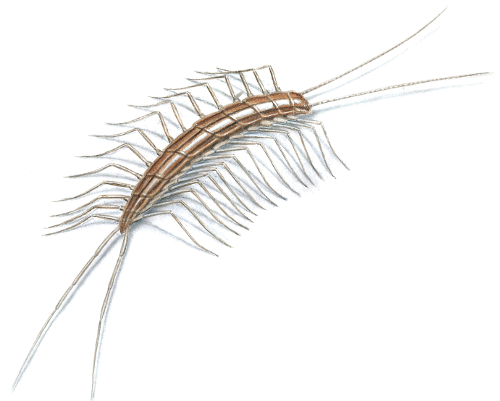
Dealing with House Centipedes
Centipedes live outdoors in mulch, under rock piles, and among leaves or brush. They sometimes travel into homes to find shelter and prey. While centipedes may feed on household insects and spiders, an infestation of these many-legged pests often drives homeowners to seek out centipede repellents.
Centipede Illustration
Manage Moisture
Preventing water buildup is a great form of natural centipede repellent. Areas beneath faucet pipes or around bathtubs are prone to dampness, so make sure to keep them dry. Use towels or fans to clear up carpet spills before they soak deep into floors.
Use Light
Simply turning on a light may work as a short-term centipede deterrent. Once exposed by bright lights, these pests will scurry back to safe, dark wall cracks or vents. While this won’t solve a centipede problem, it may expose the creatures’ hiding places or entry points. Seal these gaps in and around the home to reduce pest issues.
Dealing with Problems
Contrary to what some believe, sliced hedge apples are not a natural centipede repellent. Simple exclusion and prevention tactics often work better than home remedies. For example, declutter outdoor areas and cut tall grass, which can attract centipedes .
Many people use sticky traps to capture the pests. Although this is unlikely to get rid of a large infestation, it may help homeowners monitor the pests’ numbers and gathering spots. Common places to put glue traps include corners, along walls, and within wall voids or ceilings.