Birds Guide
Indian Peafowl
What Is a Indian Peafowl? The Indian peafowl (Pavo cristatus) is a large, ground-dwelling bird in the pheasant family, best known for the male’s spectacular fan of shimmering tail feathers. Native to the Indian …
At a glance
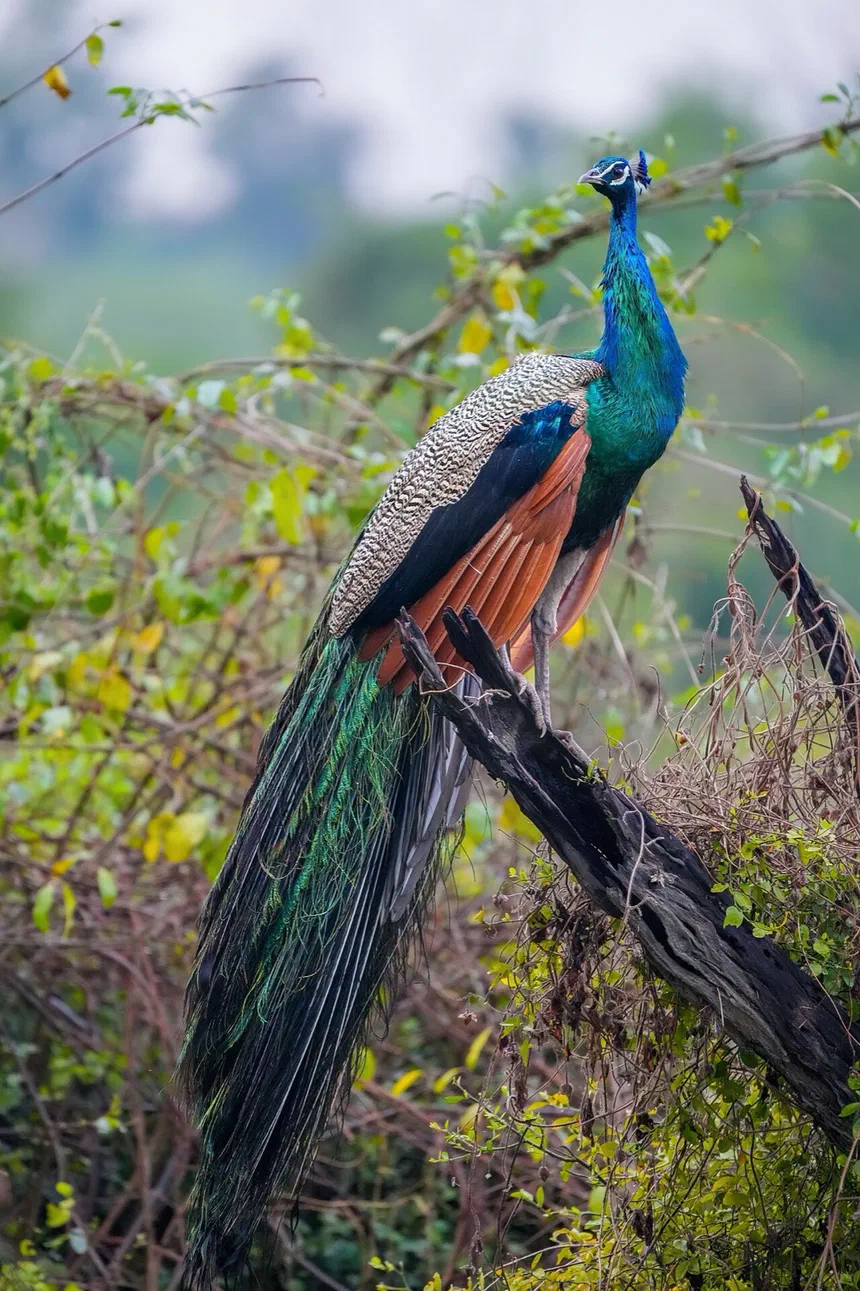
Image: Giles Laurent — CC BY-SA 4.0 · source
What Is a Indian Peafowl?
The Indian peafowl (Pavo cristatus) is a large, ground-dwelling bird in the pheasant family, best known for the male’s spectacular fan of shimmering tail feathers. Native to the Indian subcontinent, it is the national bird of India and one of the most widely recognized birds in the world. The male is called a peacock, the female a peahen, and the young are peachicks.
Appearance and Identification
Males are unmistakable, with a metallic blue head, neck, and breast, and a fan-shaped crest of thin feathers tipped with small tufts. Their most famous feature is the “train,” an elaborate upper tail covert made of long feathers decorated with iridescent eyespots, or ocelli. When fully raised in display, the train can span well over a meter. Females are considerably plainer, with mottled brown plumage, a whitish belly, and a shorter tail, which provides effective camouflage while nesting. Both sexes have strong legs suited to a life spent largely on the ground.
Habitat and Range
The Indian peafowl is native to India, Sri Lanka, Pakistan, Nepal, and Bangladesh. It favors a mix of open forest, scrubland, farmland, and the margins of human settlements, often thriving near villages and cultivated fields. Peafowl generally prefer areas with access to water and tall trees, which they use as nighttime roosts to stay safe from ground predators. The species has also been introduced to many other parts of the world, including parts of North America, Australia, and various islands, where feral populations sometimes persist in parks and estates.
Diet
Peafowl are opportunistic omnivores. Their diet includes seeds, grains, berries, flower petals, and other plant material, along with insects, worms, and small animals such as lizards, frogs, and even small snakes. Near farms they readily feed on cultivated crops and dropped grain. They typically forage by walking slowly across the ground, scratching and pecking, and are most active in the cooler hours of morning and late afternoon.
Behavior
Indian peafowl are social birds that often gather in loose groups. They are strong runners and prefer to flee danger on foot, though they can fly short distances, especially to reach elevated roosts. Peacocks are famous for their loud, far-carrying calls, which are frequently heard at dawn and dusk and during the breeding season. The male’s courtship display, in which he raises and shivers his train while facing a peahen, is among the most striking visual displays in the bird world.
Life Cycle and Reproduction
Breeding is tied largely to the rainy season across much of the species’ range. Males display to attract females, and a single male may mate with several peahens. The female alone builds a simple nest, usually a shallow scrape on the ground hidden in dense vegetation, and lays a clutch of roughly 3 to 6 eggs. She incubates the eggs for about 28 days. The chicks are precocial, able to walk and follow their mother soon after hatching, and they remain with her for several months while they grow. Young males take a few years to develop their full adult plumage and train.
Conservation Status
The Indian peafowl is listed as Least Concern by the IUCN, reflecting a large, stable, and widespread population. In India it holds legal protection and deep cultural significance, and it is generally tolerated or welcomed near human settlements. Localized threats include poaching for feathers, poisoning where the birds conflict with agriculture, and habitat loss, but none of these currently endanger the species as a whole.
Frequently Asked Questions
Is the peacock the male or female? The term peacock properly refers to the male. The female is a peahen, and both sexes together are called peafowl.
Why does the male have such a large tail? The train is used in courtship display. Females tend to prefer males with larger, more symmetrical trains marked with many eyespots, a classic example of sexual selection.
Can peafowl fly? Yes, though only short distances. They spend most of their time on the ground but fly up into trees to roost safely at night.