Birds Guide
Iceland Gull
What Is a Iceland Gull? The Iceland gull (Larus glaucoides) is a medium-to-large gull of the high North Atlantic, known for its pale, frosty plumage and unmarked “white” wingtips. Despite its name, it does not actually …
At a glance
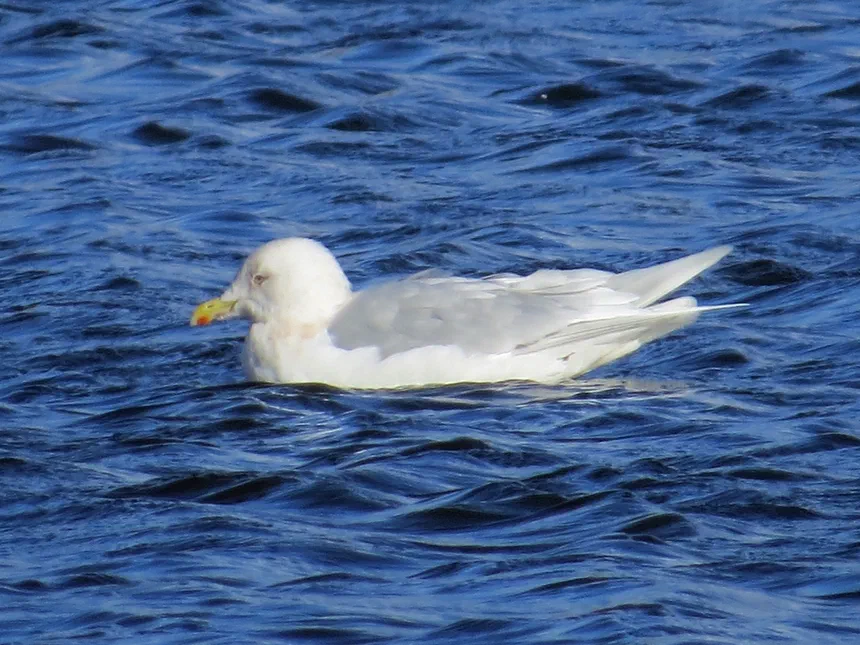
Image: MPF — CC BY-SA 3.0 · source
What Is a Iceland Gull?
The Iceland gull (Larus glaucoides) is a medium-to-large gull of the high North Atlantic, known for its pale, frosty plumage and unmarked “white” wingtips. Despite its name, it does not actually breed in Iceland but is a familiar winter visitor there and along other northern coasts. It belongs to the group of pale-winged gulls sometimes called “white-winged gulls,” alongside the closely related glaucous gull.
Appearance and Identification
Adult Iceland gulls are clean white on the head, underparts, and tail, with a soft pale gray mantle and back. The wingtips lack the black markings seen in most gulls, appearing white to pale gray, which is a key field mark. The bill is yellow with a red spot near the tip, the legs are pinkish, and the eye is typically pale. Birds take about four years to reach full adult plumage, passing through progressively paler brownish and mottled immature stages. The species is noticeably smaller and gentler-faced than the similar glaucous gull, with a rounder head and proportionally longer wings that extend well past the tail at rest.
Habitat and Range
This gull breeds in the Arctic, nesting on coastal cliffs and rocky ledges in Greenland and northeastern Canada. Outside the breeding season it disperses across the northern North Atlantic, wintering along the coasts of Iceland, the British Isles, Scandinavia, and the northeastern seaboard of North America. Wintering birds favor harbors, estuaries, fishing ports, and open coastal waters, where food is reliable. Small numbers wander farther south during colder winters, occasionally turning up well inland at large lakes and reservoirs.
Diet
The Iceland gull is an opportunistic feeder that leans carnivorous. Its natural diet centers on fish and marine invertebrates, and during the breeding season it also takes small prey, eggs, and other items from the tundra and cliffs. Like many gulls, it readily scavenges, following fishing boats for discards and visiting harbors and refuse sites for scraps. It feeds by surface-dipping, shallow plunging, and picking food from the water or shoreline.
Behavior
Outside of nesting, Iceland gulls are social birds often seen loafing and feeding among mixed flocks of other gulls. They are strong, buoyant fliers well suited to windy Arctic and coastal conditions. On the water they swim readily, and they gather in numbers around concentrated food sources such as fishing activity. Their calls are typical gull-like squeals and yelps, though they are generally less vocal in their wintering areas than on the breeding grounds.
Life Cycle and Reproduction
Breeding takes place in the short Arctic summer, with pairs nesting singly or in loose colonies on cliff ledges and rocky outcrops near the sea. The nest is a mound of vegetation, moss, and seaweed. A typical clutch is two to three eggs, incubated by both parents for roughly four weeks. The chicks are semi-precocial, remaining at or near the nest while both adults feed them, and they fledge after several weeks. Young birds then spend their first years in immature plumage before breeding, and individuals can live for well over a decade in the wild.
Conservation Status
The Iceland gull is currently listed as Least Concern by the IUCN, reflecting a wide range and a reasonably stable overall population. Because it breeds in remote Arctic regions, it faces relatively little direct human disturbance on the nesting grounds. Longer-term concerns include changes to Arctic and marine ecosystems driven by climate change, which could affect prey availability, as well as shifts in fisheries that many wintering birds rely on for scavenged food.
Frequently Asked Questions
Does the Iceland gull breed in Iceland? No. Despite its name, it breeds mainly in Greenland and Arctic Canada. Iceland is an important wintering and stopover area, which is how the bird came to be named.
How do you tell an Iceland gull from a glaucous gull? Iceland gulls are smaller and more delicately built, with a rounder head, smaller bill, and longer wings that project well beyond the tail. Glaucous gulls are bulkier with a heavier bill and a fiercer expression.
Why are its wingtips white instead of black? Iceland gulls lack the dark wing pigment found in most gulls, giving them pale or white wingtips. This “white-winged” look, shared with a few other northern gulls, is one of the easiest ways to pick them out in a flock.