Birds Guide
Herring Gull
What Is a Herring Gull? The herring gull (Larus argentatus) is a large, adaptable seabird and one of the most familiar gulls of the Northern Hemisphere. It is a member of the family Laridae, and its bold, opportunistic …
At a glance
What Is a Herring Gull?
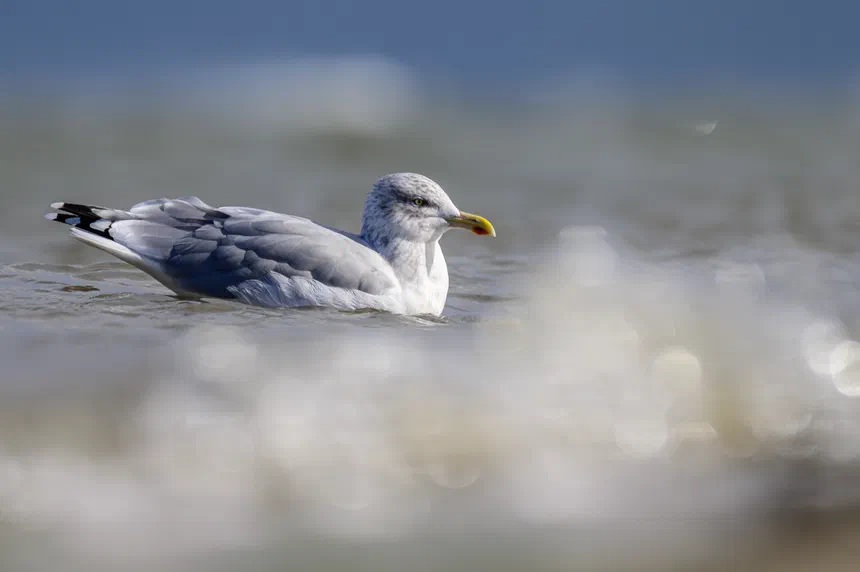
The herring gull (Larus argentatus) is a large, adaptable seabird and one of the most familiar gulls of the Northern Hemisphere. It is a member of the family Laridae, and its bold, opportunistic habits have made it a common sight along coastlines, harbors, and even inland cities. To many people, its loud, laughing call is the classic sound of the seaside.
Appearance and Identification
Adult herring gulls are stout, powerfully built birds with a white head and underparts, a pale gray back and upperwings, and black wingtips marked with white spots. The stout yellow bill carries a distinctive red spot near the tip of the lower mandible, and the eyes are pale yellow ringed with a thin orange or yellow rim. The legs are usually pink. Adults measure roughly 22 to 26 inches long with a wingspan of about 48 to 58 inches, and weigh somewhere between 1.5 and 3.3 pounds. Young herring gulls look very different from adults: they are mottled brown and gray, and pass through several plumages over about four years before gaining the clean gray-and-white look of a breeding adult. Sexes appear alike, though males average slightly larger.
Habitat and Range
Herring gulls breed across northern North America, much of Europe, and parts of northern Asia. They favor coastal environments such as rocky shores, sandy beaches, cliffs, estuaries, and offshore islands, but they are highly flexible and also thrive around lakes, rivers, reservoirs, farmland, landfills, and urban rooftops. In many towns and cities they have become year-round residents, nesting on buildings and scavenging in streets and parking lots. Northern populations often migrate south for winter, while birds in milder regions may stay put. This willingness to exploit human-altered landscapes is a major reason the species remains so widespread.
Diet
The herring gull is a true omnivore and opportunist. Its natural diet includes fish, crabs, mollusks, marine worms, sea urchins, insects, and the eggs and chicks of other birds. Along the coast it often drops hard-shelled prey such as clams onto rocks or pavement to crack them open. Herring gulls are also enthusiastic scavengers, feeding on carrion, discarded human food, and refuse at landfills and fishing docks. They readily follow fishing boats and plows to snatch exposed prey, and they will steal food from other birds. This dietary flexibility allows them to survive in a remarkable range of conditions.
Behavior
Herring gulls are social birds that gather in large, noisy flocks to feed, roost, and breed. They are intelligent and resourceful, quickly learning to take advantage of new food sources and human activity. Communication relies on a rich set of calls and postures, from the far-carrying “long call” to begging and alarm signals. Famous behavioral studies of this species helped reveal how chicks peck at the red spot on a parent’s bill to trigger feeding. Strong fliers, herring gulls soar easily on sea breezes and thermals and can travel long distances between roosting and feeding sites.
Life Cycle and Reproduction
Herring gulls typically begin breeding at around four to five years of age and often form long-lasting pair bonds. Breeding takes place in colonies, where pairs build a nest of grass, seaweed, and debris on the ground, on cliffs, or on rooftops. The female usually lays two or three olive, speckled eggs, which both parents incubate for roughly four weeks. Chicks hatch covered in downy feathers and are fed regurgitated food by both parents. They fledge in about five to seven weeks but may depend on the adults for some time afterward. In the wild, herring gulls commonly live 15 to 25 years, and some individuals reach considerably older ages.
Conservation Status
Globally, the herring gull is listed as Least Concern by the IUCN, reflecting its large population and vast range. Despite this, some regional populations, particularly in parts of western Europe, have declined and are of local conservation concern, likely due to changes in fisheries, food availability, and habitat. At the same time, the species’ success around people sometimes brings it into conflict with humans over noise, nesting, and food-snatching in urban areas.
Frequently Asked Questions
Why do herring gulls have a red spot on their bill? The red spot is a feeding cue. Chicks peck at it to prompt the parent to regurgitate food, a classic example of an instinctive begging behavior.
Are herring gulls endangered? No. They are classified as Least Concern globally, though certain regional populations have declined and are monitored locally.
What do herring gulls eat? Almost anything. Their diet ranges from fish, crabs, and shellfish to carrion, insects, eggs, and human food scraps from docks and landfills.