Birds Guide
Hen Harrier
What Is a Hen Harrier? The hen harrier (Circus cyaneus) is a slender, medium-sized bird of prey belonging to the harrier group of the hawk family. It is best known for hunting low over open country on long, upswept …
At a glance
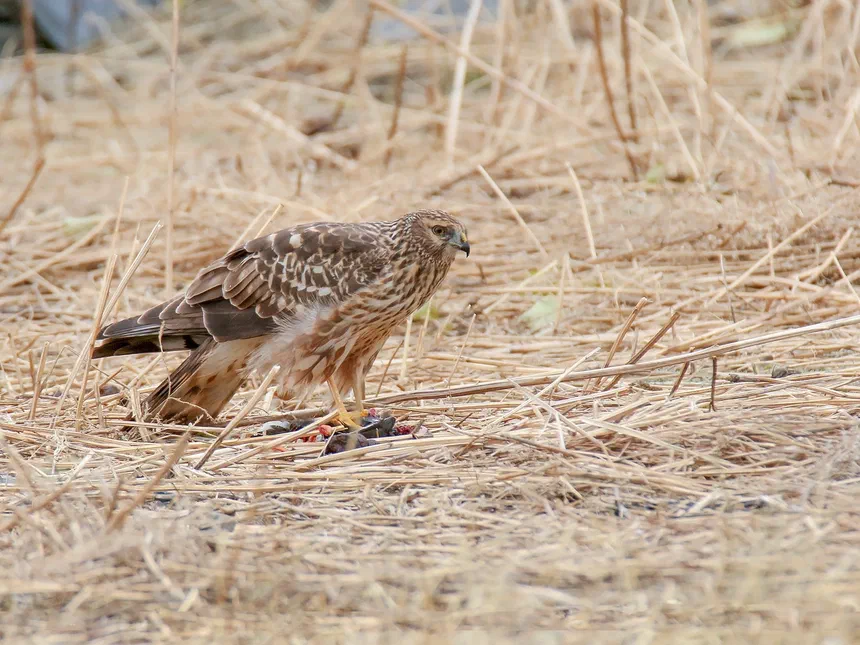
Image: Imran Shah — CC BY-SA 2.0 · source
What Is a Hen Harrier?
The hen harrier (Circus cyaneus) is a slender, medium-sized bird of prey belonging to the harrier group of the hawk family. It is best known for hunting low over open country on long, upswept wings, and for the striking difference in appearance between the ghostly gray males and the warm brown females.
Appearance and Identification
Hen harriers show pronounced sexual dimorphism. Adult males are pale ash-gray above with a white rump, black wingtips, and mostly white underparts, giving them a distinctive “gray ghost” look in flight. Females are considerably larger and are brown above with heavily streaked buff underparts, earning them the nickname “ringtail” for the bold bands across the tail. Juveniles resemble females but often appear warmer and more rufous below. Both sexes share the harrier’s owl-like facial disc, which helps funnel sound while hunting, along with a slim body, long wings, and a long tail. The white rump patch is a useful field mark on birds of either sex.
Habitat and Range
This species favors wide, open landscapes with low vegetation. Breeding birds are typically found on heather moorland, rough grassland, bogs, young conifer plantations, and reed-fringed marshes. In winter, hen harriers spread into lowland farmland, coastal marshes, river valleys, and estuaries where prey is easier to find. The hen harrier breeds across much of northern and central Europe and eastward through temperate Asia. Northern populations are migratory, moving south in autumn, while birds in milder regions may stay year-round. The closely related Northern Harrier of the Americas was once treated as the same species.
Diet
Hen harriers are carnivorous and hunt mainly small mammals and birds. Voles and other small rodents form a large part of the diet in many areas, supplemented by young rabbits, small songbirds, and the chicks of ground-nesting birds. They hunt by quartering slowly and low over the ground, using both keen eyesight and sharp hearing to detect prey hidden in grass, then dropping suddenly to seize it with their talons. This low, buoyant hunting flight is one of the species’ most recognizable behaviors.
Behavior
Outside the breeding season hen harriers are often solitary while hunting, but they are notably social at night, gathering at communal winter roosts on the ground in reedbeds or rough grassland, sometimes with other harriers. In spring, males perform a spectacular “sky-dancing” display, climbing and tumbling through a series of steep dives and rolls to attract females and advertise territory. Harriers are also known for aerial food passes, in which a male drops prey in mid-air for the female to catch below the nest.
Life Cycle and Reproduction
Hen harriers nest on the ground, building a simple platform of grasses and stems hidden among heather or dense vegetation. Females usually lay around three to six eggs and do most of the incubation, which lasts roughly a month, while the male provides food. Some males are polygynous, mating with more than one female in a season. Chicks hatch covered in down and remain in the nest area for several weeks before fledging. Young birds become independent later in the summer and may breed within a year or two.
Conservation Status
Globally the hen harrier is listed as Least Concern by the IUCN, reflecting its broad range and sizable overall population. Regionally, however, some populations have declined sharply. In parts of the British Isles the species is a focus of conservation concern, largely because of illegal persecution linked to game-bird shooting, along with habitat change and disturbance. Protecting moorland habitat, reducing persecution, and monitoring nests are key measures used to support vulnerable local populations.
Frequently Asked Questions
Why are male and female hen harriers such different colors? Males are pale gray while females are brown and streaked. This strong sexual dimorphism is typical of harriers and helps camouflage the ground-nesting female while males are more conspicuous during display.
What does a hen harrier eat? It is a carnivore that preys mainly on small mammals such as voles, along with small and young birds, hunting them low over open ground.
Is the hen harrier endangered? Globally it is considered Least Concern, but certain regional populations are threatened by illegal killing and habitat loss and receive special protection.