Birds Guide
Grey Heron
What Is a Grey Heron? The grey heron (Ardea cinerea) is a large, long-legged wading bird found across much of Europe, Asia, and Africa. A member of the heron family, it is a familiar sight along rivers, lakes, and …
At a glance
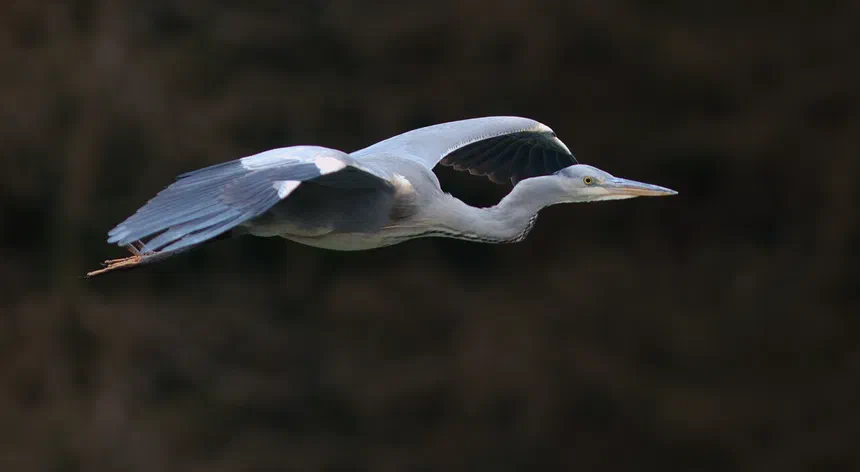
Image: Luc Viatour — CC BY-SA 3.0 · source
What Is a Grey Heron?
The grey heron (Ardea cinerea) is a large, long-legged wading bird found across much of Europe, Asia, and Africa. A member of the heron family, it is a familiar sight along rivers, lakes, and coastlines, where it stands patiently in the shallows waiting to strike at passing prey.
Appearance and Identification
This is a tall, slender bird, standing roughly a meter high with a wingspan that can approach two meters. The plumage is predominantly soft grey on the back and wings, with a paler, whitish head and neck. A distinctive black stripe runs above the eye and extends into a slender plume at the back of the crown, while a line of dark streaks marks the front of the neck. The bill is long, dagger-shaped, and yellowish, often flushing brighter orange in the breeding season. In flight, the grey heron folds its neck into a characteristic S-shape and trails its long legs behind, beating its broad, bowed wings slowly. Males and females look alike, though juveniles appear duller and greyer, lacking the crisp black head markings of adults.
Habitat and Range
Grey herons occupy a wide variety of wetland habitats, including the margins of freshwater rivers, lakes, ponds, and marshes, as well as estuaries, tidal flats, and rocky coastlines. They are highly adaptable and readily use human-modified landscapes such as reservoirs, canals, flooded fields, and garden ponds. The species ranges across most of Europe, much of temperate and tropical Asia, and parts of Africa. Northern populations may migrate south for the winter, while birds in milder regions are largely resident year-round.
Diet
The grey heron is a carnivore and an opportunistic predator. Fish typically form the core of its diet, but it also takes amphibians, aquatic insects, crustaceans, small mammals such as voles and rats, reptiles, and occasionally the chicks or eggs of other birds. It hunts by standing motionless or wading slowly through shallow water, then seizing or spearing prey with a rapid thrust of its bill. Larger catches are usually swallowed whole, sometimes after being manipulated headfirst.
Behavior
Often solitary when feeding, the grey heron defends a favored fishing spot and can stand still for long stretches while watching the water. It is most active around dawn and dusk but may forage at any time of day. Although it hunts alone, the species is colonial when breeding, gathering in treetop nesting groups known as heronries. Grey herons are generally wary of people, taking flight with a harsh, croaking “fraank” call when disturbed. Their slow, deliberate wingbeats make them easy to recognize even at a distance.
Life Cycle and Reproduction
Breeding usually begins in late winter or early spring. Grey herons nest in colonies, most often building large stick platforms high in tall trees, though reedbeds, cliffs, and bushes are sometimes used. The female typically lays around three to five pale blue-green eggs, which both parents incubate for roughly 25 to 26 days. Both adults feed the chicks by regurgitation. The young grow quickly and generally fledge at around seven to eight weeks of age, though they may return to the nest to be fed for a time afterward. Many young birds do not survive their first winter, but those that do can live for several years, and some individuals reach well beyond a decade.
Conservation Status
The grey heron is listed as Least Concern by the IUCN, reflecting its large range and stable or increasing populations across much of that area. Its adaptability to a broad range of wetlands, including artificial water bodies, has helped it thrive. Localized threats include wetland drainage, water pollution, and severe winters that can freeze feeding areas and cause die-offs, but none of these currently endanger the species as a whole.
Frequently Asked Questions
Is the grey heron the same as the North American great blue heron? No. They are closely related and look similar, but the great blue heron (Ardea herodias) is a separate, larger species of the Americas. The grey heron replaces it across Europe, Asia, and Africa.
Why does a heron stand so still? Standing motionless is a hunting strategy. By staying still, the heron avoids alarming fish and other prey, then strikes suddenly when something moves within reach.
Do grey herons only eat fish? No. While fish are a major food, grey herons are opportunistic and also eat amphibians, insects, crustaceans, reptiles, and small mammals such as voles.