Birds Guide
Green Heron
What Is a Green Heron? The green heron (Butorides virescens) is a small, stocky wading bird of the heron family, Ardeidae, native to the Americas. Compact and short-legged compared with its larger cousins, it is best …
At a glance
What Is a Green Heron?
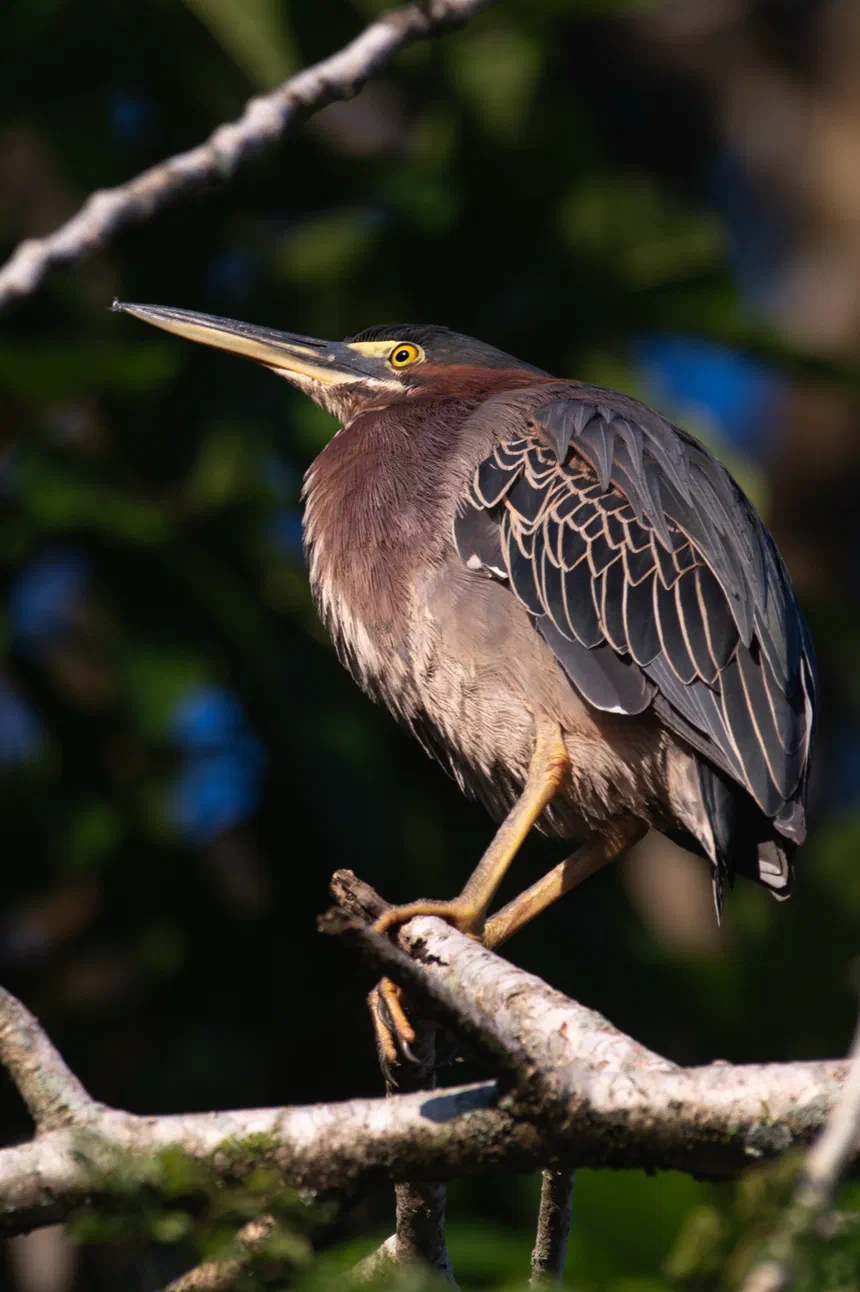
The green heron (Butorides virescens) is a small, stocky wading bird of the heron family, Ardeidae, native to the Americas. Compact and short-legged compared with its larger cousins, it is best known for its secretive habits along the edges of quiet waters and for its remarkable use of tools while hunting. Despite its name, its plumage is often more slate-blue and chestnut than truly green.
Appearance and Identification
The green heron is a compact bird, roughly the size of a crow, measuring about 16 to 18 inches long with a wingspan near 25 inches. Adults have a glossy greenish-black cap that can be raised into a short shaggy crest, a rich chestnut-colored neck and breast, and a dark, iridescent green-gray back. The belly is grayish, the legs are yellow to orange (brightening in breeding males), and the bill is long, straight, and dagger-shaped. When alarmed, a green heron often stretches its neck upward, revealing a streaked throat, and flicks its short tail. Juveniles are browner and more heavily streaked, lacking the crisp adult coloring. In flight the bird appears dark and rounded, usually flying low with steady wingbeats.
Habitat and Range
This heron favors small, sheltered wetlands rather than the open marshes preferred by larger herons. Typical habitats include the wooded margins of ponds, slow streams, swamps, mangroves, and lake shores, where overhanging vegetation provides cover and perches. It breeds across much of the eastern and western United States, southern Canada, Mexico, and Central America, extending into parts of northern South America and the Caribbean. Northern breeding populations are migratory, moving south to warmer coastal and tropical areas for the winter, while birds in milder southern regions may remain year-round.
Diet
The green heron is a carnivore and an ambush predator. Small fish form the core of its diet, but it also takes aquatic insects, crayfish, amphibians such as frogs and tadpoles, snails, worms, and occasionally small reptiles or rodents. It typically hunts by standing motionless at the water’s edge or crouching low on a perch, then striking swiftly with its bill. Famously, the green heron is one of the few birds known to use bait: it may drop feathers, insects, twigs, or bread crumbs onto the water’s surface to lure curious fish within striking range, a rare example of tool use in birds.
Behavior
Green herons are usually solitary and territorial, especially when feeding, and they are more active around dawn and dusk. They are wary and often overlooked, freezing or slinking into cover when disturbed and giving a sharp, explosive “skeow” call as they flush. Their patient, hunched hunting posture and slow, deliberate movements help them approach prey undetected. Unlike many herons that nest in large colonies, green herons often nest as isolated pairs, though loose groupings can occur where habitat is suitable.
Life Cycle and Reproduction
Breeding pairs form each season, with males performing display flights and calls to attract mates. The nest is a loose platform of sticks, usually built in a shrub or tree near or over water. The female typically lays three to five pale greenish-blue eggs, and both parents share incubation, which lasts roughly three weeks. The hatchlings are altricial, relying on both adults for food, and they grow quickly, clambering about nearby branches before they can fly. Young herons generally fledge within a few weeks of hatching. Wild green herons commonly live around five to eight years, though many do not survive their first year.
Conservation Status
The green heron is listed as Least Concern by the IUCN, reflecting a broad range and a large overall population. Nonetheless, like many wetland birds, it depends on healthy aquatic habitats, and local declines can occur where wetlands are drained, polluted, or developed. Protecting riparian vegetation and small wetlands benefits this species along with the many other animals that share those environments.
Frequently Asked Questions
Are green herons actually green? Only partly. Their backs and caps have a dark greenish iridescence, but much of the plumage appears blue-gray and chestnut, so the “green” can be hard to see except in good light.
Do green herons really use tools? Yes. They are among a small number of birds documented dropping bait such as insects, feathers, or twigs onto the water to attract fish, then striking when the prey comes close.
Where are green herons usually found? They favor small, sheltered wetlands with cover, such as wooded pond edges, streams, swamps, and marshes across North and Central America.