Birds Guide
European Robin
What Is a European Robin? The European robin (Erithacus rubecula) is a small, plump songbird best known for the bright orange-red patch that covers its face and chest. A familiar sight across gardens and woodlands, it is …
At a glance
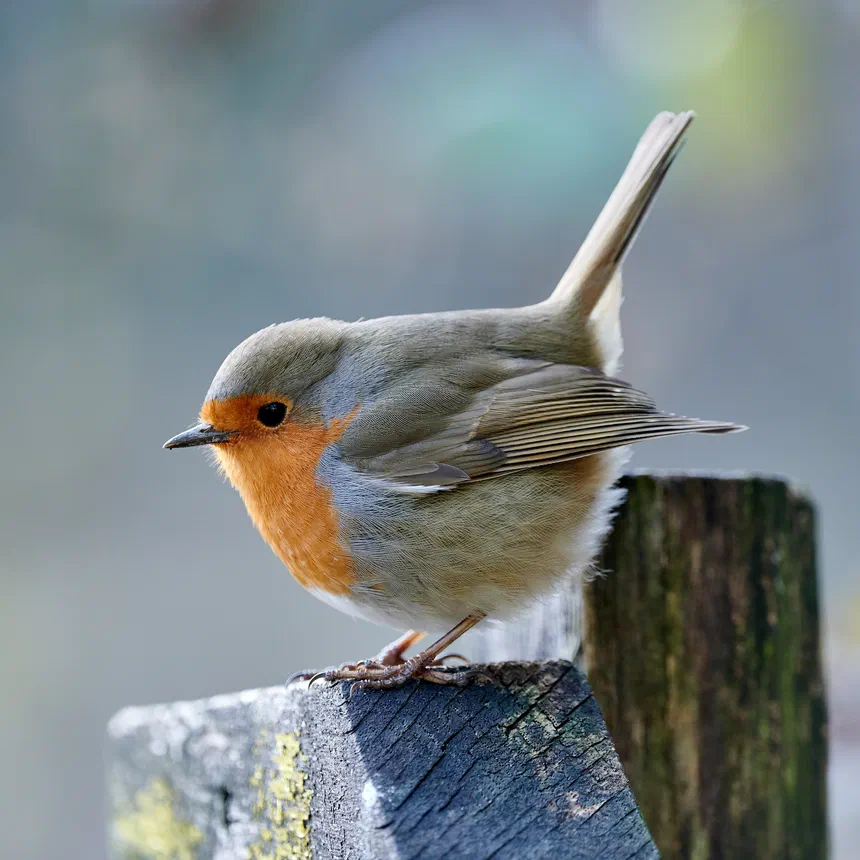
Image: C-M — CC BY-SA 4.0 · source
What Is a European Robin?
The European robin (Erithacus rubecula) is a small, plump songbird best known for the bright orange-red patch that covers its face and chest. A familiar sight across gardens and woodlands, it is beloved in Britain, where it is often associated with winter and holiday imagery. Despite its name, it is not closely related to the American robin, which is a thrush.
Appearance and Identification
The European robin is a rounded bird with a relatively large head, thin legs, and a habit of holding its body upright. Adults display a warm orange-red wash across the forehead, face, throat, and breast, bordered by a soft blue-gray band along the sides of the neck and upper breast. The back and wings are olive-brown, and the belly is whitish. Males and females look nearly identical, making them difficult to tell apart by sight. Juveniles lack the red coloring entirely and are instead heavily mottled and spotted in brown and buff, which helps camouflage them before they molt into adult plumage.
Habitat and Range
This species is widespread across Europe, extending into North Africa and parts of western Asia. It favors woodland edges, hedgerows, scrub, parks, and cultivated gardens, wherever there is a mix of cover and open ground for foraging. In much of western and southern Europe, robins are year-round residents. Populations breeding in colder northern and eastern regions are more migratory, moving south and west to escape harsh winters. In Britain, robins are famously tame and readily approach people, while in some other parts of their range they tend to be shyer and more retiring.
Diet
The European robin is an opportunistic omnivore. During the warmer months, its diet is dominated by invertebrates, including beetles, caterpillars, flies, spiders, and earthworms. It commonly follows digging animals — and gardeners turning soil — to snatch exposed grubs and worms. In autumn and winter, when insects are scarce, robins shift toward seeds, fruits, and berries, and they readily visit feeders for suet, mealworms, and crumbs. Robins typically forage close to the ground, dropping onto prey from a low perch.
Behavior
Robins are strongly territorial for much of the year, and both males and females may hold and defend feeding territories through the winter, an unusual trait among European songbirds. They advertise their territory with a wistful, warbling song delivered from a prominent perch, and they will sing even in winter and at night, sometimes drawn to artificial lighting. Territorial disputes can be intense, and aggressive encounters between rival robins occasionally turn fatal. Their large, dark eyes are well suited to foraging in dim light, and robins are often among the first birds to sing at dawn and the last to fall silent at dusk.
Life Cycle and Reproduction
The breeding season generally runs from spring into summer. The female builds a cup-shaped nest of moss, leaves, and grass, often tucked into a sheltered nook such as a bank, dense vegetation, a wall cavity, or even discarded items like kettles and boots. She typically lays a clutch of around four to six eggs and incubates them for roughly two weeks. Both parents feed the nestlings, which fledge about two weeks after hatching. A pair may raise two or more broods in a single season if conditions allow. Mortality is high in the first year, and although the average lifespan is only a year or two, individuals that survive their first winter can live considerably longer.
Conservation Status
The European robin is classified as Least Concern by the IUCN, reflecting its large, stable, and widespread population. It adapts well to human-modified landscapes and benefits from garden feeding, especially in winter. Localized declines can occur due to severe winters or habitat loss, but overall the species faces no significant threat and remains one of the most common and recognizable birds across its range.
Frequently Asked Questions
Is the European robin the same as the American robin? No. They share a name and a reddish breast but belong to different families. The European robin is an Old World flycatcher relative, while the American robin is a true thrush and is much larger.
Why are robins so tame in gardens? In Britain especially, robins have learned to associate people and digging with exposed food such as worms. This behavior likely developed from following large animals that turned over soil, and it makes them appear unusually bold and friendly.
Do male and female robins look different? Not really. The sexes are almost identical in plumage, so they cannot be reliably told apart by appearance alone. Young birds, however, are spotted brown and lack the orange breast until their first molt.