Birds Guide
Dark-Eyed Junco
What Is a Dark-Eyed Junco? The dark-eyed junco (Junco hyemalis) is a small, ground-loving sparrow native to North America. Familiar at winter feeders across much of the continent, it is one of the most abundant and …
At a glance
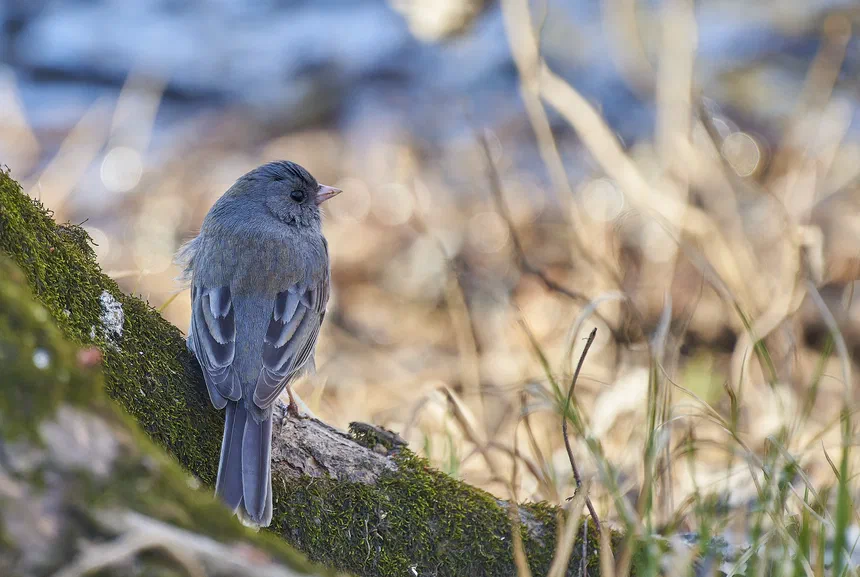
Image: Paul Danese — CC BY-SA 2.0 · source
What Is a Dark-Eyed Junco?
The dark-eyed junco (Junco hyemalis) is a small, ground-loving sparrow native to North America. Familiar at winter feeders across much of the continent, it is one of the most abundant and widely distributed songbirds in the region. Birders sometimes call it the “snowbird” because flocks appear in many areas just as colder weather sets in.
Appearance and Identification
Dark-eyed juncos are compact sparrows with rounded heads, short pinkish bills, and a distinctive pale belly that contrasts sharply with darker upperparts. When they flush, they flash bright white outer tail feathers, one of the easiest ways to identify them in flight. Plumage varies markedly across the species’ range: the widespread “Slate-colored” form is largely gray above with a clean white belly, while western “Oregon” birds show a dark hood, rusty back, and buff flanks. Other regional forms include “Pink-sided,” “Gray-headed,” and “White-winged” types. Males tend to be darker and crisper in coloration than the browner, more muted females and young birds.
Habitat and Range
This species breeds across a vast area, from the boreal forests of Alaska and Canada south through the mountainous and forested regions of the western and northeastern United States. Preferred breeding habitat includes coniferous and mixed woodlands, forest edges, and clearings. In winter, many northern populations migrate southward, spreading into open woodlands, fields, parks, roadsides, and suburban yards throughout most of the United States and into northern Mexico. Some populations at lower elevations or milder climates remain year-round residents.
Diet
The dark-eyed junco is an omnivore whose diet shifts with the seasons. For most of the year, seeds of grasses, weeds, and other plants make up the bulk of its food, and it readily visits backyard feeders for millet and cracked seed. During the breeding season, insects and other small invertebrates such as caterpillars, beetles, ants, and spiders become an important protein source, especially for feeding growing nestlings. Juncos typically forage on the ground, hopping about and scratching through leaf litter and snow.
Behavior
Juncos are active, sociable birds that often gather in loose flocks outside the breeding season. Within these winter flocks they maintain a clear pecking order, with dominant individuals claiming the best foraging spots. They feed mostly on the ground, using a characteristic double-scratch hop to uncover seeds. Their calls include sharp smacking notes and high twitters, while the breeding song is a simple, even, musical trill delivered from an exposed perch. Though generally tame around feeders, juncos are quick to flush into nearby cover when startled.
Life Cycle and Reproduction
During the breeding season, males establish and defend territories through song. Females build a cup-shaped nest of grasses, moss, and rootlets, usually placed on or near the ground, tucked beneath vegetation, roots, or a sheltered bank. A typical clutch contains three to five eggs, which the female incubates for roughly 11 to 13 days. Both parents feed the nestlings, which fledge about 9 to 13 days after hatching. Pairs often raise two broods in a single season where conditions allow. In the wild, many juncos live only a few years, though some individuals have reached ages of ten years or more.
Conservation Status
The dark-eyed junco is listed as Least Concern by the IUCN and remains one of North America’s most numerous birds, with a population estimated in the hundreds of millions. Its broad range, adaptability, and comfort with human-altered landscapes help keep numbers healthy. As with many songbirds, however, it faces pressures from habitat loss, window collisions, and outdoor cats, and long-term monitoring helps track any gradual declines.
Frequently Asked Questions
Why are dark-eyed juncos called “snowbirds”? In much of the United States they appear at feeders and in yards mainly during fall and winter, arriving alongside colder weather and departing as spring returns, which earned them the nickname.
Do all dark-eyed juncos look the same? No. The species includes several regional color forms that differ noticeably in hood, back, and flank coloring, but all share the pale bill, dark eye, and flashing white outer tail feathers.
What do juncos eat at backyard feeders? They favor small seeds such as millet and cracked seed, and they usually prefer to feed on the ground or on low platform feeders rather than hanging feeders.