Birds Guide
Brown Pelican
What Is a Brown Pelican? The brown pelican (Pelecanus occidentalis) is a large coastal seabird recognized for its heavy body, long bill, and expandable throat pouch. It is one of the smaller pelican species and the only …
At a glance
What Is a Brown Pelican?
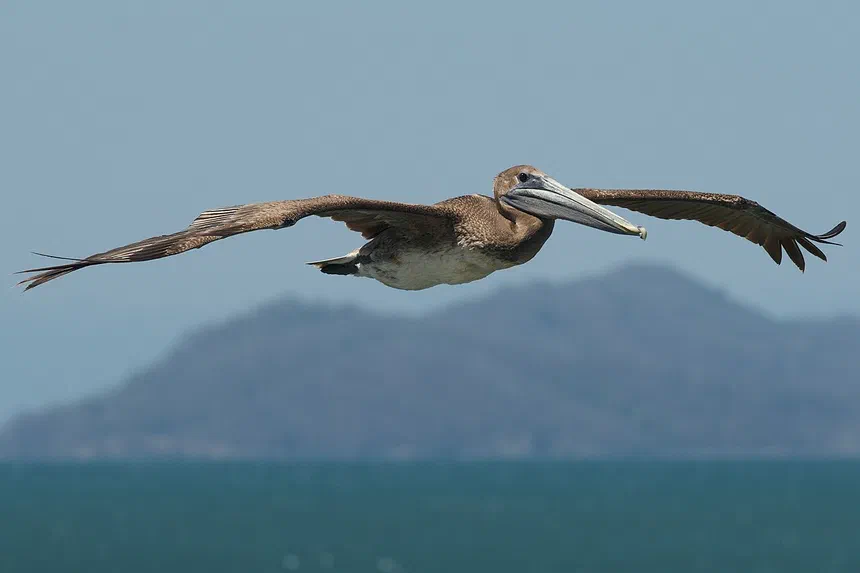
The brown pelican (Pelecanus occidentalis) is a large coastal seabird recognized for its heavy body, long bill, and expandable throat pouch. It is one of the smaller pelican species and the only one that regularly plunge-dives from the air to catch fish. Once devastated by pesticide contamination, it has become a widely celebrated conservation success story.
Appearance and Identification
The brown pelican is a bulky bird with a silver-gray to brown body, long broad wings, and a very large bill tipped with a hook. Adults show a pale yellowish or white head, and during the breeding season the back and sides of the neck turn a rich chestnut brown. The throat pouch, which hangs beneath the lower bill, can stretch dramatically to scoop up water and fish. Juveniles are generally duller, with brownish heads and pale underparts. In flight the species is unmistakable, alternating slow wingbeats with long glides, often skimming just above the water surface.
Habitat and Range
This pelican is a bird of warm coastal environments. It favors shallow marine waters, estuaries, bays, mangroves, sandbars, and rocky or sandy shorelines, and it rarely ventures far out to sea or inland. Its range stretches along the coasts of the Americas, from the southern and coastal United States southward through Central America, the Caribbean, and into northern South America, with populations on both the Atlantic and Pacific sides. Some northern birds move south for the colder months, while many populations remain in their coastal areas year-round.
Diet
The brown pelican is a specialized fish eater, feeding largely on small schooling species such as menhaden, anchovies, mullet, and sardines. It is famous for its dramatic plunge-diving technique: spotting fish from the air, it folds its wings and drops steeply into the water, using its pouch like a net to trap prey along with several gallons of seawater. After surfacing, it tilts its bill down to drain the water before swallowing the catch. Birds sometimes gather in loose feeding flocks where fish are abundant, and they readily scavenge scraps around fishing docks and boats.
Behavior
Brown pelicans are social birds that roost, travel, and nest in groups. They are strong, efficient fliers and often move in orderly lines or V-formations low over the waves, taking advantage of air currents near the water. On land they can appear clumsy, but in the air and water they are graceful and precise. Gulls sometimes try to steal fish directly from a pelican’s pouch, occasionally perching on the bird’s head as it drains water. Outside of feeding, much of the day is spent resting on pilings, buoys, jetties, and sandbars.
Life Cycle and Reproduction
Breeding takes place in colonies, often on isolated islands or in mangroves that offer protection from predators. Pairs build nests on the ground or in low trees and shrubs, and the female typically lays two to three eggs. Both parents share incubation, which lasts roughly a month, and they feed the chicks regurgitated fish. Young pelicans grow quickly and generally fledge within a few months, though they may remain dependent on adults for a while afterward. Brown pelicans usually reach breeding age at around three to five years old.
Conservation Status
The brown pelican is currently listed as Least Concern by the IUCN. In the twentieth century, however, the species suffered steep declines because of the pesticide DDT, which thinned eggshells and caused widespread nesting failure. After DDT was banned across much of its range, populations recovered strongly, and the bird was eventually removed from the U.S. endangered species list. Ongoing threats include oil spills, coastal habitat loss, entanglement in fishing gear, and disturbance at nesting colonies.
Frequently Asked Questions
How does a brown pelican catch its food? It plunge-dives headfirst from the air, opening its throat pouch underwater to scoop up fish and water, then drains the water before swallowing.
Why was the brown pelican once endangered? The pesticide DDT accumulated in the birds and thinned their eggshells, causing nests to fail. Populations rebounded after DDT was banned.
How big is a brown pelican’s wingspan? An adult’s wingspan is typically around 6.5 to 7.5 feet, making it a large and conspicuous coastal bird.
References
The conservation status and key facts in this profile are supported by these sources:
- Animal Diversity Web — Pelecanus occidentalis (brown pelican) (accessed 2026-07-29)
- GBIF — Pelecanus occidentalis Linnaeus, 1766 (accessed 2026-07-29)
Found an error, source problem, or image concern? Report this page.