Birds Guide
Blue Jay
What Is a Blue Jay? The blue jay (Cyanocitta cristata) is a bold, crested songbird in the crow and jay family, Corvidae. Native to eastern and central North America, it is one of the continent’s most familiar and vocal …
At a glance
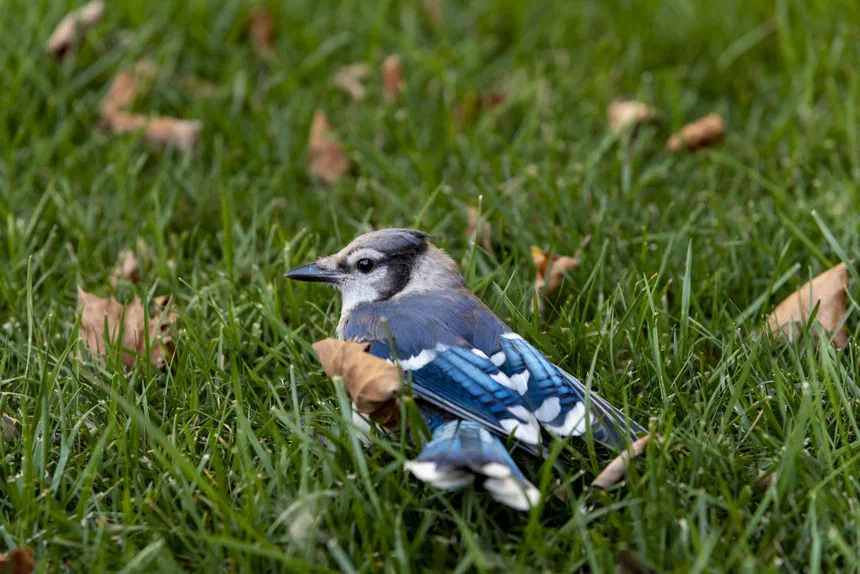
Image: Sixflashphoto — CC BY-SA 4.0 · source
What Is a Blue Jay?
The blue jay (Cyanocitta cristata) is a bold, crested songbird in the crow and jay family, Corvidae. Native to eastern and central North America, it is one of the continent’s most familiar and vocal backyard birds, known for its striking blue plumage and inquisitive intelligence.
Appearance and Identification
Blue jays are medium-sized birds, typically 9 to 12 inches (22 to 30 cm) long, with a wingspan of roughly 13 to 17 inches. Most adults weigh between 2.5 and 3.5 ounces (about 70 to 100 grams). The upperparts range from lavender-blue to bright azure, while the face, throat, and underside are pale gray to white. A distinctive black “necklace” of feathers crosses the throat and wraps up around the head, and a prominent crest of feathers on the crown can be raised or lowered to signal mood. The wings and tail show bold black barring and white patches. Notably, the blue color is not produced by pigment but by the microscopic structure of the feathers, which scatters light. Males and females look nearly identical.
Habitat and Range
The blue jay occupies a broad range across eastern and central North America, from southern Canada down through the eastern and central United States, with the range gradually expanding westward. It favors deciduous and mixed woodlands, especially areas with oak and beech trees that provide a reliable supply of acorns and nuts. Blue jays adapt readily to human-altered landscapes and are common in parks, gardens, and suburban neighborhoods, where feeders and ornamental trees supply food.
Diet
Blue jays are omnivores with a varied, opportunistic diet. Acorns are a staple, and the birds play an important ecological role by caching thousands of nuts and seeds each autumn, many of which are never retrieved and go on to germinate, helping to spread oak and beech forests. They also eat other nuts, berries, grains, and cultivated seeds, as well as insects, spiders, and small invertebrates. On occasion they take eggs or nestlings of other birds, though this behavior is less common than sometimes believed.
Behavior
Highly intelligent and social, blue jays live in loose family groups and communicate through a wide vocabulary of calls. They are well known for mimicry, often imitating the screams of hawks, which may serve to warn other jays or to startle competitors away from food. Blue jays are assertive at feeders and will mob predators such as owls, hawks, and cats to drive them off. Many northern populations undertake partial, irregular migrations in flocks along coastlines and ridgelines, while other individuals remain in place year-round; the factors triggering migration are still not fully understood.
Life Cycle and Reproduction
Blue jays typically form monogamous pair bonds that may last for several breeding seasons. In spring, both partners help build a sturdy cup-shaped nest of twigs, rootlets, and bark, usually placed in the fork of a tree. The female lays a clutch of about 3 to 6 eggs, which she incubates for roughly 16 to 18 days while the male brings food. Both parents feed the hatchlings, which fledge about 17 to 21 days after hatching but often remain dependent on the adults for several more weeks. Wild blue jays commonly live around 7 years, though some individuals reach considerably older ages.
Conservation Status
The blue jay is listed as Least Concern by the IUCN. Its population is large, widespread, and generally stable, and the species has benefited from its ability to thrive alongside people. Like many birds, blue jays face localized threats from habitat loss, collisions with windows, and diseases such as West Nile virus, but none of these currently endanger the species as a whole.
Frequently Asked Questions
Are blue jays actually blue? Not in the pigment sense. Their feathers contain dark melanin, and the blue appearance comes from light scattering off the microscopic structure of the feather barbs.
Why do blue jays imitate hawks? They mimic hawk calls fairly often. This may help warn other jays of nearby predators or may be used to scare rival birds away from a food source.
Do blue jays help forests grow? Yes. By burying large numbers of acorns and nuts each fall and leaving many uneaten, blue jays help disperse and plant oak and beech trees across wide areas.
References
The conservation status and key facts in this profile are supported by these sources:
- Animal Diversity Web — Cyanocitta cristata (Blue Jay) (accessed 2026-07-29)
- GBIF — Cyanocitta cristata (Blue Jay) (accessed 2026-07-29)
Found an error, source problem, or image concern? Report this page.