Birds Guide
Northern Bald Ibis
What Is a Northern Bald Ibis? The Northern Bald Ibis (Geronticus eremita), also known as the waldrapp or hermit ibis, is a large, dark wading bird in the ibis family Threskiornithidae. Unlike most ibises, which favor …
At a glance
What Is a Northern Bald Ibis?
The Northern Bald Ibis (Geronticus eremita), also known as the waldrapp or hermit ibis, is a large, dark wading bird in the ibis family Threskiornithidae. Unlike most ibises, which favor wetlands, this species inhabits dry, open country and nests on rocky cliffs. Once widespread across North Africa, the Middle East, and southern Europe, it is now one of the rarest birds in the region and the focus of intensive conservation work.
Appearance and Identification
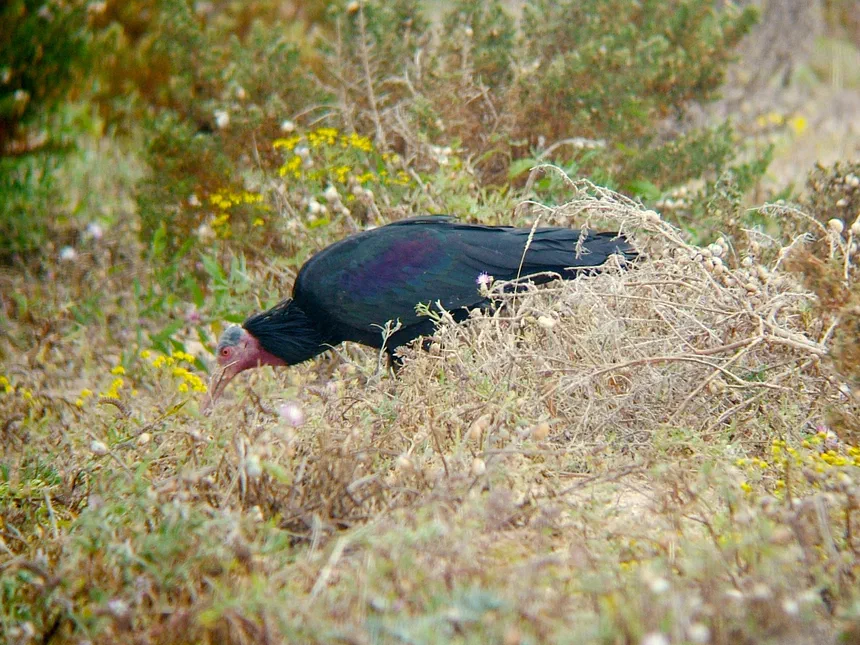
The Northern Bald Ibis is unmistakable at close range. Its body is covered in glossy black plumage that shimmers with iridescent green, bronze, and purple tones in good light. The most striking feature is its bald head and upper neck, which are unfeathered and colored a dull red to pinkish hue. A shaggy ruff of elongated feathers hangs from the back of the head, and the long, slender, down-curved bill is red. The bird stands on relatively short reddish legs. Males and females look alike, though males tend to be slightly larger. Juveniles have duller plumage and a feathered, grayish head that gradually becomes bald as they mature.
Habitat and Range
This ibis is unusual among its relatives for avoiding marshes and standing water. It favors semi-arid steppe, rocky desert margins, and open grassland, often near cliffs or steep escarpments where it can roost and nest safely from ground predators. Wild breeding populations survive mainly along the Atlantic coast of Morocco, with small remnant or reintroduced groups elsewhere. Historically the species ranged across the Middle East, North Africa, and the mountains of central and southern Europe. Dedicated reintroduction programs in Spain, Austria, and Germany are working to reestablish free-flying and migratory populations.
Diet
The Northern Bald Ibis is a ground forager that probes soil, leaf litter, and short vegetation with its curved bill. Its diet is dominated by insects, especially beetles, grasshoppers, and their larvae, along with spiders, worms, snails, and other small invertebrates. It also takes small vertebrates such as lizards, frogs, and occasionally small mammals or nestling birds when available. Birds typically feed in loose flocks, walking steadily across pastures and stony ground in search of prey.
Behavior
This is a sociable, colonial bird that roosts, nests, and feeds in groups. Flocks commute daily between cliff roosts and feeding grounds, sometimes traveling several kilometers. In flight the ibis holds its neck outstretched and beats its broad wings with strong, deliberate strokes, and migratory populations may travel in loose V-formations. The species is generally quiet away from the colony but becomes vocal at nesting sites, producing guttural grunting and croaking calls. Pairs engage in mutual preening and bowing displays that help reinforce their bonds.
Life Cycle and Reproduction
Northern Bald Ibises breed in colonies on cliff ledges or rocky outcrops, and sometimes on old buildings. Pairs are largely monogamous and often reuse the same nest site across seasons. The nest is a loose platform of sticks lined with grass and other soft material. Females typically lay two to four eggs, which both parents incubate for roughly four weeks. Chicks are altricial, hatching helpless, and are fed regurgitated food by both adults. Young fledge at around one and a half to two months but may remain dependent on their parents for a time afterward. Birds generally reach breeding age at three to five years.
Conservation Status
The Northern Bald Ibis is one of the world’s most threatened birds and has been the subject of decades of conservation effort. It suffered dramatic declines from hunting, pesticide poisoning, habitat loss, and disturbance at nesting cliffs, disappearing from most of its former range. The wild Moroccan population has stabilized and modestly increased thanks to protection and monitoring, prompting the IUCN to move the species from Critically Endangered to Endangered. Reintroduction and captive-breeding programs continue to build new populations and, in Europe, to teach captive-bred birds traditional migration routes using human-guided flights.
Frequently Asked Questions
Why is it called “bald”? Adults have a bare, unfeathered red head and upper neck, which gives the bird its name. Juveniles start out with a feathered head that gradually loses its feathers as they mature.
Where can you still see wild Northern Bald Ibises? The main surviving wild population lives along the Atlantic coast of Morocco. Smaller reintroduced or semi-wild groups also exist in parts of Europe and the Middle East through conservation programs.
Is the Northern Bald Ibis endangered? Yes. It is classified as Endangered by the IUCN. It was previously Critically Endangered, but careful protection of its Moroccan colonies has helped numbers recover somewhat.
References
The conservation status and key facts in this profile are supported by these sources:
- Animal Diversity Web — Geronticus eremita (Northern Bald Ibis) (accessed 2026-07-29)
- GBIF — Geronticus eremita (Linnaeus, 1758) (accessed 2026-07-29)
Found an error, source problem, or image concern? Report this page.