Birds Guide
Bald Eagle
What Is a Bald Eagle? The bald eagle (Haliaeetus leucocephalus) is a large bird of prey native to North America and the national bird of the United States. It belongs to the sea eagle group, and despite its name it is …
At a glance
What Is a Bald Eagle?
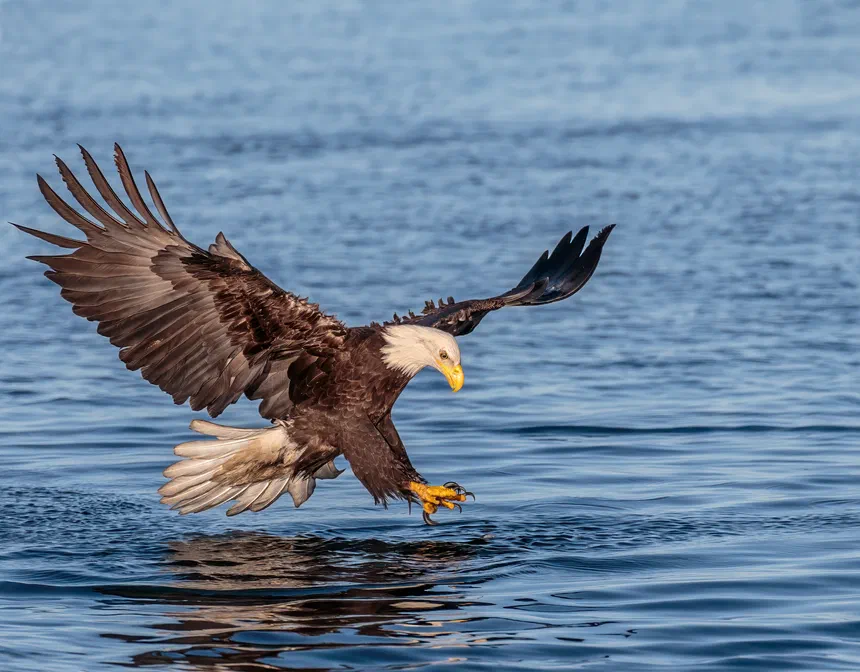
The bald eagle (Haliaeetus leucocephalus) is a large bird of prey native to North America and the national bird of the United States. It belongs to the sea eagle group, and despite its name it is not actually bald: the word comes from an older meaning of “white-headed.” Adults are instantly recognized by their snowy white head and tail set against a dark brown body.
Appearance and Identification
Adult bald eagles have a chocolate-brown body and wings, a bright white head and tail, and a heavy, hooked yellow bill with matching yellow legs and feet. Their eyes are pale yellow. Wingspans typically range from about 5.5 to 7.5 feet, and females are noticeably larger than males, a common pattern among raptors. Immature birds look very different: they are mostly dark brown mottled with white, and they do not develop the clean white head and tail until roughly four to five years of age. In flight, the broad wings are usually held flat, distinguishing them from some other large birds of prey.
Habitat and Range
Bald eagles are strongly tied to water. They favor coastlines, large lakes, rivers, reservoirs, and marshes where fish are plentiful, and they need tall, sturdy trees or cliffs nearby for perching and nesting. Their range extends across most of North America, from Alaska and much of Canada south through the contiguous United States to northern Mexico. Northern populations may migrate south in winter when waters freeze, while birds in milder regions often remain year-round.
Diet
Fish make up the bulk of the bald eagle’s diet, and the birds are skilled at snatching prey from the water surface with their talons. When fish are scarce, they readily take waterfowl, small mammals, turtles, and other prey. Bald eagles are also opportunistic scavengers, feeding on carrion and frequently stealing meals from other birds such as ospreys. This flexible, opportunistic feeding helps them thrive in a wide variety of settings.
Behavior
Bald eagles are powerful, agile fliers capable of soaring for long periods on rising air currents. Outside the breeding season, especially in winter, many gather in large numbers at rich food sources such as salmon runs or open water below dams. They are highly vocal, producing a series of high, chirping and chattering calls that are often surprisingly weak for such an imposing bird. Pairs are known for a dramatic aerial courtship in which two birds lock talons and tumble through the sky.
Life Cycle and Reproduction
Bald eagles typically mate for life and often return to the same nesting territory year after year. They build enormous stick nests, usually high in a large tree, and add to them each season, so nests can become some of the largest of any bird. Females generally lay one to three eggs, which both parents help incubate for around 35 days. The young grow quickly and fledge at roughly 10 to 12 weeks, though they may depend on the adults for some time afterward. Full adult plumage and breeding maturity arrive at about four to five years old.
Conservation Status
The bald eagle is currently listed as Least Concern by the IUCN, but this reflects a remarkable recovery. Through the mid-20th century, populations crashed due to hunting, habitat loss, and especially the pesticide DDT, which thinned eggshells and caused nesting failures. After DDT was banned and legal protections were strengthened, numbers rebounded strongly, and the species was removed from the U.S. endangered species list in 2007. It remains protected under specific federal laws in the United States.
Frequently Asked Questions
Are bald eagles actually bald? No. Their heads are covered in white feathers. The name comes from an old use of “bald” meaning white-headed, not hairless.
What do bald eagles mainly eat? Fish are their primary food, but they also hunt waterfowl and small animals and scavenge carrion when the opportunity arises.
How long do bald eagles live? In the wild they commonly live about 20 to 30 years, and individuals in captivity can live even longer.