Beetles Guide
Whitemarked Spider Beetle Facts & Information
Appearance Size: The whitemarked spider beetle adult is about 1/4 inch long. Male specimens are smaller than females. Characteristics: This group of beetles is called spider beetles because adults look a bit like small …
At a glance
Appearance
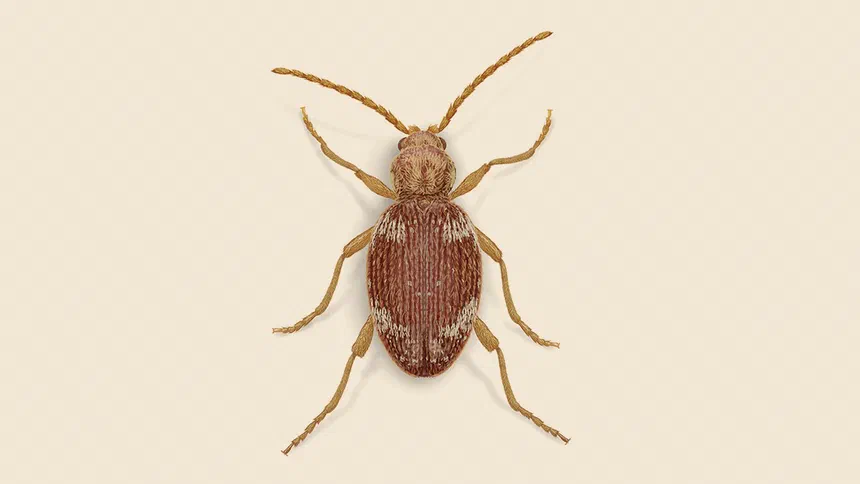
- Size: The whitemarked spider beetle adult is about 1/4 inch long. Male specimens are smaller than females.
- Characteristics: This group of beetles is called spider beetles because adults look a bit like small spiders with long legs and an unusually large, globe-shaped abdomen. However, the shape of the whitemarked spider beetle’s abdomen is more elongated when compared with other members of the spider beetle group.
- Color: Light brown in color with patches of white hairs on the front and back of the outer wings.
- Larvae: The larval or grub stage is shaped like a “C” and cream colored with a light brown head. Full-grown larvae are just about the same length as the adults and look somewhat like the larvae of the drugstore beetle .
Behavior
The common name spider beetle stems from the insect’s appearance of looking somewhat like a long-legged spider , but in fact they are really beetles .
Diet
Whitemarked spider beetles are scavengers that feed on damaged or spilled products and organic matter. Preferred foods include:
- Animal skins and dead insects
- Beans
- Cereals
- Chocolate and cocoa powder
- Corn meal
- Fruits
- Grains, seeds, and nuts
- Herbs
Habitat
In general, the most likely locations for whitemarked spider beetle infestations are homes and commercial food storage or production facilities. They are often found in humid environments and feed on foodstuffs spoiled by dampness. Infestations are commonly found in:
- Grain elevators
- Homes
- Libraries
- Museums
- Warehouses
Life Cycle
Whitemarked spider beetles develop by complete metamorphosis and go through four stages:
- Egg
- Larvae (grub)
- Pupae (cocoon)
- Adult
Eggs
Females lay individual eggs in cracks and crevices close to the beetle’s food supply. Generally, eggs hatch in about two to three weeks.
Larvae
Larvae go through three instars, taking about two to three months to complete the larval stage. The full-grown larvae spin a silk cocoon web and either go into an extended resting period or pupate immediately.
The larval or grub stage is shaped like a “C” and cream colored with a light brown head. Full-grown larvae are just about the same length as the adults and look somewhat like the larvae of the drugstore beetle .
Pupae
The pupal stage takes about two to three weeks to complete, but adults may remain within the cocoon for a month or more before developing into sexual maturity.
Adults
Upon emergence, adults feed and mate. Whitemarked spider beetle males, but not females, have the ability to fly. Adults may be seen on basement walls in the winter. Depending on temperature and humidity, it takes about four to nine months to complete one generation.