Beetles Guide
Blister Beetle Facts & Information
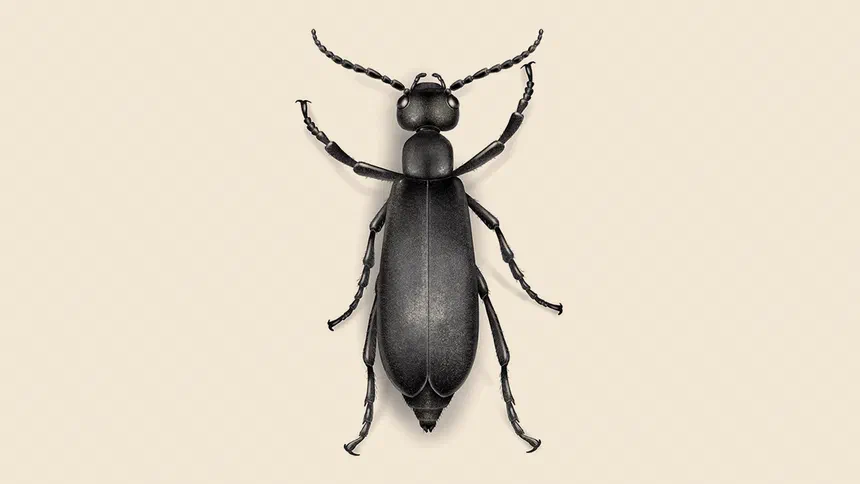
Appearance There are several species of blister beetles in the U.S. Size : Blister beetles are softbodied beetles that range in size from 1 to 2.5 cm in length. Color : Adults range in color from an ash gray to bright …
At a glance
Appearance
There are several species of blister beetles in the U.S.
- Size : Blister beetles are softbodied beetles that range in size from 1 to 2.5 cm in length.
- Color : Adults range in color from an ash gray to bright yellow with black stripes.
They usually are seen during the day on flowers and also are attracted to lights at night.
Cantharidin
Blister beetles belong to a group of insects with a very interesting and sordid past with people. They get their name from a caustic chemical they produce called cantharidin. When crushed, the beetle can literally bleed the chemical from its joints, and skin contact with it can result in blisters. Even though cantharidin is caustic, it has medical properties that people have long exploited in the form of Spanish fly. People would consume a concoction of dried and crushed blister beetles for ailments such as gout and arthritis, as well as using it as the aphrodisiac Spanish fly. Unfortunately, cantharidin can be fairly toxic and it is no longer widely used in medicine.
Habitat
Blister beetles are not an indoor infesting pest. They tend to be more of an agricultural/livestock pest. Many species feed on plants which include ornamental and vegetable crops. Horses and livestock also may be affected. Blister beetles, feeding in a hay field, may accidentally be ground up when the hay is harvested. The cantharidin impregnates the hay and can be consumed by the animals, potentially resulting in their death.
Reproduction
Eggs are laid by the female in protected areas like under stones. The initial larvae are highly mobile and usually seek out insects such as bees as they feeds on flowers. The larvae ride back to the nest where they prey on the inhabitants of the nest. The larvae eventually become pupae and then transform into adults.