Beetles Guide
Billbug Facts & Information
What You Can Do The homeowner should always consult with their PMP for help with identification and pest management. These professionals can identify the pests that are causing lawn problems, plus provide insight on …
At a glance
What You Can Do
The homeowner should always consult with their PMP for help with identification and pest management. These professionals can identify the pests that are causing lawn problems, plus provide insight on effective control techniques. Some important techniques for controlling billbugs include:
- Using turf grass varieties which are resistant to billbugs.
- Using biological control products such as billbug parasitic nematodes and fungal diseases.
- Using conventional insecticide control applications during the time of year when they are most effective against the adult and larval billbugs.
- Using lawn care and mowing methods that minimize the amount of thatch and enhance lawn health. Thatch buildup reduces the movement of water and soil minerals to the plant, plus creates a good habitat for billbug adults to thrive.
Appearance
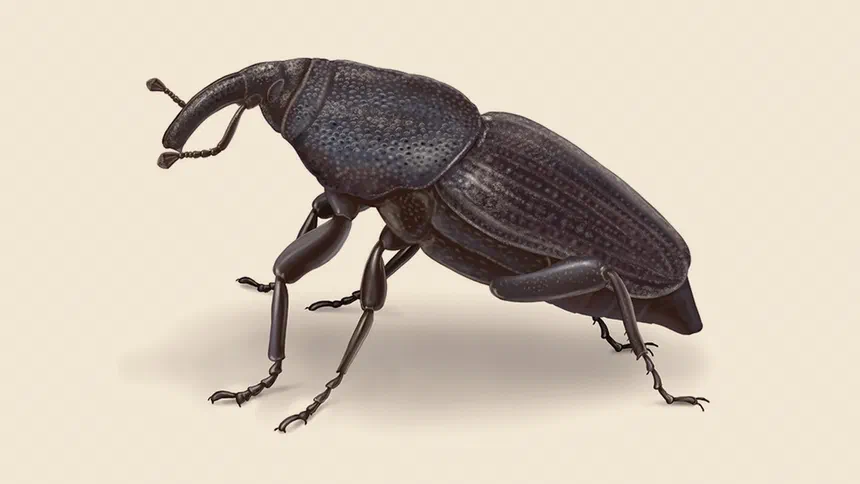
- Size: Adult billbugs are beetles in the weevil family. Depending on the particular species, they are about 1/2 to 1 inch long.
- Characteristics: Has a snout that some compare to a miniature version of an elephant’s trunk.
- Color: Gray to brown in color. The insect’s larval stage is grub-like in appearance, white, and with no legs.
Diet
Billbugs feed on grasses and garden crops. Damage occurs when adults cut into the stem to lay eggs and feed on the plant juices. Larvae eat the plant’s stems and roots that are below ground. Grasses that commonly commonly consumed include:
- Fescue Varieties
- Kentucky Bluegrass
- Perennial Ryegrass
Reproduction
In most cases, billbugs spawn one generation a year, but reproductive capabilities can vary depending on species and location. Adults usually overwinter in leaf litter and lawn thatch prior to laying eggs in a chamber they cut in the grass stems. Billbug grubs hatch about one to three weeks later and begin feeding inside the plant’s stem.