Arachnids Guide
Indian Ornamental Tarantula
What Is a Indian Ornamental Tarantula? The Indian ornamental tarantula (Poecilotheria regalis) is a large, tree-dwelling spider native to the forests of India. Prized for its intricate patterning and swift movements, it …
At a glance
What Is a Indian Ornamental Tarantula?
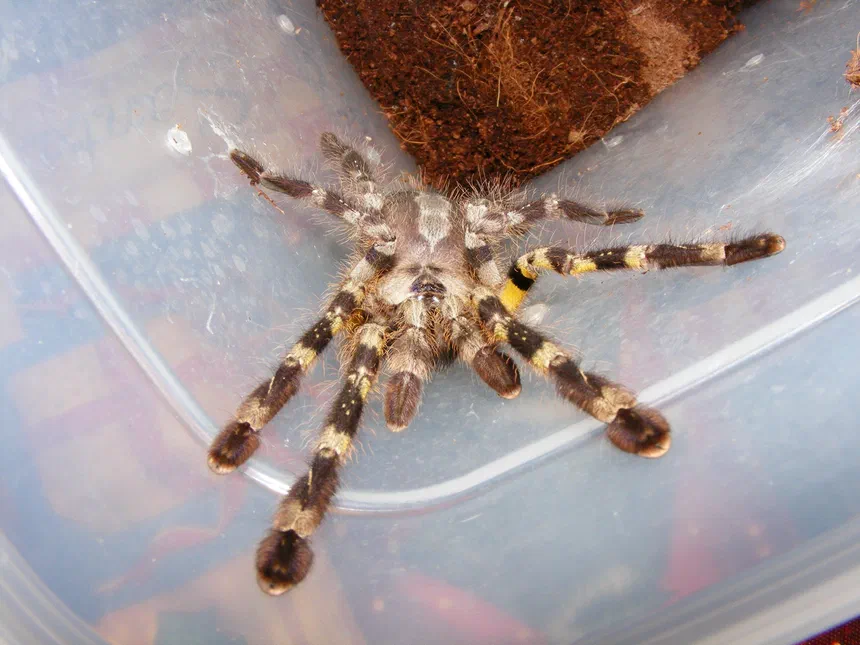
The Indian ornamental tarantula (Poecilotheria regalis) is a large, tree-dwelling spider native to the forests of India. Prized for its intricate patterning and swift movements, it belongs to a group of Old World tarantulas known collectively as parachute or ornamental spiders. It is one of the most recognizable and widely kept species in its genus, though it retains a well-earned reputation for potent venom and a defensive temperament.
Appearance and Identification
This species is a striking arboreal tarantula with a leg span that typically reaches 6 to 7 inches (15 to 18 cm) in mature specimens. The body displays an elaborate mosaic of gray, cream, and black, with a distinctive fretwork pattern on the carapace and abdomen. The undersides of the front legs bear bold bands of black and bright yellow, which are flashed as a warning when the animal feels threatened. Like other members of its genus, it has long, slender legs suited to climbing and rapid movement across vertical surfaces. Females grow noticeably larger and bulkier than the more slender males.
Habitat and Range
Poecilotheria regalis is found across central and southeastern India, favoring tropical deciduous and semi-evergreen forests. As an arboreal species, it lives high in trees, sheltering within hollows, crevices, and beneath loose bark where it spins silk-lined retreats. These retreats serve as both a resting place and an ambush point. The species tolerates a range of forest conditions but depends on mature trees with suitable cavities, making it sensitive to habitat loss where old-growth forest is cleared.
Diet
The Indian ornamental tarantula is a carnivore and an ambush predator. Its diet consists mainly of insects such as crickets, moths, beetles, and roaches, though larger individuals may take small vertebrates including lizards and, occasionally, small frogs or nestling birds. It waits near the entrance of its silken retreat and strikes quickly when prey passes within reach, injecting venom through its fangs to subdue the target before feeding.
Behavior
This is a fast, agile, and defensive tarantula rather than an aggressive one. When disturbed, it usually flees at high speed into cover, but if cornered it may rear up and display the vivid warning colors on its legs. Unlike many New World tarantulas, it lacks urticating hairs and instead relies on speed and a potent bite for defense. Its venom is medically significant and can cause intense pain, muscle cramping, and prolonged discomfort in humans, though bites are rarely life-threatening. The species is largely nocturnal, remaining hidden by day and becoming active after dark.
Life Cycle and Reproduction
After a male matures, he seeks out a female’s retreat to mate, an encounter that carries some risk of being cannibalized. A successful mating leads the female to produce an egg sac containing dozens of eggs, which she guards within her silken shelter. The spiderlings hatch and disperse to establish their own retreats. Growth proceeds through a series of molts, with the tarantula shedding its exoskeleton to increase in size. Males live only a few years and typically die soon after reaching maturity, while females may live well over a decade under favorable conditions.
Conservation Status
The IUCN lists Poecilotheria regalis as Least Concern, reflecting a relatively broad range. Nonetheless, populations face pressure from deforestation and habitat fragmentation, as well as collection for the exotic pet trade. Because the genus depends on mature forest trees, ongoing loss of old-growth habitat remains the primary long-term concern for wild populations.
Frequently Asked Questions
Is the Indian ornamental tarantula dangerous to humans? Its venom is potent and a bite can cause severe pain and cramping, but fatalities are not documented. It is best observed rather than handled.
Where does this tarantula live? It is native to forests in central and southeastern India, where it lives high in trees inside hollows and crevices.
How long do they live? Females can live 12 years or more, while males generally survive only 3 to 4 years, dying shortly after maturity.