Arachnids Guide
Chilean Rose Tarantula
What Is a Chilean Rose Tarantula? The Chilean rose tarantula (Grammostola rosea) is a medium-sized, ground-dwelling spider native to the arid regions of western South America. Named for the subtle rose or pinkish tint …
At a glance
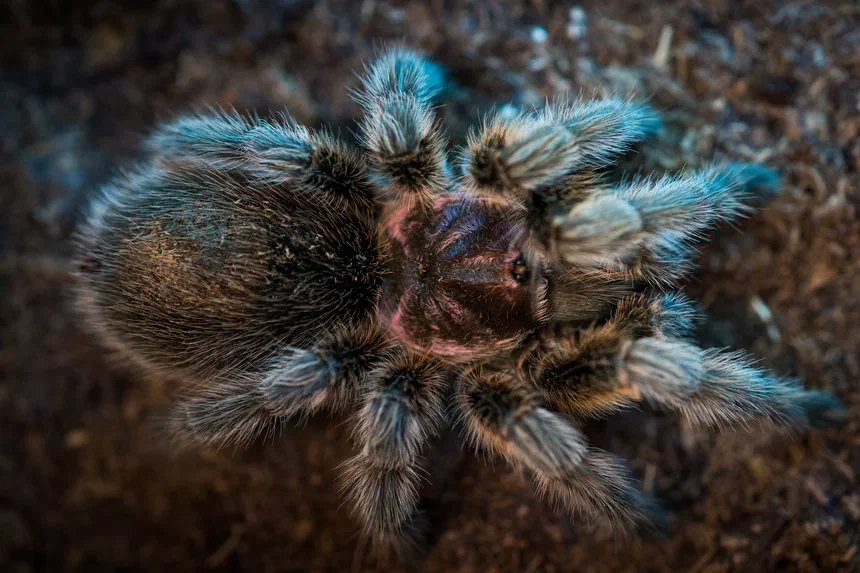
Image: Fucesa — CC BY-SA 4.0 · source
What Is a Chilean Rose Tarantula?
The Chilean rose tarantula (Grammostola rosea) is a medium-sized, ground-dwelling spider native to the arid regions of western South America. Named for the subtle rose or pinkish tint that can wash over its brown to gray body, it is one of the most widely kept tarantulas in the pet trade, prized for its hardy, docile temperament.
Appearance and Identification
This tarantula has a stocky, hairy body divided into two main parts: a fused head-and-thorax (the cephalothorax) and a rounded abdomen. Its overall color is typically earthy brown or gray, often overlaid with reddish or pinkish hairs that give the species its common name; a related color form sold as the “rose hair” can show a stronger copper or rose flush. Adults reach a leg span of roughly 4.5 to 5.5 inches (11 to 14 cm). Like other New World tarantulas, it carries fine urticating (irritating) hairs on its abdomen, which it can flick toward a threat. Males tend to be smaller and leggier than the bulkier females and develop specialized structures on their pedipalps at maturity.
Habitat and Range
Grammostola rosea is found across the dry scrublands, deserts, and grasslands of northern Chile and neighboring parts of Bolivia and Argentina, including areas near the Atacama region. It favors warm, arid to semi-arid terrain where it can shelter under rocks, in leaf litter, or in burrows. As an opportunistic burrower, it will occupy abandoned tunnels or dig shallow retreats, plugging or lining the entrance with silk to conserve moisture and stay hidden from predators.
Diet
The Chilean rose tarantula is a carnivore and an ambush predator. In the wild it feeds mainly on insects such as crickets, beetles, moths, and grasshoppers, along with other small invertebrates; larger individuals may occasionally take tiny vertebrates. It does not spin a capture web but instead waits near its burrow, seizing prey with its fangs and injecting venom that both subdues the victim and begins digesting it. The spider then draws up the liquefied tissue. These tarantulas have slow metabolisms and can go weeks or even months between meals.
Behavior
This species is largely nocturnal and sedentary, spending much of its time motionless near shelter. It is well known for its calm, generally non-aggressive disposition, which makes it popular among keepers, though individuals can be unpredictable and may go through periods of restlessness or fasting. When disturbed, its first line of defense is usually to flee or to kick urticating hairs from its abdomen; a bite is a last resort. The venom is mild to humans, typically causing only localized pain and swelling, but the irritating hairs can cause discomfort to skin and eyes.
Life Cycle and Reproduction
After a final molt to maturity, a male spins a small sperm web, charges his pedipalps, and sets out to find a female. Mating is a cautious affair, and the male often retreats quickly afterward. The female produces an egg sac containing dozens to a few hundred eggs, which she guards within her burrow. Spiderlings hatch and disperse to live independently. Growth is slow, occurring through a series of molts in which the tarantula sheds its exoskeleton. There is a striking difference in longevity between the sexes: males usually live only a few years and generally die not long after maturing, while females are famously long-lived, often surviving 15 to 20 years in captivity.
Conservation Status
The Chilean rose tarantula has not been formally assessed by the IUCN, and it remains common across much of its range. Because large numbers are collected from the wild for the international pet trade, however, some conservationists have raised concerns about localized pressure on wild populations. Habitat disturbance and unregulated collection are the main potential threats to watch.
Frequently Asked Questions
Is the Chilean rose tarantula dangerous to people? No. Its venom is mild and its temperament is generally docile. The most common reaction to a bite or to its flicked hairs is temporary irritation rather than serious harm.
Why do females live so much longer than males? Males devote their final life stage to finding mates and typically die within a year or so of maturing, while females continue molting and can live for well over a decade.
What do they eat as pets? Captive tarantulas are usually fed appropriately sized live insects such as crickets or roaches, offered every week or two, along with a shallow source of water.