Arachnids Guide
Camel Spider
What Is a Camel Spider? The camel spider (order Solifugae) is not a true spider at all but a distinct group of arachnids, sometimes called sun spiders, wind scorpions, or solifuges. Despite their fearsome reputation, …
At a glance
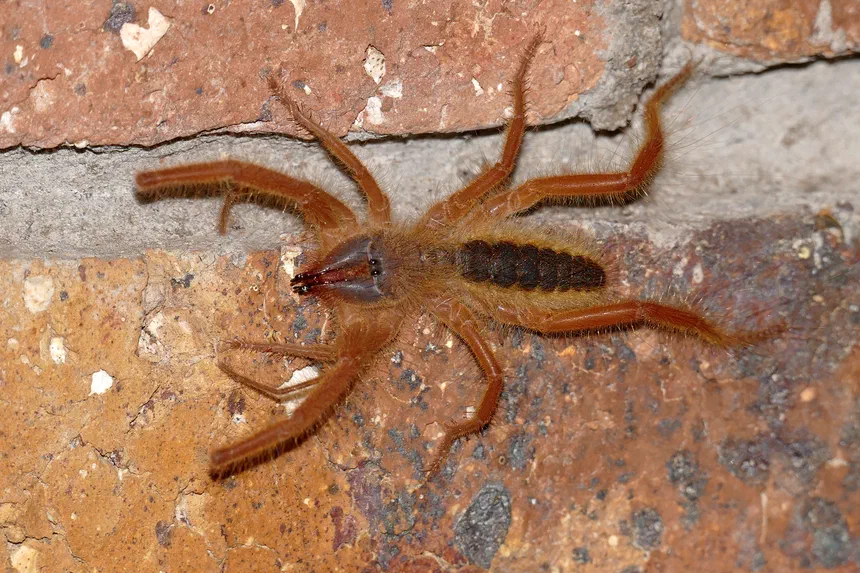
Image: Bernard DUPONT — CC BY-SA 2.0 · source
What Is a Camel Spider?
The camel spider (order Solifugae) is not a true spider at all but a distinct group of arachnids, sometimes called sun spiders, wind scorpions, or solifuges. Despite their fearsome reputation, they are neither spiders nor scorpions, and they lack venom entirely. The order includes more than a thousand described species adapted to hot, dry landscapes on several continents.
Appearance and Identification
Camel spiders have a tan, sandy, or reddish body covered in fine sensory hairs, which helps them blend into desert soil. Their most striking feature is a pair of oversized jaws called chelicerae at the front of the head, each split into two pincer-like segments that can make up a large share of the body length. Just behind the jaws are long, leg-like pedipalps tipped with adhesive organs used to grip prey and surfaces. They have four pairs of walking legs, and the first pair often works as feelers rather than for running. Larger species reach a body length of roughly 2 to 3 inches, with a wider apparent span once the legs are included, but popular photographs often exaggerate their size through forced perspective.
Habitat and Range
Solifuges are creatures of arid and semi-arid country. They thrive in deserts, dry grasslands, scrublands, and rocky slopes across the Middle East, North and southern Africa, the drier parts of Asia, and the American Southwest and Mexico. A few species tolerate more temperate conditions, but the group as a whole is absent from Australia and Antarctica. Many shelter in burrows or beneath stones and debris during the day, emerging when conditions are favorable.
Diet
Camel spiders are aggressive, opportunistic predators. Their diet consists mainly of insects such as beetles, termites, and grasshoppers, along with other arachnids, and larger individuals may take small lizards, rodents, or even small birds. They do not spin webs or use venom; instead they run down prey and seize it with their powerful chelicerae, using a chewing, sawing motion to crush and liquefy the meal. Their appetite is considerable, and captive individuals will feed until visibly swollen.
Behavior
The name solifuge means “those that flee from the sun,” and while some species are indeed nocturnal, many so-called sun spiders are active by day and simply move between sun and shade. They are famously fast runners, capable of covering short bursts at speeds that startle observers, and they sometimes appear to chase people, though they are really seeking the person’s shadow rather than attacking. Camel spiders are generally solitary and can be pugnacious toward one another. They are not venomous and pose little danger to humans, although a bite from a large individual can pinch and break skin.
Life Cycle and Reproduction
Reproduction begins when a male locates a female and transfers sperm, in many species by depositing a packet and maneuvering it into the female with his chelicerae. Afterward the female typically digs a burrow and lays a clutch that can range from dozens to well over a hundred eggs. Some species guard the eggs until they hatch, forgoing food during this period. The young pass through several molts as they grow. Most camel spiders are thought to live for about a year, completing a single breeding season, though the life histories of many species remain poorly documented.
Conservation Status
The vast majority of solifuge species have not been formally assessed by the IUCN, and no broad conservation concern applies to the group. Because they occupy remote desert habitats and are difficult to survey, population trends are largely unknown. As with many desert specialists, localized species could be vulnerable to habitat loss, though the order overall is widespread.
Frequently Asked Questions
Are camel spiders venomous? No. Solifuges have no venom glands. They subdue prey with their strong jaws rather than a chemical bite.
Do camel spiders really chase people? They can appear to, but they are following the shade a person casts rather than pursuing the person, and they are seeking shelter from the sun.
How big do they actually get? The largest species reach a body length of roughly 2 to 3 inches. Widely shared photos that make them look enormous rely on holding the animal close to the camera.