Ants Guide
Leafcutting Ants Atta spp. and Acromyrmex spp.
What is a leafcutting ant? Leafcutting ants get their name from their habit of cutting leaves into small pieces. There are only two species in the United States, which are found in Arizona, Texas, western Louisiana and …
At a glance
What is a leafcutting ant?
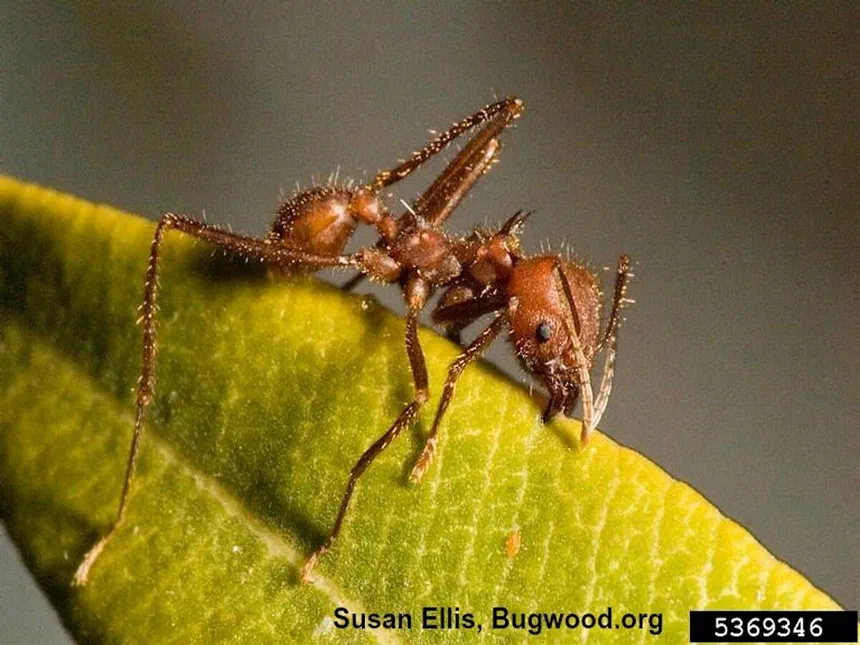
Leafcutting ants get their name from their habit of cutting leaves into small pieces. There are only two species in the United States, which are found in Arizona, Texas, western Louisiana and southern California. Mature nests of leafcutting ants may contain in excess of one million individuals, but only one queen who is long-lived. Some very old colonies may occupy the same area for 60-70 years.
Leafcutting Ants Atta spp. and Acromyrmex spp.
How to Prevent Leafcutting Ants
Nest location is critical in the prevention of leafcutting ants. Trailing workers can usually be found and followed at night when they forage. Often there will be leaf pieces along the trail and at the nest entrances, which are a sign of these ants.
Consider working with a licensed pest professional to employ a preventative pest management plan.
Leafcutting Ant Habits
Workers forage when the temperature is between 45-90 degrees. They usually stay in their nest during the hottest period of the day, and seal the entrances with soil and debris to conserve moisture. During the summer, they forage mostly at night. Leafcutting ants will travel up to 600 ft. from the nest to gather leaves, which they use to raise a fungus for food.
Aside from their harvested plant parts, leafcutting ants eat caterpillar droppings, corn, cornmeal, flour, rice, peas, wheat, oats, chops, bread, cake, chicken feed, sugar, beans and ground coffee.
Where to Find Leafcutting Ant Nests
Leafcutting ants build their nests in soil. They are primarily outdoor pests found in warm, agricultural areas. However, it’s not uncommon for leafcutting ants to be found nesting in urban neighborhoods. They also occasionally enter structures, but leave quickly.
Do Leafcutting Ants Pose a Threat?
Leafcutting ants are of concern to homeowners in urban settings because of their ability to rapidly remove leaves, flowers and fruits from trees. They can cause considerable defoliation overnight.
Workers have large mandibles that are capable of drawing blood.
How to Get Rid of Leafcutting Ants
If you suspect a leafcutting ant infestation in your home, the best course of action is to contact a licensed pest control professional . They will conduct a thorough inspection to identify the full extent of the problem. Once the situation is properly identified, the appropriate control measures can be taken.