Ant Hierarchy
Identification
Ant Hierarchy and Castes
Ants are social insects that live in highly structured colonies. Different members of the colony belong to different castes that share general characteristics. These include a narrow, constricted waist and bent antennae. Additionally, reproductive ants, also called swarmers, have wings. Members of the worker, and reproductive castes (queen and reproductive males) have separate roles to fulfill in the hierarchy of an ant colony:
- Queens head the colonies and lay thousands of eggs to ensure the nest’s survival. They are typically larger than workers.
- Reproductive male ants mate with the queen and may die afterwards. They are generally the same size or larger than workers and have small heads with large eyes.
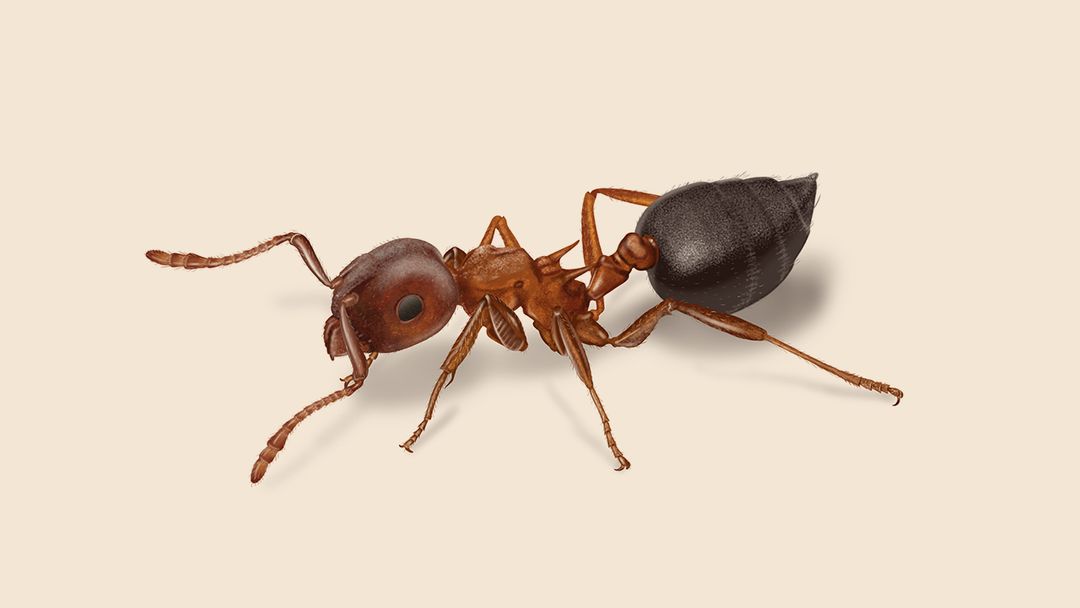
- Workers are sterile, wingless females that never reproduce. Instead, they forage for food, care for the queen’s offspring, maintain nests, and protect the colony. They can measure up to half an inch long and can be yellow, red, brown, or black in color.
Poison Testers in Ant Colonies
Ants have sophisticated measures for dealing with poisons and famine. In the ant hierarchy, older workers called living silos serve as testers for food toxicity. They regurgitate and distribute food to the rest of the colony, resulting in a diluted food chain that protects the queen and reproductives from poison. This adaptation makes removing infestations with poison baits sometimes challenging.