Library Section
Ants
Types of ants in Canada Common structure-infesting ant species found in Canada include the black carpenter ant, pavement ant, pharaoh ant, odorous house ant, Argentine ant, and thief ant. Most of the ant problems in …
At a glance
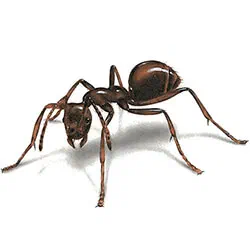
Types of ants in Canada
Common structure-infesting ant species found in Canada include the black carpenter ant, pavement ant, pharaoh ant, odorous house ant, Argentine ant, and thief ant. Most of the ant problems in Canadian homes are caused by carpenter ants, pavement ants, and pharaoh ants. Of all ant species, the black carpenter ant is the largest in size and the most common to cause structural damage. Pavement ants depending on location of nests are more of a nuisance, especially if nesting indoors. The pharaoh ant is another indoor nuisance pest, often attracted to foods high in protein and sugar.
Ants can be difficult to remove once they establish a colony. Managing and controlling infestations is necessary if ants are frequently seen in your home or there are signs of a nearby nest. Before controlling an ant problem, it is important to know what species of ant you are dealing with. Having basic knowledge on the appearance, behaviour, nesting habits, and type of problems ants cause can help identify the ant species in order to use proper control methods.
Appearance and identification
Ants are generally easy to recognise; their colour is usually black, dark brown, red, or tan in colour. Depending on the species, their size can range from 1.5 mm to 13 mm in length. Like all insects, the body of an ant is divided in three distinct parts: head, thorax and abdomen. The thorax is joined to the abdomen by constricted petioles, also known as nodes. Depending on the species, some ants have a single node and others have two nodes. All ants have three pairs of legs used for walking, and they do not have wings, except for the reproductive swarmers, which have two pairs of functional wings used for mating and dispersal flights.
Habitat, Diet, Lifecycle
Habitat
Ants are social insects that live in colonies with populations often reaching hundreds of thousands. Most ant colonies build nests in soil. Some species, like the carpenter ant, tunnel into wood to create nesting chambers. A typical ant colony consists of three distinct social castes: the queen, drones, and workers. Most colonies have one queen and a vast number of workers, but the colonies of some species can have multiple queens. The queen’s function is to lay eggs and control activities of the nest via pheromone communication. The most likely to be seen outside the nest during non-swarming season are the workers. The workers forage for food to carry back to the colony. Foraging often brings ants into the home, because they are attracted to nearly any food humans may leave out. Sugary foods, meats, and grease are particularly attractive to ants.
Diet
The workers forage for food to carry back to the colony. Foraging often brings ants into the home, because they are attracted to nearly any food humans may leave out. Sugary foods, meats, and grease are particularly attractive to ants.
Lifecycle
Ants begin life as eggs, laid by a queen ant when she mates with a male ant. The oval, white, transparent eggs are tiny – only 0.5 mm across – so are very difficult to spot.
After one or two weeks, these eggs hatch into larvae. Adult ants regurgitate the food they have already eaten to feed these extremely hungry grubs. The larvae then shed their skin to become pupae, which look like white adult ants but with their legs and antennae folded up against their body. Over time, these pupae get darker in colour, eventually becoming adult ants. These adult ants are either new queens, female workers, or male drones. While the wingless female workers set about foraging for food and feeding the larvae yet to hatch, new queens and male drones have wings and fly away in a nuptial flight to mate.
After mating, they lose their wings and the male drone quickly dies. The queen builds a new nest, and begins laying eggs, controlling the gender of her eggs to match the colony’s needs.
Ant queens can keep laying these eggs for decades, living for up to 30 years, while workers live up to three years and drones only live for a few weeks.
Do ants bite
The mouth parts of ants have adapted for biting and chewing solid food. Some species have jaws strong enough to bite through human skin, but most cannot. Ant species such as black carpenter ants can bite if provoked. Some ant species including European Fire ants sting and inject formic acid into the wound, hence a burning sensation at the site of the bite. The majority of Canadian ant species rarely inflict bites on humans.
Ants with wings
Ant colonies feature a hierarchical social structure in which thousands of sterile female workers maintain the nest, forage for food, care for larvae, and protect one or more queens, whose sole responsibility is to ensure the continued survival of the colony by laying eggs. Most colonies form when the new reproductive queens leave their old nest, mate with a male, and deposit their eggs at the site of the new colony. New reproductive queens and males are characterized their wings, which worker ants lack. In a ritual known as a nuptial flight the winged ants, also known as alates, depart from existing colonies when prompted by the weather, fly to a new location, and mate. The alates mate in swarms either aerially or terrestrially. The newly mated queens then fly off to locate a nesting site, detach their wings, and lay eggs. Winged males, on the other hand, die after completing the nuptial flight as they exist solely to mate with the queen. The swarming presence of winged ants indoors, especially during winter, strongly indicates a nearby colony.
Problems caused by ants
Ants are unsightly and a nuisance when found inside a home. A few species such as pharaoh ants have been implicated in disease transmission, especially in hospital and long-term care facilities. Outdoor nesting habits can damage lawns and gardens, as well. When dwelling indoors, ants may cause damage to the structure by chewing wood, insulation, and electrical cables during nest building. Select species of ants are capable of inflicting painful stings. Some individuals may develop inflamed skin at sting sites and experience cramps and headaches as reactions to ant venom.
Infestation - ants in the home
Because pest species of ants frequently establish colonies in populated areas, the insects often invade the homes of Canadian residents. Attracted by the presence of food, foraging ants enter houses to scavenge for crumbs, oil or grease spills, sugar, and edible items regularly found in kitchen pantries and easily contaminate food items.
Ants gain entry to buildings through cracks in the walls or foundation, as well as through gaps or other small openings that often appear where moulding or plumbing connect with the structure.
Large numbers of ants can successfully invade homes by detecting and following an invisible trail produced by scouts sent previously by the colony to search for food.
Why do I have ants
Canada has more than 100 species of ants, including the black carpenter ant, pavement ant, pharaoh ant, odorous house ant, Argentine ant, and thief ant. Foraging ants are attracted by food and enter homes to scavenge for crumbs, oil or grease spills, sugar, and other edible items.
Ants gain entry to buildings through cracks in the walls or foundations, or through other gaps and small openings that often appear where moulding or plumbing connect with the structure.
Large numbers of ants can successfully invade homes by detecting and following an invisible trail produced by scouts sent previously by the colony to search for food.
How can I prevent ants invading
Keep your home clean and sanitary, store food in tightly-sealed containers, clean up crumbs and spills promptly, sweep the floor regularly, rinse food containers before recycling, keep the structure well maintained, repair all cracks in walls and foundations, keep doors, windows, and entry points sealed.
How worried should I be about ants
Ants are unsightly and a nuisance that will contaminate your food. A few species such as pharaoh ants can also spread disease, especially in hospital and long-term care facilities.
If the ants nest outside, they can damage lawns and gardens. If inside, ants can cause damage to the structure by chewing wood, insulation, and electrical cables during nest building.
Some species of ants inflict painful stings, with the ant venom causing some people to develop inflamed skin and experience cramps and headaches. Some ant colonies can grow exponentially quickly, making them even more difficult to eradicate. To stop this ant invasion in its tracks, you need a professional pest control service.
Browse This Section
Every guide in Ants
Use these links to move quickly between closely related pages in the same section.
Acrobat Ants
What is an Acrobat Ant? Acrobat ants get their common name from their ability to acrobatically raise their abdomen over …
Allegheny Mound Ant Facts & Information
Appearance Color: Allegheny mound ants have a reddish head and thorax. The abdomen and legs are dark brown to black. …
Ant Bite & Sting Facts
How to Identify & Prevent Ant Stings While many of the more aggressive ant species will bite, the primary reactions are …
Ant Hierarchy
Ant Hierarchy and Castes Ants are social insects that live in highly structured colonies. Different members of the …
Argentine Ants
What is an Argentine Ant? Argentine ants are an invasive species originally native to Argentina, Uruguay, Paraguay, …
Army Ant Facts & Information
Appearance Abdomen: Their abdomens are oval-shaped, and the stinger is located in this body segment. Head: Army ant …
Asian Needle Ants Facts & Information
How do I get rid of Asian Needle Ants? To get rid of Asian needle ants in your home, start by identifying and sealing …
Bigheaded Ant Facts & Information
Appearance There are several species of bigheaded ants that can be found throughout the United States. They are in the …
Black Ants
Why do I have little black ants Little black ants are found in open areas of lawns or under stones, bricks, timber, and …
Boric Acid for Ants: Effectiveness and Safety Tips
Controlling ants in and around your home can be extremely challenging. Many homeowners try various strategies and …
Bullet Ant Facts & Information
What is a bullet ant? Paraponera clavata, the bullet ant’s scientific name, is a large predatory neotropical ant known …
Can ants fly?
What are alates? The majority of ants are wingless. However, at certain times of the year, swarms of flying ants become …
Can Ants Hear?
How Ants Communicate Social insects such as ants have advantages over solitary insects. Among those advantages is the …
Can Ants Live in Walls?
Depending upon distribution and cold weather conditions, ants may be as likely to nest outdoors as indoors, especially …
Can Ants Smell?
Ants communicate with each other using pheromones, sounds, and touch. The use of pheromones as chemical signals is more …
Carpenter Ants
What are the Signs of a Full Carpenter Ant Infestation in the House? The main signs of a carpenter ant infestation in …
Citronella Ants
How to identify Citronella Ants Yellow ant workers grow to be anywhere between 3 and 4.5 mm in size. Swarmers have wings …
Cow Killer Ant Facts & Information
Appearance Characteristics: One of the most observable differences between ants and wasps is that ants have elbowed or …
Crazy Ants
Life Cycle The life cycle of a single crazy ant will vary depending on its role in the colony. A colony’s longevity …
Facts About Ant Nests
Types of Ant Nests Ant nests generally are divided and categorized into three major groups – ants that nest in soil, in …
Field Ants
What are field ants? Also known by many other names such as thatching ants, red ants and wood ants, the field ant gets …
Fire Ants
Habitat & Behaviour Habitat Originally from South America, fire ants have migrated to countries as far away for …
Forelius Pruinosus Facts & Information
Appearance This ant species doesn’t currently have a common name, but is classified by ant experts in the same family as …
Ghost Ants
What are ghost ants? Ghost ants get their common name from the fact that they are very hard to see due to their pale …
Grease Ant Facts & Information
Appearance Grease ants are one of the smallest groups of ants, measuring only 1.5 to 2.2 mm in length. Grease ants are …
Harvester Ants
What is a Harvester Ant? Harvester ants get their common name from their behavior of collecting or harvesting seeds as …
How do Ants Build Anthills?
What is an ant mound? An ant mound is a structure built by ants, typically made of soil, sand, or other materials that …
How Do Ants Get Inside Your House?
What Attracts Ants to Come Inside? Ants invading your home can be a persistent nuisance, whether seasonal or year-round. …
How Do Ants Reproduce?
Abundant Insects Ants are one of the most abundant insects on our planet and the reasons are their eusocial, complex …
How long do ants live?
Factors Determining an Ant’s Lifespan Longevity of ants depends upon a number of factors such as: Ant species Ant colony …
How to Identify Elongate Mexican Twig Ants
Appearance Size: Elongate Mexican twig ants are 8 to 10-mm in size. Body: Adults are best described as large slender …
Leafcutter Ant Facts & Information
What You Can Do One proactive technique that can be helpful to prevent leafcutter ant damage to specific landscaping …
Leafcutting Ants
What is a leafcutting ant? Leafcutting ants get their name from their habit of cutting leaves into small pieces. There …
Little Black Ants
What is a little black ant? The little black ant gets its common name from its very small size and black coloration. …
Longhorn Crazy Ants
What is a longhorn crazy ant? Longhorn crazy ants get their common name from the workers’ habit of running in an …
Moisture Ant Facts & Information
Appearance Length: Workers are 4 to 4.5 mm long Color: yellow in color When crushed, they produce a lemon scent that is …
Odorous Ant Facts & Information
Appearance Size: Odorous house ants, sometimes called odorous ants, are small, measuring 2.4 to 3.3 mm in length. Color: …
Odorous House Ant
How to Identify Odorous Ants Odorous house ants, also known as stink ants or coconut ants, are distinctive due to the …
Odorous House Ants
What is a odorous house ant? The odorous house ant gets its name from the strong, rotten coconut-like smell it gives off …
Pavement Ant
What do Pavement Ants look like Pavement ants get their name because they often nest under sidewalks, driveways and …
Pavement Ants
What is a pavement ant? Pavement ants get their name because they make nests in or under cracks in pavement. These dark …
Pharaoh Ant
What do pharaoh ants look like Pharaoh ants are notorious indoor pests, often unnoticed due to their small size and …
Pharaoh Ants
What is a pharaoh ant? Pharaoh ants get their name from the mistaken belief that they were one of the plagues of Egypt …
Pyramid Ants
What are pyramid ants? The pyramid ant gets its common name from the pyramid shaped structure on top of the thorax. They …
Queen Ants
Most ant species are social insects, living in large cooperative groups called colonies. Two or more generations may …
Red Imported Fire Ants
What is a red imported fire ant? Red imported fire ants (RIFAs, for short) get their common name from their ability to …
Roger's Ant Facts & Information
Appearance Hypoponera punctatissima is an ant species without an approved common name, but in many parts of the world it …
Rover Ant Facts & Information
What You Can Do Since infestations are often associated with moisture and fungal decay, efforts to remediate moisture …
Small Honey Ant Facts & Information
Appearance Size: They are about 0.08 to 0.2 inches long. Body: Workers have a triangular-shaped abdomen that has a …
Sugar Ant Facts & Information
Appearance Sugar ant is a common name that many people use to describe any small ant that is attracted to sweets. …
Tawny Crazy Ant Facts & Information
Appearance The tawny crazy ant, also known as the rasberry crazy ant, is an invasive species that was brought to the …
Thief Ant
How to identify Thief Ants Often mistaken for pharaoh ants due to similarities in colour and size of the workers, and …
Thief Ants
What are thief ants? Thief ants are one of the smallest household ants. Thief ants get their name from their habit of …
What is the Largest Ant Colony in the World?
What is an ant colony? Ants are social insects that form small to large colonies. A typical ant colony contains an …
When are ants most active?
What time of year are ants most active? Ant activity varies by species, but ants can thrive year-round. However, March …
Where Do Ants Go in the Winter?
Why Do Ants Come Indoors? Ants often move inside looking for better conditions, food, moisture, shelter, favorable …
White-footed Ants
What is a white-footed ant? White-footed ants get their common name from their very light-colored feet. Mature colonies …
Yellow Ants
What is a yellow ant? The yellow ant gets its common name from the yellow coloring of its body. Yellow ants are also …