Amphibians Guide
Iberian Ribbed Newt
What Is a Iberian Ribbed Newt? The Iberian ribbed newt (Pleurodeles waltl) is a large, largely aquatic salamander native to the southwestern Iberian Peninsula and parts of northern Morocco. It is the biggest newt species …
At a glance
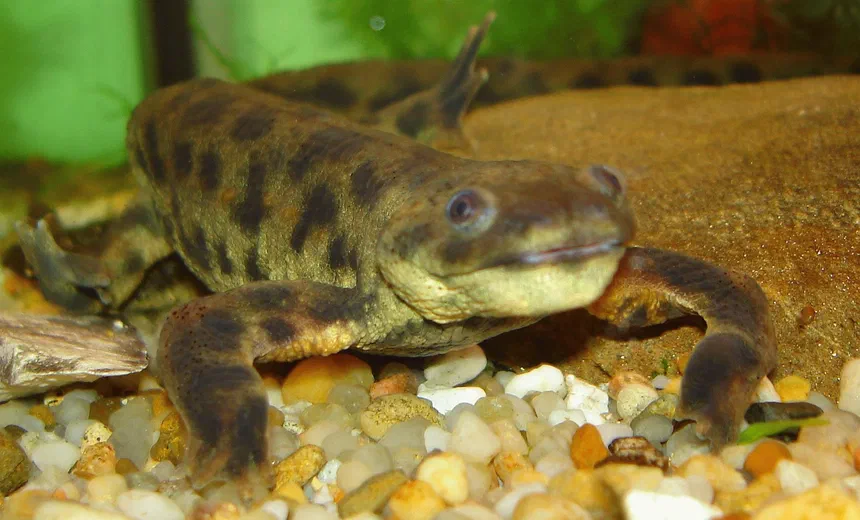
What Is a Iberian Ribbed Newt?
The Iberian ribbed newt (Pleurodeles waltl) is a large, largely aquatic salamander native to the southwestern Iberian Peninsula and parts of northern Morocco. It is the biggest newt species in Europe and is best known for an unusual defense in which it pushes its sharp ribs outward through pores in its skin. The species is also a favorite laboratory animal and has even been raised aboard orbiting spacecraft to study development in microgravity.
Appearance and Identification
This is a robust, flattened newt that typically measures about 6 to 12 inches (15 to 30 cm) in total length, including a long, laterally compressed tail. Its skin is rough and granular, colored in muted grays and browns that help it blend into muddy pond bottoms. A defining feature is the row of orange or rusty tubercles running along each flank, marking the points where the ribs can protrude. The head is broad and flattened, the eyes are small, and males in breeding condition develop swollen forelimbs and darkened nuptial pads used to grip a mate.
Habitat and Range
Pleurodeles waltl favors still or slow-moving fresh water, including ponds, ditches, flooded meadows, cattle troughs, cisterns, reservoirs, and quiet stream pools. It tolerates somewhat brackish and nutrient-rich water better than many amphibians, which lets it persist in agricultural landscapes. The species ranges across central and southern Portugal and Spain and into northern Morocco. Where water is permanent, adults may stay aquatic year-round; where pools dry out, they retreat to burrows or damp cover on land and wait for rains to refill their breeding sites.
Diet
The Iberian ribbed newt is an opportunistic carnivore. It hunts a wide variety of small aquatic invertebrates, including insect larvae, worms, snails, small crustaceans, and other soft-bodied prey. Larger individuals will also take tadpoles, amphibian eggs, and even smaller newts. Prey is generally located by a combination of sight and smell and captured with a quick forward lunge and suction of the mouth.
Behavior
Mostly nocturnal, these newts spend the day resting under stones, vegetation, or debris and become active in the evening. They are relatively slow-moving and rely on camouflage and defense rather than speed. Their signature protection is a startling one: when seized, the newt swings its sharp rib tips outward through the orange-tipped warts along its sides, while glands in the skin release a mild toxin. A predator that bites down effectively presses the poison into the wounds the ribs create, encouraging it to let go. The ribs retract afterward, and the newt’s skin heals without lasting harm.
Life Cycle and Reproduction
Breeding is tied to water availability and often peaks in the cooler, wetter months of fall through spring. During courtship, the male positions himself beneath the female and clasps her forelimbs with his own, then deposits a packet of sperm (a spermatophore) that she takes up to fertilize her eggs internally. The female attaches hundreds of eggs to submerged plants and stones. Aquatic larvae hatch with feathery external gills and grow over several months before metamorphosing, though some populations can retain larval traits under certain conditions. Sexual maturity typically comes within a year or two, and adults may live roughly 7 to 12 years in the wild, sometimes longer in captivity.
Conservation Status
The IUCN lists the Iberian ribbed newt as Near Threatened. Although it remains locally common in parts of its range, it faces pressure from habitat loss, the draining and pollution of wetlands, drought linked to changing climate, and introduced predators such as non-native fish and crayfish that consume eggs and larvae. Its ability to use artificial water bodies offers some resilience, but the ongoing loss of temporary ponds is a concern for long-term stability.
Frequently Asked Questions
Is the Iberian ribbed newt dangerous to people? No. Its rib defense and skin secretions are aimed at predators and can cause mild irritation, but it poses no serious threat to humans. As with any amphibian, hands should be washed after handling.
Why is it sometimes called the “Spanish ribbed newt”? Both names refer to the same species. “Spanish” and “Iberian” describe its home range on the Iberian Peninsula, and “ribbed” points to the protruding ribs it uses for defense.
Why has it been sent into space? Because it is hardy, breeds readily in the lab, and has large, easily studied eggs and embryos, it has been used in orbital experiments to examine how vertebrate development and reproduction respond to microgravity.