Amphibians Guide
Fowler's Toad
What Is a Fowler’s Toad? The Fowler’s toad (Anaxyrus fowleri) is a small, stout-bodied true toad native to eastern North America. It belongs to the family Bufonidae and was once classified in the genus Bufo. Named for …
At a glance
What Is a Fowler’s Toad?
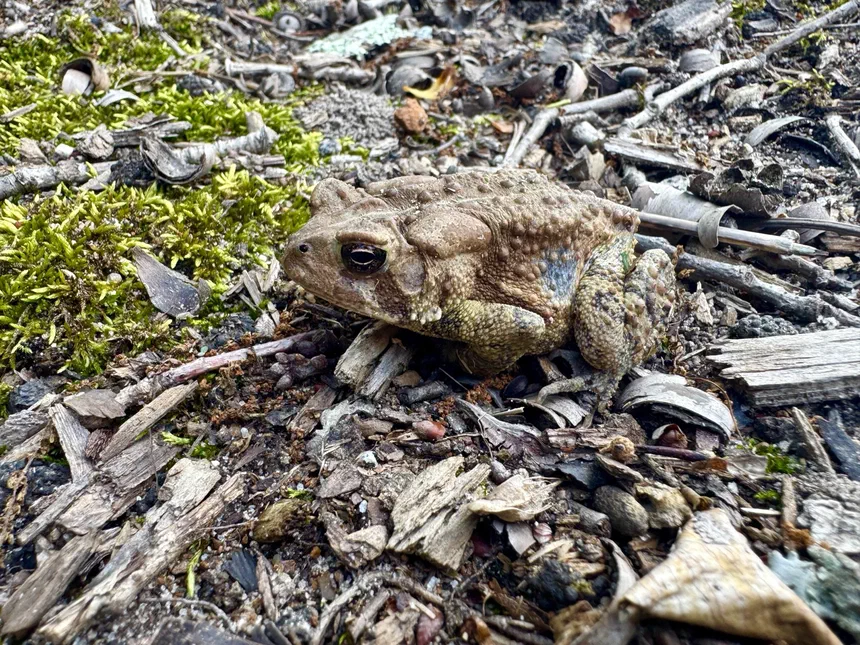
The Fowler’s toad (Anaxyrus fowleri) is a small, stout-bodied true toad native to eastern North America. It belongs to the family Bufonidae and was once classified in the genus Bufo. Named for the naturalist Samuel Page Fowler, it is a familiar amphibian across much of the eastern United States.
Appearance and Identification
Fowler’s toads are typically brown, gray, brick-red, or olive, with darker blotches scattered across the back. A key identifying feature is that each of these dark spots usually contains three or more warts, and a light stripe often runs down the middle of the back. The belly is generally pale and unmarked except for a single dark spot on the chest. Prominent parotoid glands sit behind the eyes and touch the ridges (cranial crests) on the head, a trait that helps separate this species from the similar American toad, whose parotoid glands are separated from the crests. Adults usually measure about 5 to 9 centimeters (2 to 3.5 inches) in length, with females generally larger than males.
Habitat and Range
This toad occupies a broad range across the eastern United States and reaches into parts of southern Ontario, Canada. It favors open, sandy habitats such as beaches, dunes, floodplains, meadows, and open woodlands, and it is often found near ponds, marshes, streams, and other freshwater sources needed for breeding. Fowler’s toads tolerate disturbed and suburban landscapes reasonably well and can be common in gardens and agricultural edges where suitable soil allows for burrowing.
Diet
Fowler’s toads are carnivorous and feed primarily on small invertebrates. Their diet includes insects such as beetles, ants, and moths, along with spiders, snails, and other soft-bodied prey. Notably, unlike many toads, they generally avoid eating earthworms. They are sit-and-wait foragers, using a quick, sticky tongue to capture prey, and are most active in feeding during warm evenings and at night.
Behavior
These toads are largely nocturnal, spending hot or dry daytime hours burrowed into loose soil or sheltered under leaf litter, logs, and debris. When threatened, a Fowler’s toad may flatten its body against the ground to avoid detection, and its parotoid glands secrete a mild toxin that deters many predators. Contrary to folklore, handling a toad does not cause warts, though the skin secretions can irritate the eyes and mouth. During colder months, the toads dig down below the frost line to hibernate through winter.
Life Cycle and Reproduction
Breeding takes place in late spring and early summer, typically from May through July. Males gather at the edges of shallow water and produce a distinctive, nasal, unmusical call, often described as a short “waaah” lasting a few seconds, to attract females. A female lays long strings of eggs, potentially numbering in the thousands, which are draped among aquatic vegetation. The eggs hatch into tadpoles within about a week. The tadpoles feed on algae and organic matter and metamorphose into tiny toadlets over roughly one to two months, after which the young leave the water to begin life on land.
Conservation Status
The Fowler’s toad is listed as Least Concern on the IUCN Red List, reflecting its wide distribution and generally stable populations. However, some regional populations, particularly at the northern edge of the range in Canada, are of conservation concern due to habitat loss, shoreline development, and pollution. Because they rely on clean freshwater for breeding and sensitive skin makes them vulnerable to contaminants, these toads can serve as useful indicators of local environmental health.
Frequently Asked Questions
Is a Fowler’s toad poisonous to humans? Its skin secretions contain mild toxins that can irritate the eyes, mouth, and mucous membranes, and can be dangerous to pets that bite or swallow the toad. For humans, simply handling one is not dangerous, but washing your hands afterward is wise.
How can you tell a Fowler’s toad from an American toad? The clearest clue is the parotoid glands: in Fowler’s toads they touch the head crests, while in American toads they are separated from the crests. Fowler’s toads also typically have three or more warts within each dark spot and usually just one chest spot.
What sound does a Fowler’s toad make? Males give a short, nasal, buzzing call often likened to a bleating “waaah” that lasts a few seconds, quite different from the long, musical trill of the American toad.