Amphibians Guide
Fleischmann's Glass Frog
What Is a Fleischmann’s Glass Frog? Fleischmann’s glass frog (Hyalinobatrachium fleischmanni) is a tiny tree-dwelling amphibian best known for the transparent skin on its underside, through which its internal organs are …
At a glance
What Is a Fleischmann’s Glass Frog?
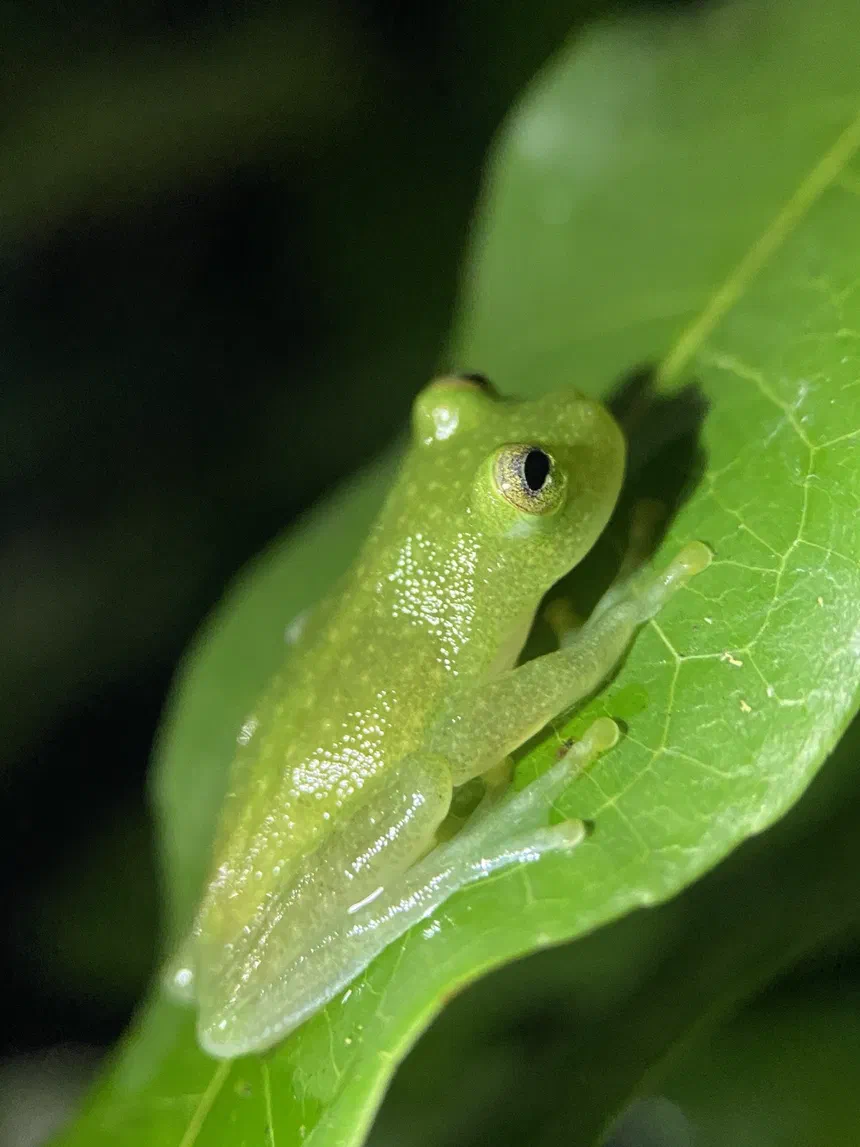
Fleischmann’s glass frog (Hyalinobatrachium fleischmanni) is a tiny tree-dwelling amphibian best known for the transparent skin on its underside, through which its internal organs are partly visible. It belongs to the glass frog family Centrolenidae, a group of small Neotropical frogs named for this striking see-through quality.
Appearance and Identification
This is a small, delicate frog, with adults typically measuring only about 0.8 to 1.2 inches (2 to 3 centimeters) in body length. From above it is a uniform pale lime to yellow-green, often sprinkled with small pale or yellowish spots, which helps it blend into the leaves it rests on. The belly skin is transparent to translucent, so the heart, digestive tract, and other organs can be seen from underneath, though a white membrane covers much of the abdomen. The eyes face forward and have gold-flecked irises with horizontal pupils, and the fingertips bear small adhesive disks that aid in climbing.
Habitat and Range
Fleischmann’s glass frog occupies humid lowland and montane forests from southern Mexico south through much of Central America and into parts of northern South America, including Colombia and Ecuador. It is closely tied to flowing water, favoring vegetation, shrubs, and overhanging leaves along the banks of clear streams and small rivers. Individuals are usually found perched on the undersides of leaves within a short distance of running water, which is essential for their breeding cycle.
Diet
As a carnivore, this frog feeds on small invertebrates that it can capture at night. Its diet consists mainly of tiny insects such as flies, small crickets, and other soft-bodied arthropods, along with spiders and similar prey. It hunts by sitting still and ambushing passing prey, using a quick flick of its sticky tongue to seize meals that suit its small mouth.
Behavior
Fleischmann’s glass frog is nocturnal and arboreal, spending daylight hours resting quietly on foliage and becoming active after dark. During the breeding season, males are highly vocal and call from the undersides of leaves to attract females and to advertise their territories, often defending a chosen leaf against rival males. Its translucent coloring, combined with a habit of pressing flat against a leaf, makes the resting frog difficult for predators to spot against the surrounding greenery.
Life Cycle and Reproduction
Breeding is tied to the rainy season and to streamside vegetation. After a female is attracted by a calling male, she lays a small clutch of eggs, typically a few dozen, on the underside of a leaf hanging over or near flowing water. In this species the male commonly attends the developing eggs, guarding the clutch and helping keep it moist, behavior that improves the eggs’ chances against predators and dehydration. When the tadpoles hatch, they drop or wash down into the stream below, where they burrow into gravel and leaf debris and continue developing until they metamorphose into small froglets.
Conservation Status
Fleischmann’s glass frog is currently listed as Least Concern by the IUCN, reflecting its broad geographic range and its ability to persist in a variety of forest habitats, including some disturbed areas near streams. Even so, like many amphibians it is sensitive to habitat loss, water pollution, and the drying or degradation of the clean streams it depends on for reproduction. Maintaining healthy, forested streamside corridors is important for keeping local populations stable.
Frequently Asked Questions
Why is it called a glass frog? The name comes from the transparent skin on the frog’s underside, through which some of its internal organs, including the heart and digestive tract, can be seen when it is viewed from below.
How big is a Fleischmann’s glass frog? It is very small, with most adults reaching only about 0.8 to 1.2 inches (2 to 3 centimeters) in body length and weighing just a gram or so.
Do the parents care for their eggs? Yes. Males of this species often guard the egg clutches laid on leaves above streams, helping keep them moist and protecting them from some predators until the tadpoles hatch and fall into the water.