Amphibians Guide
Axolotl
What Is a Axolotl? The axolotl (Ambystoma mexicanum) is a salamander famous for spending its entire life in a larval form, a condition known as neoteny. Instead of transforming into a land-dwelling adult like most …
At a glance
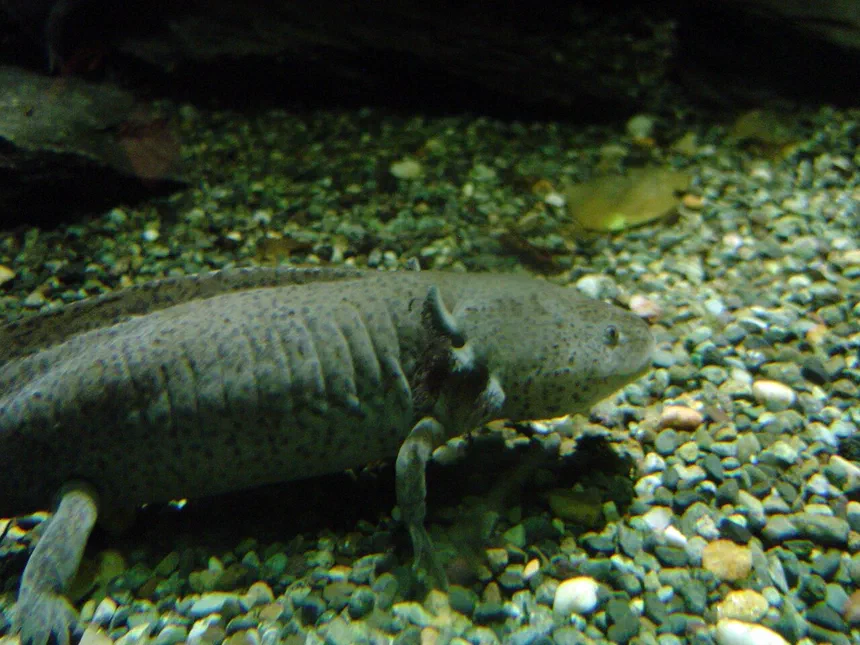
Image: Kristof Magnusson — CC BY-SA 4.0 · source
What Is a Axolotl?
The axolotl (Ambystoma mexicanum) is a salamander famous for spending its entire life in a larval form, a condition known as neoteny. Instead of transforming into a land-dwelling adult like most salamanders, it keeps its feathery external gills and remains fully aquatic. Native to a single lake system in central Mexico, it has become one of the most recognizable amphibians in the world.
Appearance and Identification
Axolotls have a wide head, a permanent gentle “smile,” and three pairs of frilly external gills that branch out from behind the head like feathery plumes. Their bodies are soft and elongated, with short limbs, tiny clawless toes, and a long, finned tail that runs the length of the back. Adults typically reach 6 to 12 inches in length, though most captive animals fall toward the smaller end of that range. Wild axolotls are usually a dark, mottled brown or greenish-gray that blends into muddy water, but captive breeding has produced striking color variants, including leucistic (pale pink with dark eyes), albino, and golden forms. Their skin is smooth and permeable, and their fine, delicate gills flush pink when oxygen-rich blood moves through them.
Habitat and Range
The axolotl is found naturally in only one place on Earth: the remnants of the ancient lake system around Mexico City, primarily the canals and wetlands of Xochimilco. Historically it also lived in nearby Lake Chalco, which has since been drained. These are cool, freshwater habitats with muddy bottoms, aquatic vegetation, and a network of channels once used for traditional agriculture. The species is adapted to relatively steady, cool water temperatures and does not naturally occur anywhere else in the wild, making its range extraordinarily small and vulnerable.
Diet
Axolotls are carnivores that feed by suction, snapping their wide mouths open to pull in prey along with a rush of water. In the wild they eat worms, aquatic insects and their larvae, small crustaceans, mollusks, and occasionally small fish. They rely on smell and the detection of movement rather than sharp eyesight to locate food. Young axolotls are especially opportunistic and, in crowded conditions, may even nip at the gills or limbs of siblings, though such injuries usually heal thanks to the animal’s remarkable regenerative powers.
Behavior
Axolotls are generally slow-moving, solitary, and most active in low light. They spend much of their time resting on the bottom or drifting through vegetation, using their tails to swim in short bursts when startled or hunting. They are not social animals and do not form groups, though they tolerate one another where habitat is suitable. Much of their behavior centers on conserving energy and remaining hidden from predators such as birds and introduced fish.
Life Cycle and Reproduction
Because axolotls stay in their larval body plan, they reach sexual maturity while still fully aquatic and gilled. Breeding is often triggered by cooling water and lengthening days. During courtship the male deposits small cone-shaped packets of sperm called spermatophores, which the female picks up with her cloaca. She then lays hundreds of jelly-coated eggs, attaching them individually to plants or other surfaces. The eggs hatch after roughly two weeks into tiny, self-sufficient larvae that already resemble miniature adults. Under unusual conditions or with hormone treatment, an axolotl can be induced to metamorphose into a land form, but this rarely happens in nature and often shortens its life.
Conservation Status
The axolotl is listed as Critically Endangered by the IUCN, and wild populations have collapsed to a tiny fraction of their former numbers. The main threats are the loss and degradation of its lake habitat through urban expansion, water pollution, and the draining of wetlands, along with predation and competition from introduced fish such as tilapia and carp. Ironically, axolotls are abundant in captivity worldwide as pets and laboratory animals, prized for their ability to regenerate limbs, spinal tissue, and even parts of organs. Conservation efforts in Mexico focus on cleaning and restoring the Xochimilco canals, building refuges free of invasive species, and supporting captive-breeding programs.
Frequently Asked Questions
Do axolotls ever turn into adult salamanders? Not under normal conditions. They keep their gills and stay aquatic for life, though metamorphosis can rarely be forced by environmental stress or hormones.
Can axolotls really regrow body parts? Yes. They can regenerate lost limbs, tail, and parts of the heart, spinal cord, and brain, which is why they are widely studied in regeneration research.
Are wild and pet axolotls the same? They are the same species, but almost all pets descend from captive lines and often show pale or albino colors, while the few remaining wild axolotls are dark and heavily endangered.