Amphibians Guide
American Toad
What Is a American Toad? The American toad (Anaxyrus americanus) is a stout, warty-skinned amphibian native to eastern and central North America. A member of the true toad family (Bufonidae), it is one of the most …
At a glance
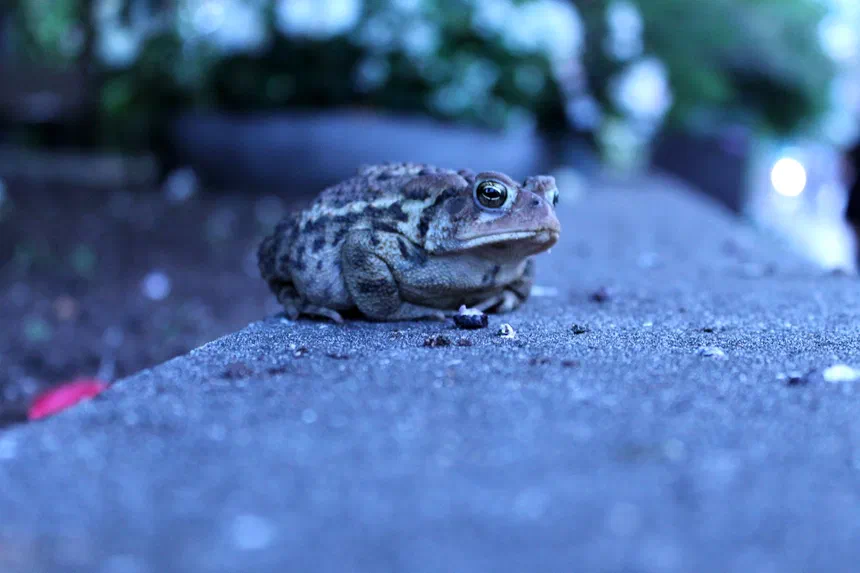
What Is a American Toad?
The American toad (Anaxyrus americanus) is a stout, warty-skinned amphibian native to eastern and central North America. A member of the true toad family (Bufonidae), it is one of the most widespread and familiar toads across its range, thriving everywhere from deep woodlands to suburban backyards.
Appearance and Identification
The American toad has a plump body, short legs, and dry, bumpy skin studded with the wart-like glands typical of true toads. Coloration is highly variable, ranging through shades of brown, olive, gray, and brick red, often with darker blotches and a pale stripe down the back. Behind each eye sits a prominent, kidney-shaped parotoid gland that secretes a milky toxin as a defense against predators. Adults typically measure about 2 to 3.5 inches (5 to 9 cm) in body length, with females generally larger than males. The warts on the body may be tinged reddish or yellowish, and breeding males can be distinguished by a dark throat.
Habitat and Range
This adaptable toad occupies a broad swath of eastern and central North America, from the Canadian Maritimes and Great Lakes region south to the Gulf states and west toward the Great Plains. It is comfortable in a wide variety of terrestrial habitats, including deciduous forests, meadows, agricultural fields, gardens, and lawns. The key requirement is access to moist cover and shallow, still water for breeding. American toads shelter under logs, rocks, leaf litter, or in shallow burrows during the heat of the day, emerging in the cool of evening.
Diet
American toads are opportunistic carnivores that feed on a wide range of small invertebrates. Their diet includes beetles, ants, crickets, spiders, earthworms, slugs, snails, and other insects. They hunt largely by sight and ambush, flicking out a sticky tongue to snap up passing prey. Because they consume large numbers of garden and agricultural pests, they are widely regarded as beneficial neighbors. A single toad can eat thousands of insects over the course of a season.
Behavior
Primarily nocturnal and crepuscular, American toads are most active at night and during damp weather. They are solitary for most of the year and move by short hops or slow walking rather than long leaps. When threatened, a toad may puff up its body to look larger, remain motionless, or rely on the toxic secretions of its parotoid glands to deter predators. In colder parts of the range, they hibernate through winter by burrowing below the frost line. Their skin toxins can sicken pets and predators that try to eat them, though the toads are harmless to handle and do not cause warts.
Life Cycle and Reproduction
Breeding takes place in spring, when males gather at shallow ponds, ditches, and flooded areas and produce a long, high, musical trill to attract females. A female may lay several thousand eggs in two long, gelatinous strings draped among aquatic vegetation. The eggs hatch within about a week into small black tadpoles, which feed on algae and organic matter. Over roughly one to two months the tadpoles metamorphose into tiny toadlets and leave the water for land. Sexual maturity is reached in two to three years. In the wild many toads live only a few years, but individuals can survive a decade or more under favorable conditions.
Conservation Status
The American toad is listed as Least Concern by the IUCN, reflecting its large range, adaptability, and generally stable populations. It tolerates human-altered landscapes well and remains common across much of its distribution. Nonetheless, like other amphibians it can be affected by habitat loss, road mortality, pesticide use, water pollution, and emerging diseases such as chytrid fungus. Maintaining clean breeding ponds and reducing chemical runoff help keep local populations healthy.
Frequently Asked Questions
Do American toads cause warts? No. This is a myth. The bumps on a toad’s skin are glands, not warts, and handling a toad cannot give you warts.
Are American toads poisonous? They are toxic rather than venomous. Their parotoid glands secrete a substance that can irritate the mouth and sicken predators or pets, but the toads are safe to hold gently and pose no danger from casual contact.
What do American toads eat in a garden? They feed on insects, slugs, snails, worms, and spiders, making them natural allies for gardeners seeking to control pests without chemicals.
References
The conservation status and key facts in this profile are supported by these sources:
- Animal Diversity Web — Anaxyrus americanus (accessed 2026-07-29)
- GBIF — Anaxyrus americanus (Holbrook, 1836) (accessed 2026-07-29)
Found an error, source problem, or image concern? Report this page.